
What Is an AI Influencer? Definition, Examples, How-To
An AI influencer is a synthetic creator with a persistent identity. Named examples, how it differs from avatars and UGC, the tools, the rules and the build.
 Noah Berger 9 min read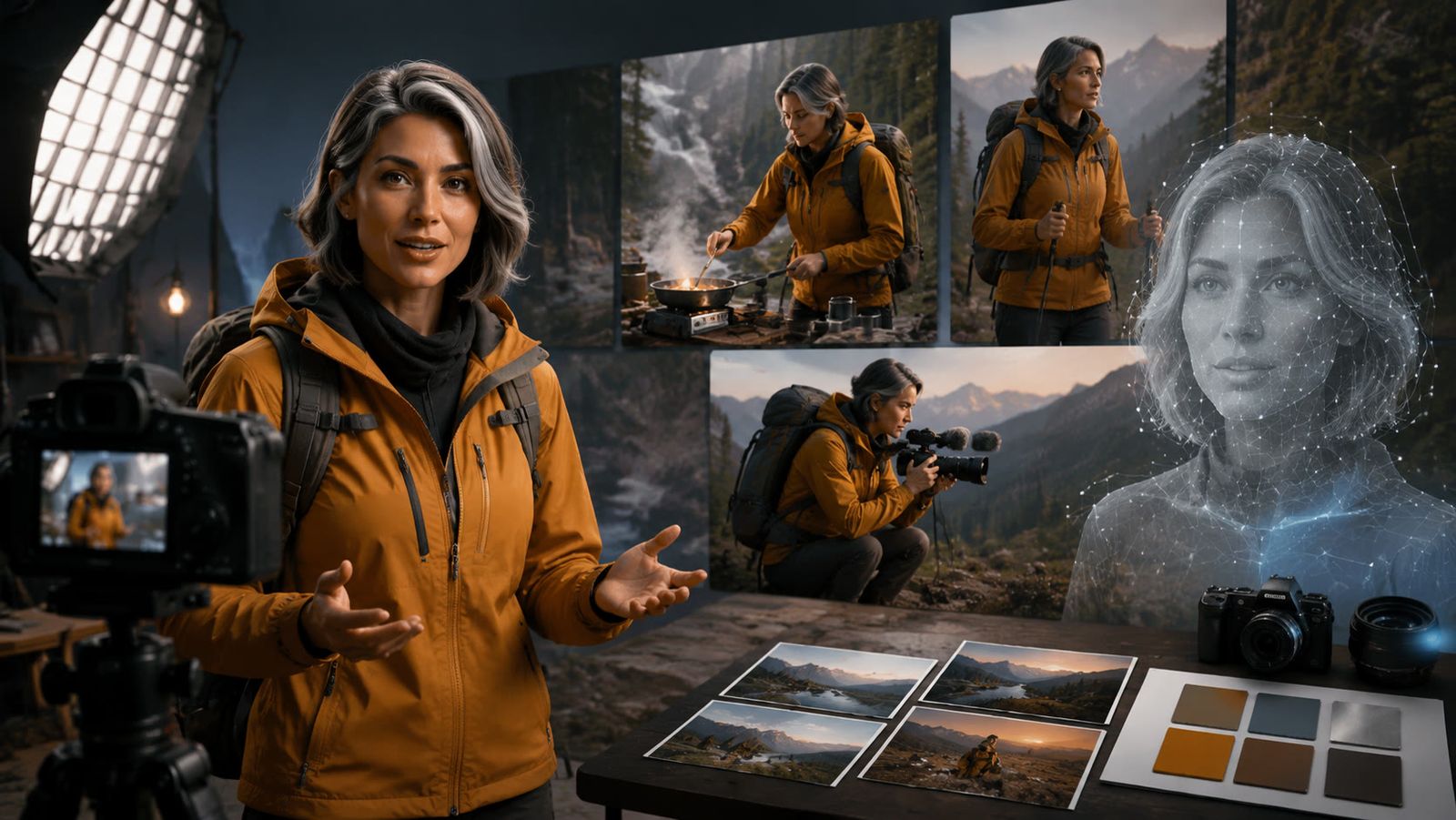
An AI influencer is a fictional creator whose face, voice and posts are generated by AI and run by a person or a team, and whose identity stays consistent from one post to the next. Miquela, launched in 2016 and still posting with 2.2M followers and the word 'Robot' in her bio on 5 September 2026, per her Instagram profile (2026), is the reference case; Aitana Lopez, created by the Barcelona agency The Clueless, is the current one. This guide defines the term, separates it from avatars and virtual idols, explains why brands use these accounts, walks through building one in LazyKiwi, lists the generator tools, and sets out the disclosure rules.
What is an AI influencer?
Three properties make the definition work. The character is synthetic: the face is generated, not filmed. The identity persists: same face, same name, same voice across months of posts. And the account behaves like a creator: it posts on a cadence, replies, and takes sponsorships. Drop any one and you have something else, which the next section sorts out.

Who are the named examples?
Lu do Magalu, the Brazilian retailer's character, led the last published ranking of ai influencers on instagram with 7.3M followers, and Miquela was second at 2.5M, per Influencer Marketing Hub (updated March 2025); Miquela's own profile showed 2.2M on 5 September 2026. Aitana Lopez is described by her agency as 'the world's first AI influencer created by The Clueless', which now lists more than 100 avatars and clients including Audi, Amazon, L'Oreal and Coca-Cola, per The Clueless (2026). Shudu Gram, Imma and Bermuda round out the usual list.
How are the accounts actually run?
Behind every account is an operator: an agency, a brand's in-house team or a solo creator. The operator keeps a character bible (face references, wardrobe, voice, opinions), generates the assets, writes the captions and answers comments. Nothing is autonomous, and the disclosure rules in the legal section apply to the operator, not to the character.
Virtual influencer vs AI avatar vs AI UGC: what is the difference?
The terms overlap in search results and get used interchangeably in pitches. They are not the same thing, and picking the wrong one changes the tooling, the cost and the legal exposure.
| Concept | What it is | Identity persists? | Typical tool | Disclosure |
|---|---|---|---|---|
| Synthetic creator (this article) | Generated face with an account, a persona and a posting cadence | Yes, by design | Image model with reference images, image-to-video, talking avatar | Label the account and each sponsored post |
| Virtual influencer | Older umbrella term; includes 3D-rendered or hand-animated characters, not only AI-generated ones | Yes | 3D software or AI | Same as above |
| AI avatar | A generated presenter for one video or a series; no social identity of its own | Optional | Talking-avatar tools | Label the video |
| AI UGC | Creator-style ad clips made with synthetic faces for a brand | No; faces change per ad | Talking-avatar tools plus an editor | Label as an ad and as synthetic |
| Virtual idol / VTuber | Animated character voiced and performed live by a real person | Yes | Motion capture, Live2D | Persona is disclosed as a character |
The practical line is persistence. An avatar in a training video can be swapped next quarter; a synthetic creator cannot change faces without losing the audience, which is why the build section spends most of its steps on keeping the face stable. Our AI UGC guide covers the ad-clip case, where the face is disposable.
Why do brands work with synthetic creators in 2026?
Three reasons show up in every agency pitch, and one of them is verifiable at scale. Control: the operator approves every frame, so there are no off-brand moments. Availability: the character shoots in any location at any hour without travel. Reach: Miquela's 2019 Samsung Galaxy campaign generated 126M organic views and 24M engagements, per Influencer Marketing Hub (2025), and the same source reports that nearly half of surveyed brands that ran such campaigns rated the experience 'very positive'.
The risks are as concrete. Trust drops when followers discover the disclosure late rather than early. Platform labels can be applied automatically: Meta adds 'AI info' labels when it detects industry-standard AI indicators or when people disclose, per the Meta Newsroom (2024). And a synthetic face recommending a product counts as an endorsement under the FTC guides, covered below.
- Works: product categories where the aesthetic is the message (fashion, beauty, gaming, travel imagery).
- Works: markets where the brand wants one face across many languages and time zones.
- Fails: testimonial-style claims ('I used this for a month'), which a synthetic creator cannot truthfully make.
- Fails: audiences that feel misled, which happens when the label arrives after the follow.
How to make an AI influencer step by step
This is the LazyKiwi workflow as it appears on screen on 5 September 2026: an image model for the face, an outfit tool for variety, image-to-video for motion, and the talking-avatar page for speech. Every step draws from one credit balance; the free plan carries 40 credits a month, per the pricing page.
- 1
Write the character bible first
One page: name, age range, city, three interests, two opinions, the way she dresses, and what she never talks about. Every prompt and caption comes from this page, so write it before generating anything.
- 2
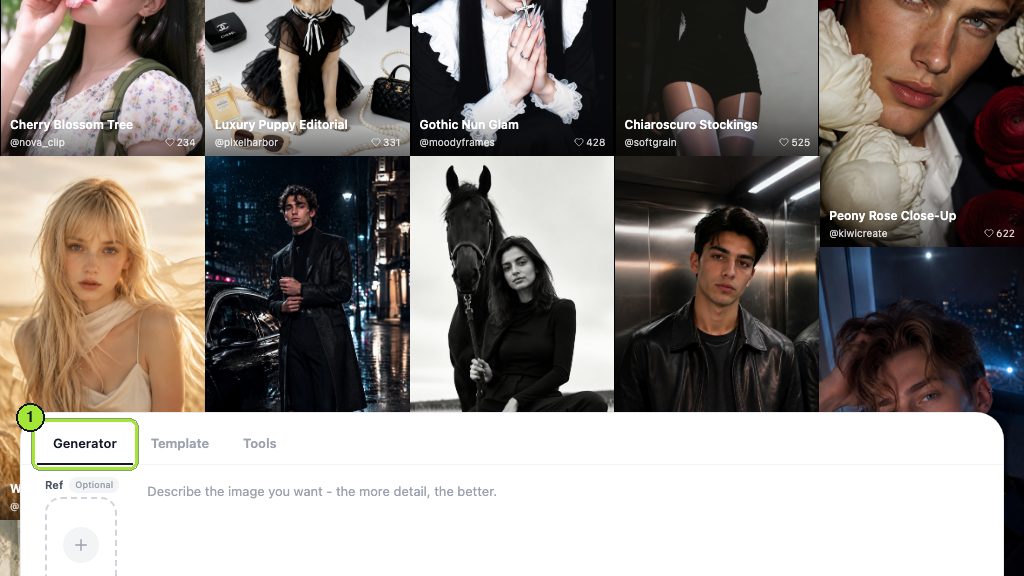
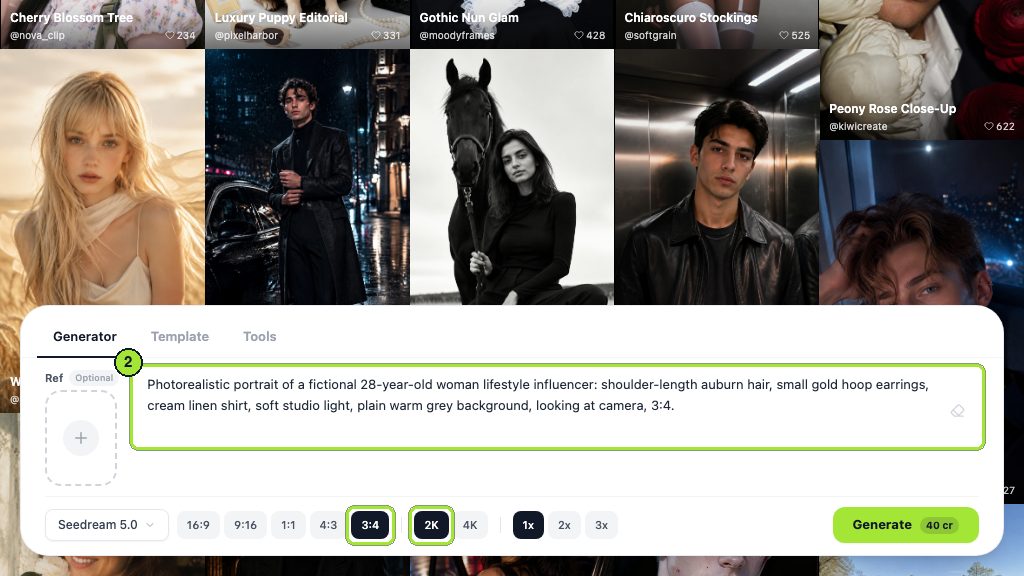
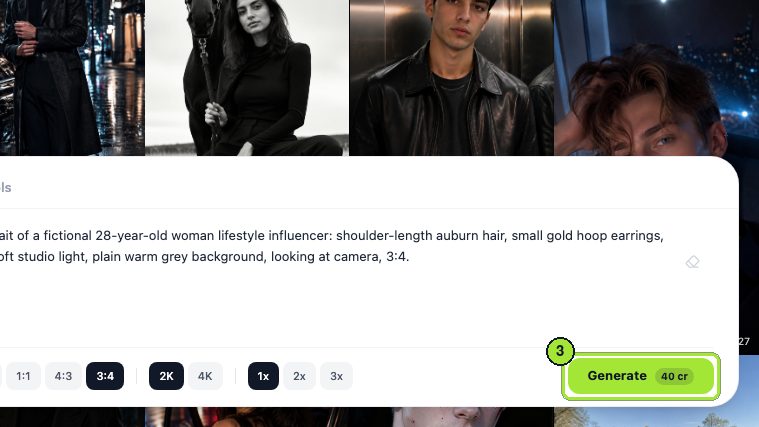
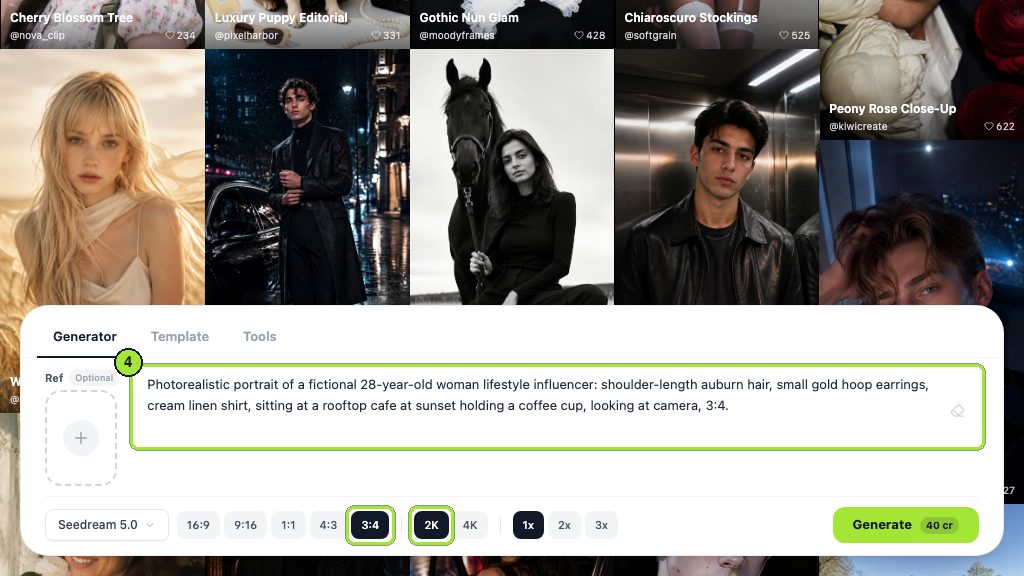
Generate the base face in Seedream 5.0
Open the AI image generator with Seedream 5.0, which takes text plus optional reference images and outputs PNG up to 4K, per the model page. Prompt for a neutral expression, front-facing, soft daylight, plain background. Render at 2K (40 credits on the day of writing), pick one, and keep it as the master reference.
- 3
Build the reference set
Feed the master image back in as the reference and ask for three-quarter, profile and full-body views with the same face. Save the four approved images; from now on, every generation includes at least one of them as a reference.
- 4
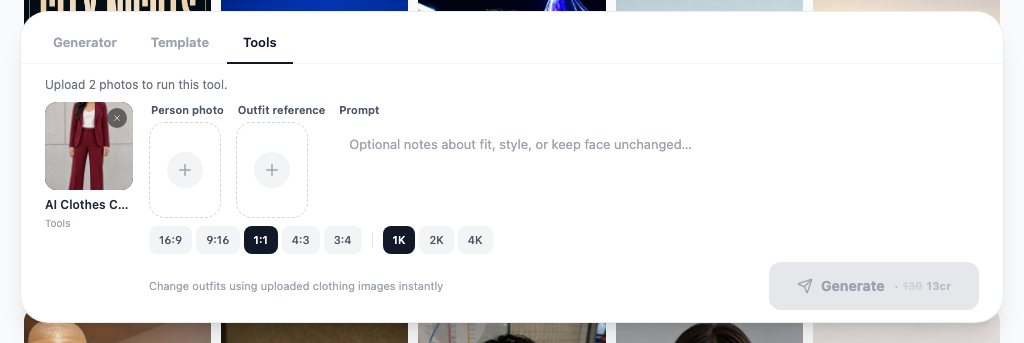
Vary outfits without touching the face
Use the AI clothes changer: it takes a person photo plus an outfit reference, with a prompt note such as 'keep face unchanged'. On 5 September 2026 a 1K run showed 13 credits at the sale price. This is how one face produces a month of wardrobe.
- 5
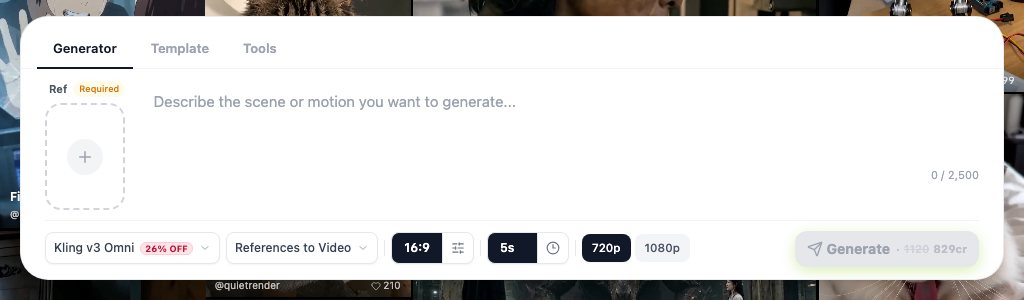
Add motion with image-to-video
Drop the approved still into Kling v3 Omni. The model accepts a text prompt, one image, or a start and end frame; renders 720p or 1080p at 16:9, 9:16 or 1:1; runs 3 to 60 seconds (3 to 15 for start-end frames); and takes prompts up to 2,500 characters, per the model page. Prompt for small motion only: a glance, a hair move, a step.
- 6
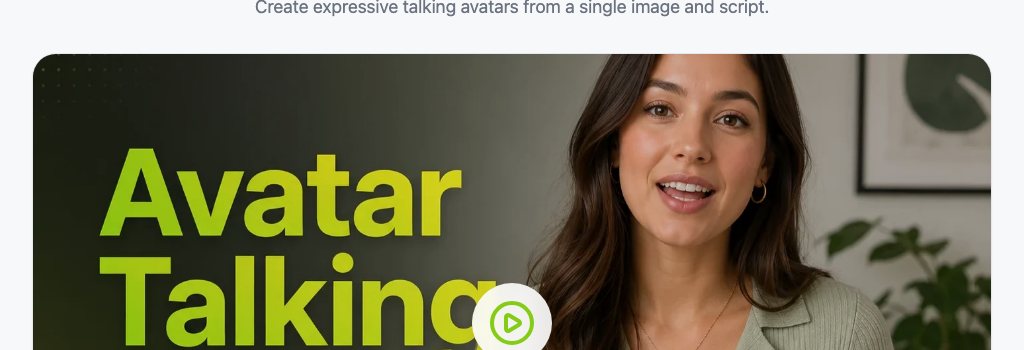
Give the character a voice
For spoken posts, upload the master portrait to the Avatar Talking page, choose an action preset and one of the four voices, and paste a script of up to 1,000 characters. Keep the same voice forever; a voice change reads as a recast.
- 7
Post on a cadence and log everything
Three posts a week beats ten in one day. Log the prompt, seed, references and credits for each asset, so a hit can be reproduced.


When the face drifts
If a generation comes back with a different jawline, do not prompt harder; add a second reference image from the approved set. If a video drifts, run it through AI character swap with the master portrait as the reference instead of re-rendering.
Which AI influencer generator tools exist?
Searches for a persona generator (and the shorter 'make influencer AI' queries) return two kinds of product: general image-and-video workbenches, and dedicated persona platforms that bundle creation with monetisation. What each site showed on 5 September 2026 is below; where a site publishes no prices, the cell says so.
| Tool | Type | What it covers | Pricing shown on 5 September 2026 | Notes |
|---|---|---|---|---|
| LazyKiwi | Workbench | Seedream 5.0 faces with references, clothes changer, Kling v3 Omni motion, Avatar Talking speech | Free plan 40 credits a month; credit plans | No persona hosting or monetisation layer |
| MakeInfluencer | Persona platform | Character builder, video with 10+ models, lip sync, motion control, REST API | Per-model credit costs shown; plan prices not on the home page | Aimed at operators who want one dashboard |
| Glambase | Persona platform | Create the influencer, generate content, chat and earn features | Premium tier mentioned; no prices on the home page | Monetisation built in; adult-adjacent positioning |
| HeyGen | Avatar platform | Photo and custom video avatars for spoken clips | Creator $29 a month; free tier 3 videos of 1 minute | Speech, not image consistency |
| The Clueless | Agency | Runs Aitana Lopez and 100+ avatars for brands | Agency engagement | Buy the service, not the tool |
MakeInfluencer bills itself as a persona generator with 'character builder, lip sync, and motion control' and prices generations per model in credits, per the MakeInfluencer site (2026). Glambase bundles creation with monetisation and chat features under a Premium tier, per the Glambase site (2026). HeyGen's Creator plan is $29 a month and its free tier allows three one-minute videos, per the HeyGen pricing page (2026). If you would rather hire than build, The Clueless sells the character as a service.
The question of how to create an ai influencer with these tools comes down to where the face lives. Persona platforms keep it inside their dashboard; a workbench keeps it as PNG references you own. For a long-running account, owning the references matters more than the dashboard.
Are synthetic influencers legal and do they need disclosure?
Legal, yes; undisclosed, no. Two rules matter in most markets, and the platforms add a third layer.
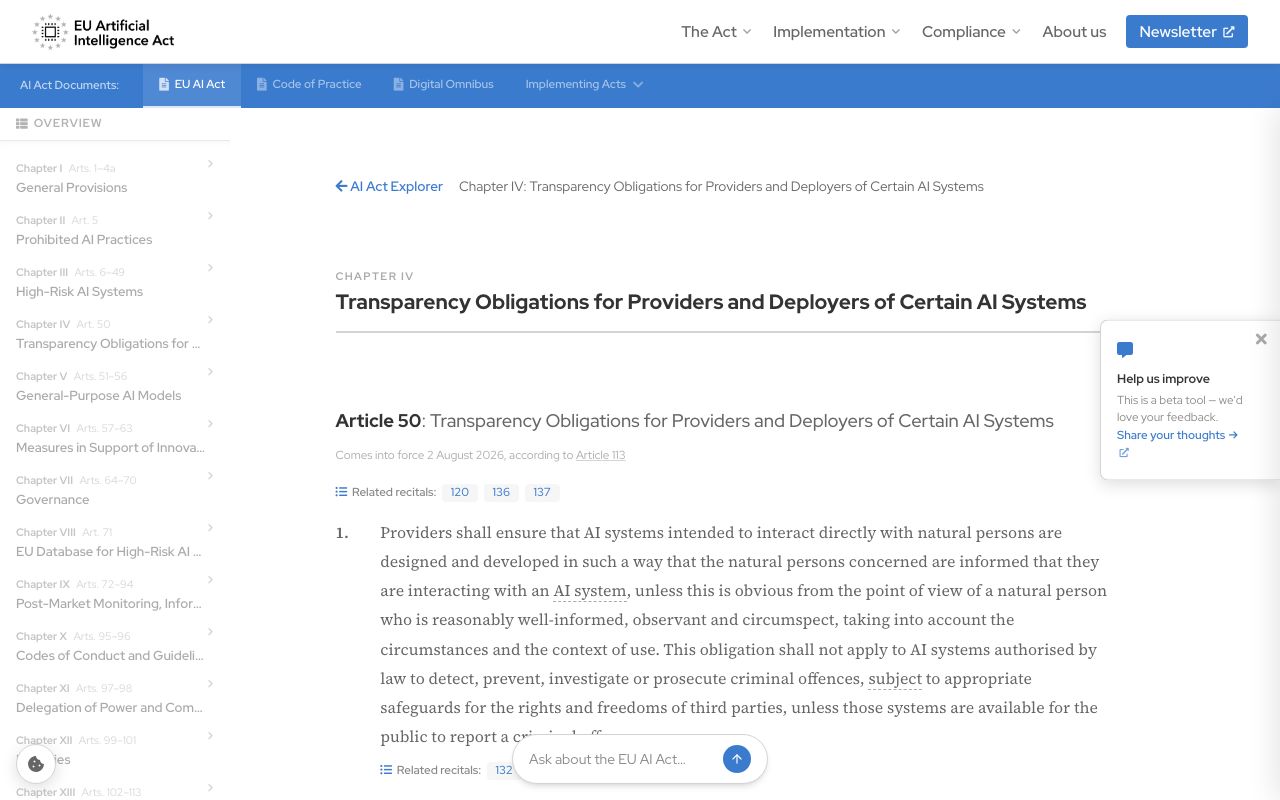
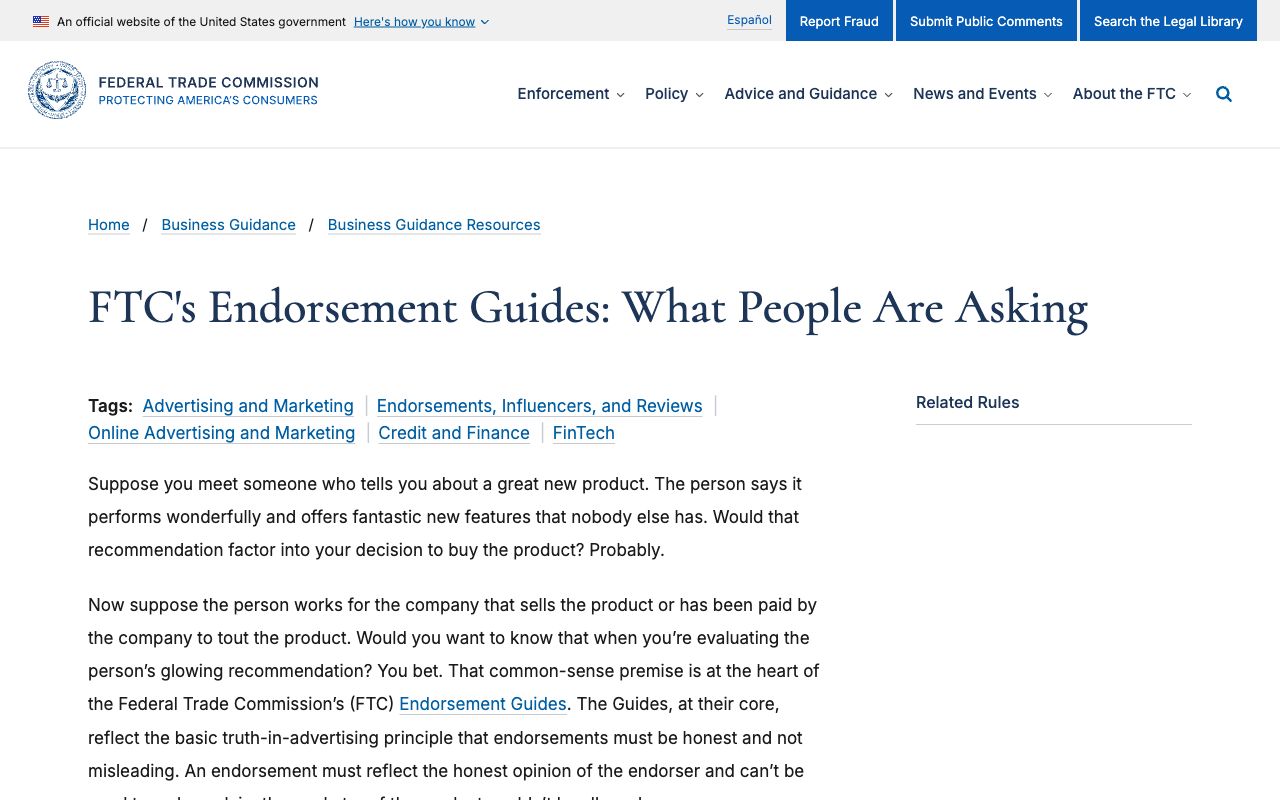
In the EU, Article 50 obliges anyone deploying a deep-fake generator to state that the output is artificial; art and satire get a lighter version of the duty (EU AI Act Explorer, 2026). In the US, the Endorsement Guides FAQ puts it plainly: when an endorser has a tie to the marketer that a significant minority of consumers would not anticipate, and it would change how they weigh the endorsement, the tie has to be disclosed 'clearly and conspicuously'; the same FAQ describes likes from 'non-existent people' as deceptive (FTC, 2026).
Platforms enforce their own labels. YouTube requires disclosure when AI is used to 'meaningfully alter or generate photorealistic content', with a real person appearing to say something they did not as its first example, per YouTube Help (2026). TikTok's AI-generated content label covers realistic images, audio or video, per the TikTok Newsroom (2023). Meta's 'AI info' label was described above.
- Put 'AI' or 'virtual' in the bio, as Miquela's 'Robot' does, so the disclosure precedes the follow.
- Label each sponsored post as an ad, then as synthetic; the two disclosures answer different questions.
- Never build the face from a real person without written consent, and never let the character claim personal product experience.
- Keep the operator's name reachable; regulators and platforms address the operator.
What does virtual influencer marketing cost and does it work?
Published rate cards are rare, so the honest answer is a range of models rather than a number. Influencer Marketing Hub estimates per-post fees from follower counts, listing Lu do Magalu at about $21,000 a post and Miquela at about $7,500, per its ranking (2025); those are estimates, not disclosed contracts. Agencies such as The Clueless price campaigns on engagement rather than publishing a rate.
Production cost is the part you control. With a workbench, an approved face costs a few 2K renders at 40 credits each, a wardrobe run costs tens of credits per outfit, and motion is the expensive line: a 5-second 720p Kling v3 Omni clip showed 829 credits at the sale price in the app on 5 September 2026. Budget most of the balance for video and spend image credits freely.
Does it work? The cited Samsung campaign shows the reach ceiling, and the survey cited above shows brands mostly satisfied. What ai influencer marketing cannot do is testimony, so measure it on awareness metrics (views, saves, mentions) rather than on conversion claims the character cannot honestly make. For the spoken-clip side of the same question, the talking avatar roundup compares the platforms by price.
Key takeaways
- Definition: a synthetic creator with a persistent identity run by an operator; Miquela (2.2M followers on 5 September 2026) and Aitana Lopez (The Clueless) are the reference cases.
- Persistence separates the concept from an AI avatar (one video) and from AI UGC (disposable faces per ad).
- Build order in LazyKiwi: Seedream 5.0 master face with references, clothes changer for variety, Kling v3 Omni for motion, Avatar Talking for speech; 40 free credits a month.
- Disclose early: Article 50 of the EU AI Act, the FTC guides and the YouTube, TikTok and Meta labels all land on the operator, not the character.
- Costs are mostly video credits (829 for a 5-second 720p Kling clip at the sale price); published per-post fees are third-party estimates, not rate cards.
Research & Trust Editor
Noah Berger
I track how detection, labelling and platform policy keep moving, and I cite the source and the date so you can check the claim yourself.
FAQ
Common questions
Who was the first synthetic influencer?
Miquela (Lil Miquela), launched on Instagram in 2016, is the account most sources treat as the first synthetic creator; her profile still lists 'Robot' in the bio and showed 2.2M followers on 5 September 2026. The Clueless describes its own Aitana Lopez as the first created by that agency, which is a narrower claim.
Can synthetic influencers make money?
Yes, through sponsorships, affiliate links and licensing, though published figures are estimates. Influencer Marketing Hub estimated per-post fees of about $21,000 for Lu do Magalu and $7,500 for Miquela in its 2025 ranking, and The Clueless lists clients such as Audi, Amazon and L'Oreal. Smaller accounts earn on affiliate and licensing before sponsorships arrive.
Do virtual influencers have to say they are AI?
In practice, yes. EU AI Act Article 50 obliges deployers to state that deep-fake output is artificial, the FTC wants any unexpected tie between an endorser and a marketer disclosed clearly, and YouTube, TikTok and Meta label realistic synthetic media. Put the disclosure in the bio and on every sponsored post.
How do you keep the character's face consistent?
Lock a master portrait, then generate every new image with one or more approved references attached rather than with prompt words alone. In LazyKiwi that means Seedream 5.0 with reference images for stills, the clothes changer for outfits with the face kept unchanged, and character swap with the master portrait when a video drifts.
Is a virtual influencer the same thing as an AI one?
Not exactly. Virtual influencer is the older umbrella term and includes 3D-rendered or hand-animated characters such as early Miquela; the AI version is generated by image and video models and can be produced by a solo operator. Both need the same disclosures, and both live or die on a consistent identity.
Start with the face
Generate the master portrait in Seedream 5.0, save it as your reference, and build the character from there.
Keep reading
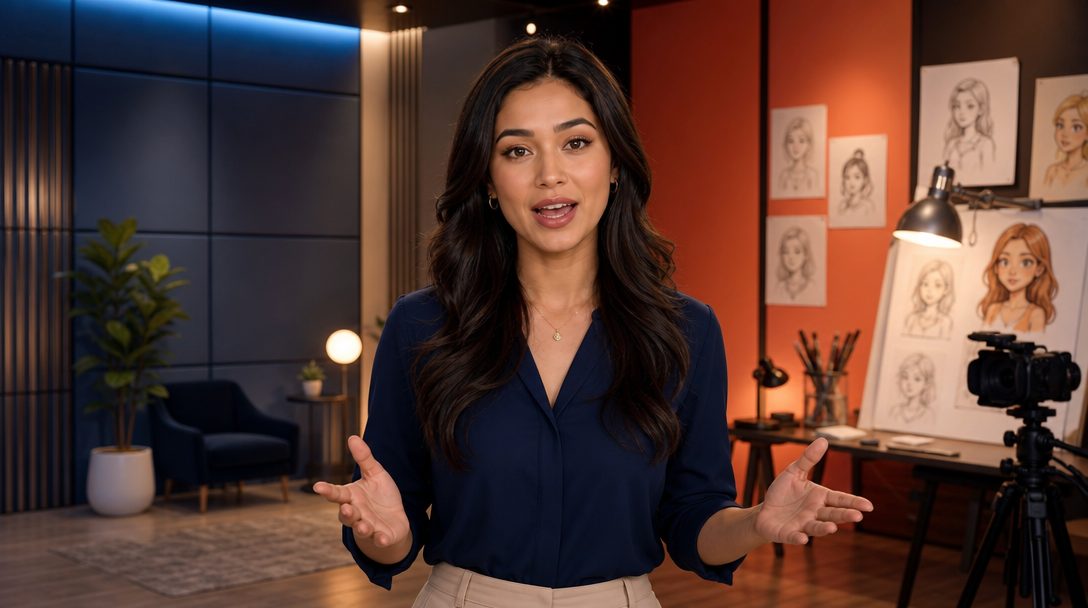
Best AI Avatar Video Generator: A Practical Guide for Creators
Find the right AI avatar workflow for explainers, social clips, onboarding videos, and experiments without choosing a tool that is too complex for the job.
8 min read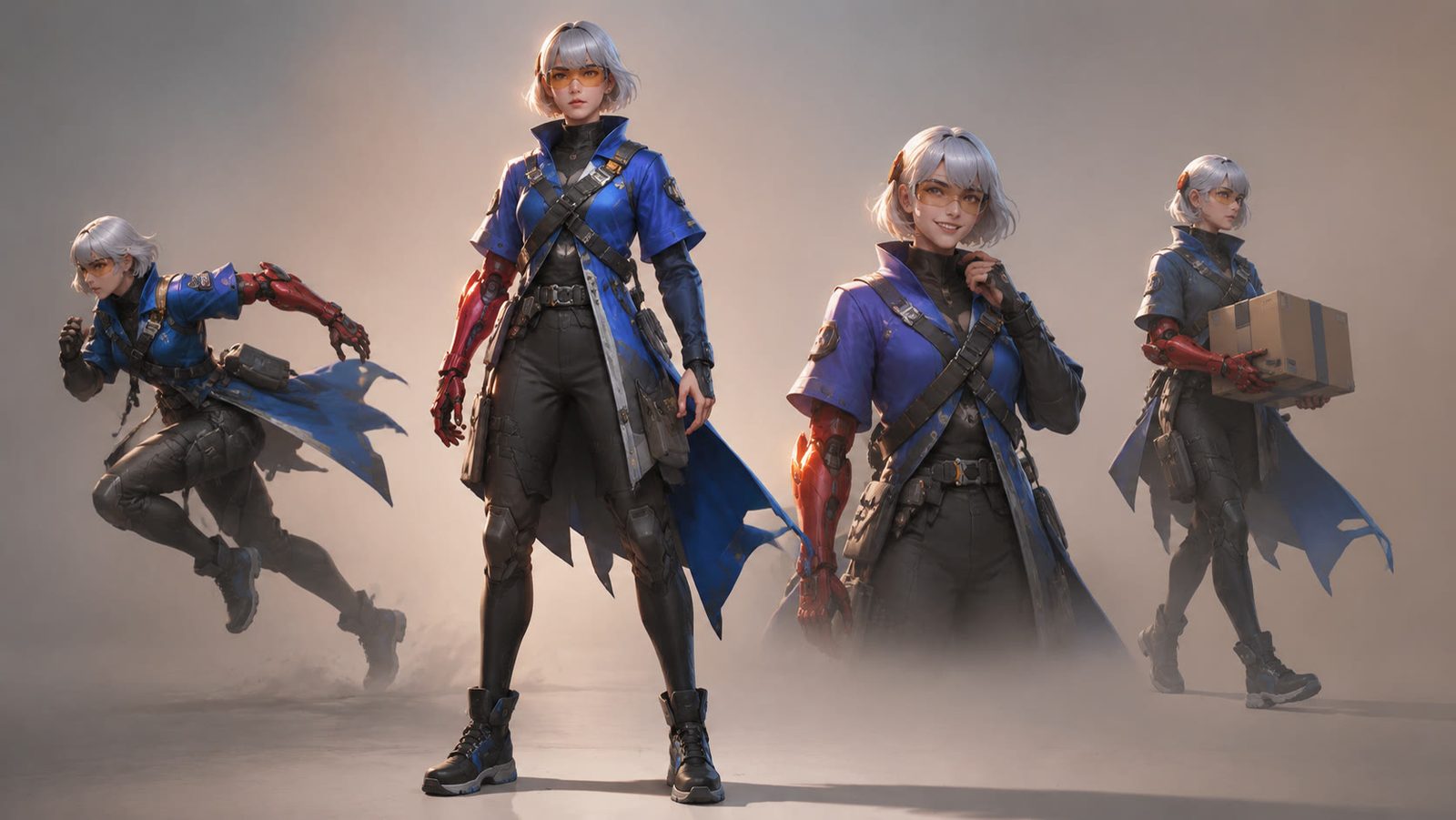
How to Use an AI Character Generator for Consistent Designs
Turn a clear concept into reusable character art with an AI character generator, structured prompts, reference details, and a simple iteration workflow.
8 min read
AI UGC: A Practical Guide to Faster Brand Creative
AI UGC uses artificial intelligence to create or assist creator-style brand videos. Learn how B2B teams can produce, test, and govern AI UGC ads without presenting synthetic content as genuine customer testimony.
8 min read
7 HeyGen Alternatives for Avatars, Training, and Social Video
Compare seven HeyGen alternatives—LazyKiwi, D-ID, Synthesia, Colossyan, Elai.io, Captions, and VEED—by their talking-photo, training, localization, social editing, and team workflows.
8 min read