Helicopter Shot (Aerial Shot)
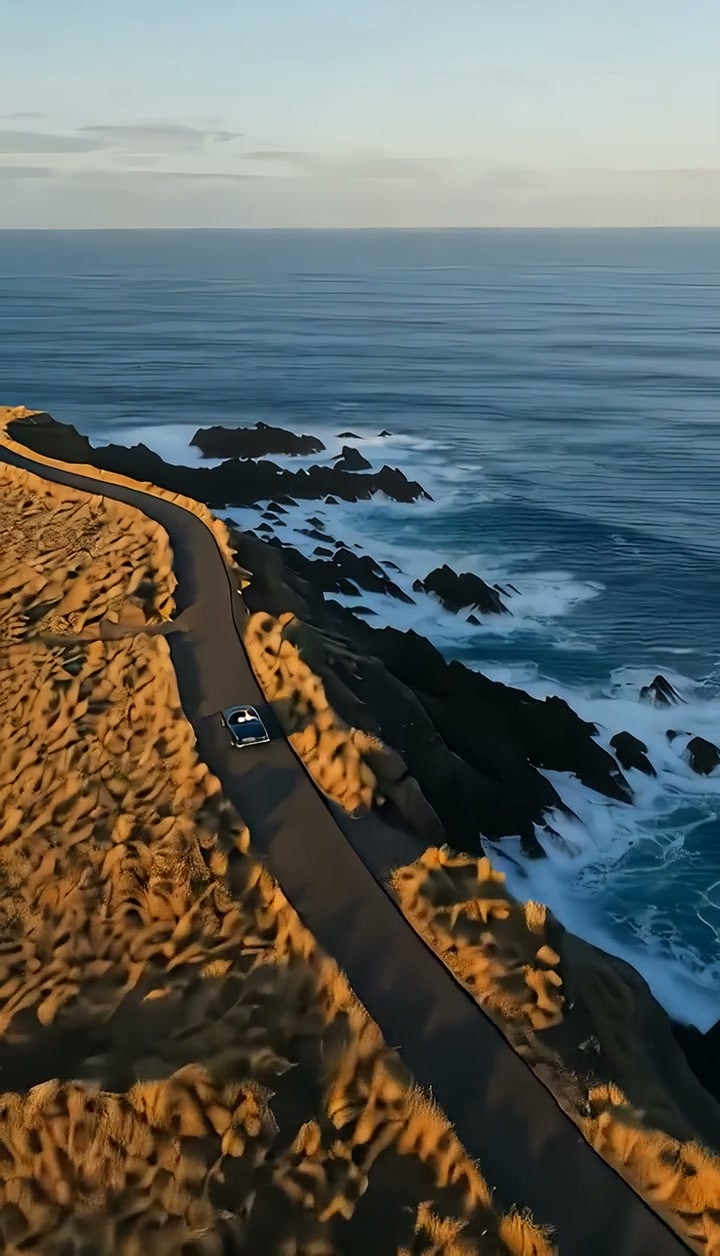
Helicopter Shot turns one photo into a high, wide aerial shot: the camera sweeps along a broad, gradual flight path far above the landscape, keeping the scale of the terrain readable, and settles on a steady high-altitude frame. Upload a single still and get a short clip, no helicopter, no gyro mount.
Helicopter Shot Template
Upload one wide photo taken from real height, with a horizon and plenty of terrain in frame.
WHAT IT IS
What an aerial shot is, and how the template makes one from a single photo
An aerial shot is any shot filmed from high above the ground, and a helicopter shot is the biggest version of it: a wide-angle pass from real altitude along a long, curving flight line, the kind captured from a gyro-stabilized camera ball under a helicopter's nose. Where a drone works close and low, the helicopter keeps its distance and shows whole coastlines, city grids and mountain ranges in one sweeping move. Directors open films with it and use it to place a chase or a journey inside a landscape. This template creates that pass from one uploaded photo of a place or a distant subject. The virtual camera flies smoothly along a broad, gradual route at height, frames the landscape or subject wide, keeps large-scale spatial relationships clear, and comes to rest on a stable high-altitude composition. Output is a short clip, vertical or landscape, on the Seedance video model, with no aircraft, no pilot and no fuel bill.
- High altitude, wide angle
- The camera stays far above the scene and frames wide, so the clip reads as a big, expensive aerial rather than a close drone hover. Horizon, terrain and distant subject share the frame.
- Long, gradual sweep
- The flight path is broad and slow-turning, the way a helicopter banks through a pass rather than darting. Movement is continuous and smooth from the first frame to the last.
- Scale stays readable
- The generation instruction keeps large-scale spatial relationships clear: where the river meets the city, how far the road runs, where the coastline turns. The geography holds together as the camera moves.
- No helicopter, no gyro ball
- A real helicopter pass needs an aircraft, a pilot, a stabilized camera mount and a budget to match. Upload one photo, pick the template, and the workbench acts as your aerial video generator.
USE CASES
Three landscapes worth a high pass
Travel, business and film situations where the shot needs altitude and scale.
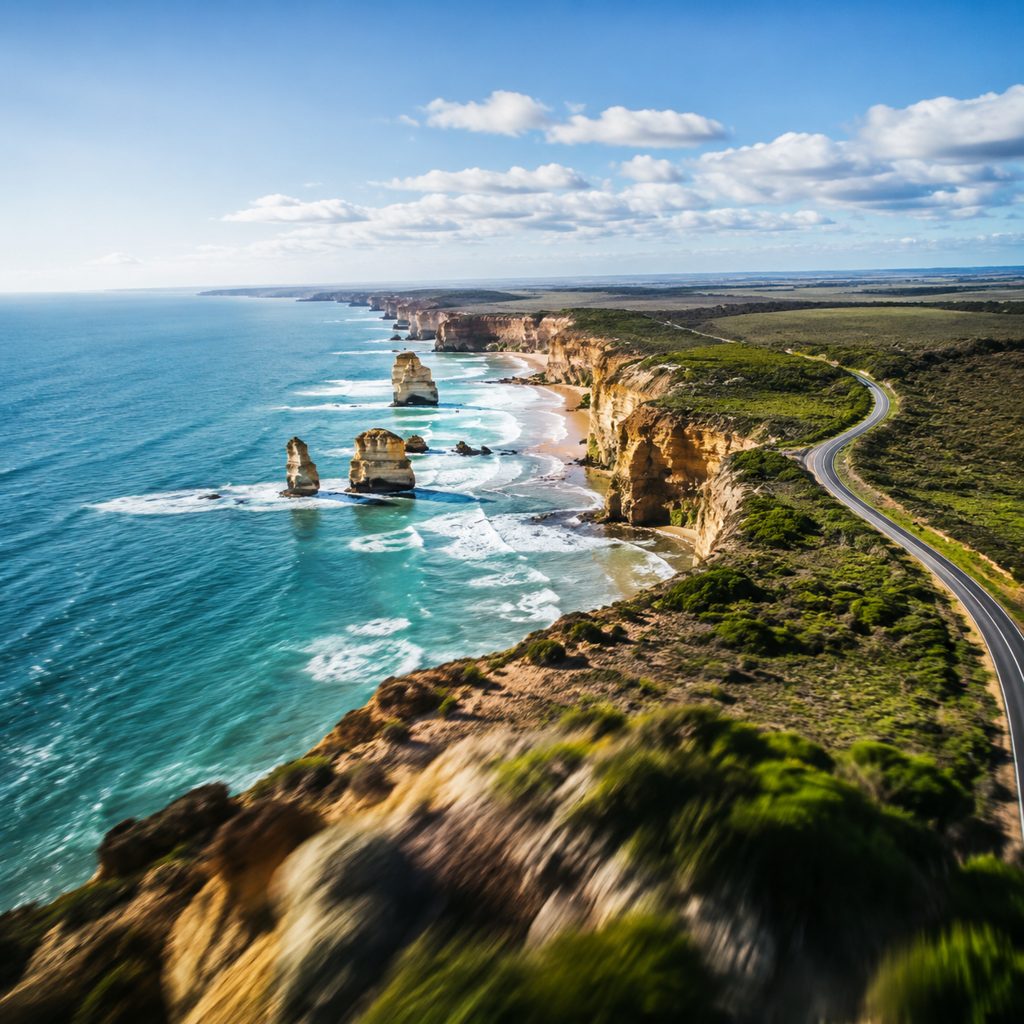
Coastline pass for a travel channel
A wide viewpoint photo of a rocky coastline becomes a helicopter pass that sweeps along the shore from altitude, cliffs and surf laid out below. Travel channels use the 16:9 clip as a cold open before the on-camera host appears.
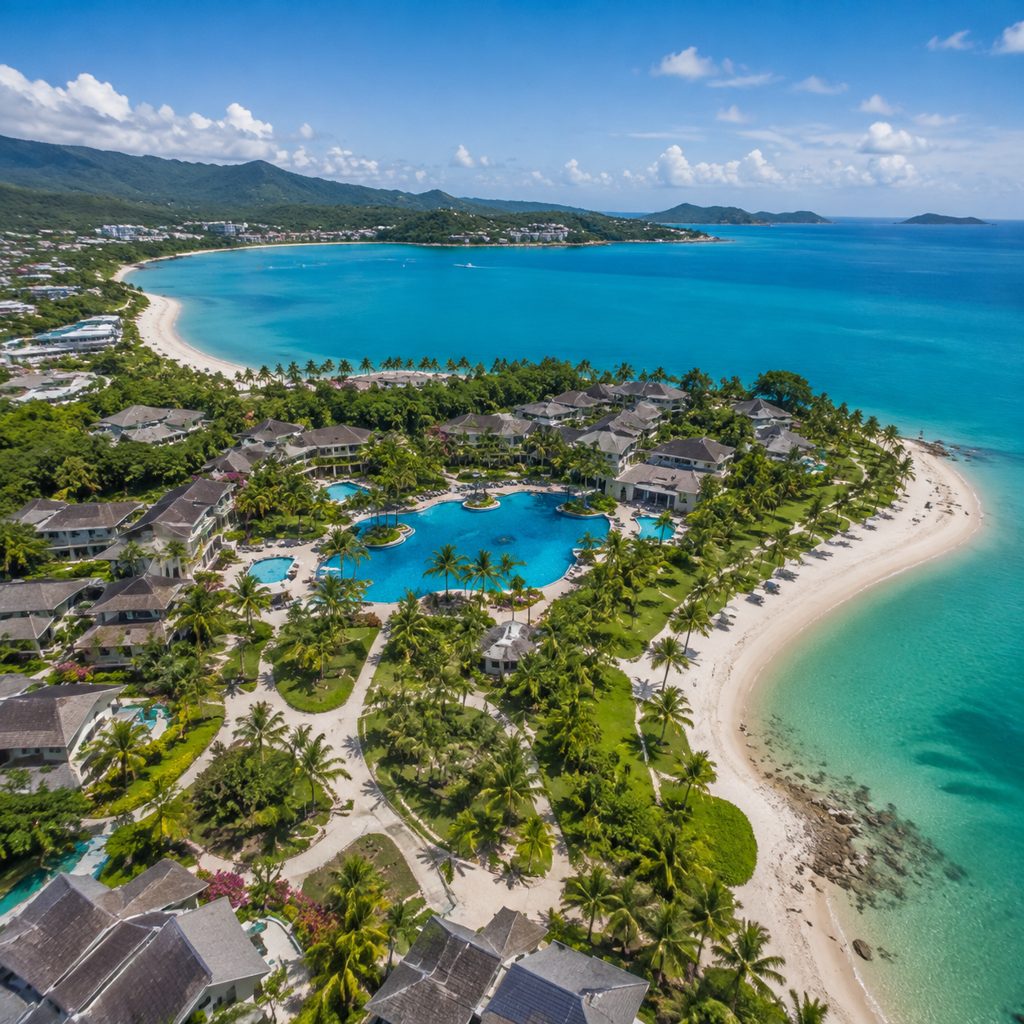
Resort or campus flyover
A high photo of a resort on a bay turns into a high aerial pass that shows the grounds, the beach and the road in. Hospitality and university marketing teams run the clip under a voiceover in a 16:9 brand video.
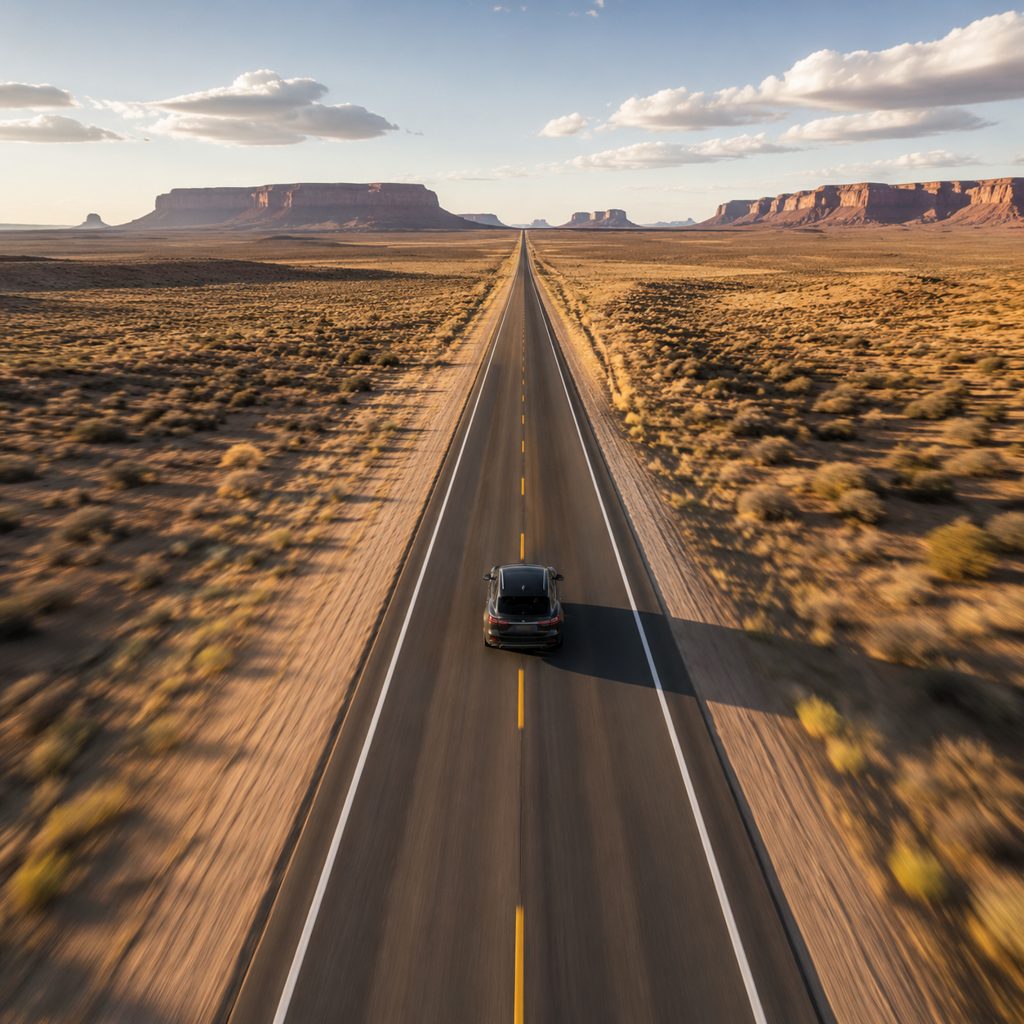
Lone car on a desert highway
A high photo of a single car on a straight desert road becomes a high aerial pass that tracks the car from far above, the highway cutting through empty land. Filmmakers use the clip as a journey beat in a short-film teaser.
FAQ
Common questions
What is an aerial shot?+
An aerial shot is a shot filmed from high above the ground, from a helicopter, plane, drone or crane. The framing establishes geography and scale, showing how a subject sits inside a landscape. The helicopter version is the widest, highest form, sweeping along a long flight path at real altitude.
Helicopter shot vs drone shot: what is the difference?+
The helicopter flies higher, wider and along a longer, more gradual line, so it shows entire coastlines and city grids. A drone shot works closer to the ground and can approach or retreat from a single subject. This template gives the big sweep; the Drone Push In and Drone Pull Back templates handle the close moves.
Does the camera fly toward the subject during the pass?+
No. The template moves along a broad, lateral or arcing route while keeping the subject or landscape framed wide, rather than approaching it. The distance stays large from start to finish. For a move that closes in on a target, use the Drone Push In template instead.
What photo works best for the aerial pass?+
A wide photo taken from real height, a mountain overlook, a tall building, a plane window or a drone, with a horizon and a lot of terrain in frame. Coastlines, cities, valleys and highways all work. Close-ups and street-level photos give the engine no altitude to fly at.
How long is the clip and what formats can I export?+
The template delivers a short clip from a single uploaded frame, in vertical or landscape output set in the workbench. The pass runs continuously and settles on a stable high-altitude frame, so the last second holds as an establishing shot or a title background.
Where is an ai aerial shot most useful?+
Cold opens for travel channels on 16:9 YouTube, brand and destination videos, real-estate and resort pages, and short-film teasers that need a journey beat. On 9:16 TikTok and Reels a high sweep works as a scene-setting shot before cutting to a person on the ground.
Can this replace an aerial video generator or stock helicopter footage?+
For a short establishing move built from your own photo, yes: the template turns one still into a sweeping aerial clip without a helicopter or a stock license. For long flights with specific routes or ground action, a real aerial crew remains the tool.
Other names for Helicopter Shot
High, sweeping aerials get named in a few ways. Helicopter shot is the classic term; aerial pass and flyover are broader; bird's-eye sweep and high-altitude establishing shot describe the framing; searches for ai aerial shot, aerial video generator and helicopter footage from a photo all describe the same tool intent. However it is phrased, the move is a wide pass from altitude, and this template generates it from one still.
Sweep over the landscape from one photo
Free credits on signup. No helicopter, no pilot, no stock license.