
Midjourney Alternatives in 2026: 9 Options, Free and Paid
Nine Midjourney alternatives verified on each vendor's pricing page: which have a free tier, which edit in place, and where Midjourney's plans still win.
 Maya Chen 10 min read
People look for Midjourney alternatives for three reasons: no free tier exists, subscriptions begin at $10 monthly and climb to $120, and the workflow still assumes you are happy living in a web gallery or a Discord server. This guide opens with what Midjourney actually charges and offers on 15 Oct 2026, taken from its own help centre, then compares nine other tools on the one thing each does that Midjourney does not. Prices and free allowances were read on each vendor's pricing page the same day. No quality bake-off was run for this piece, so no tool is called "better"; the aim is to match a tool to a budget and a job.
What Midjourney is and who still needs it
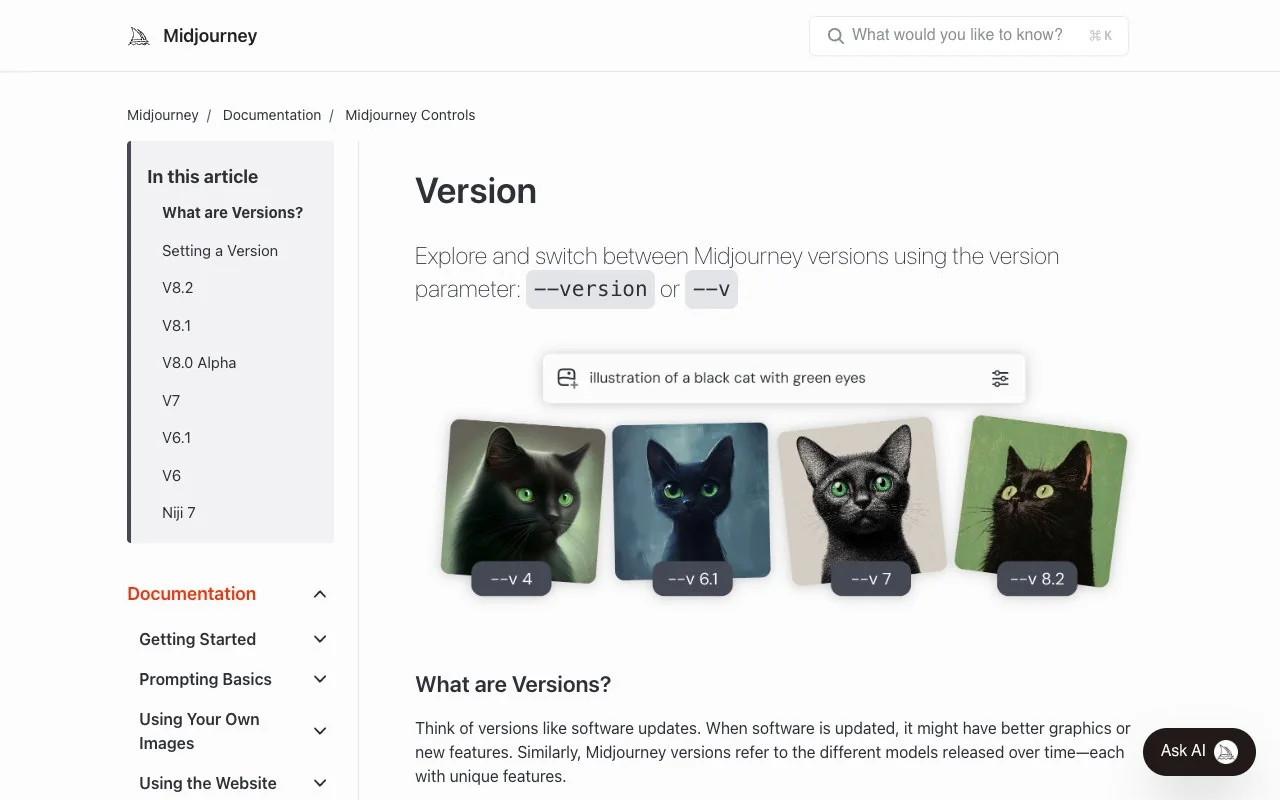
Midjourney is a subscription image generator with its own models, used through the midjourney.com web app or a Discord bot. Its strengths are a distinctive painterly aesthetic, personalisation profiles that learn your taste, moodboards, style references and, since V8.2, an Edit Model which replaced the older Omni Reference and Retexture tools, according to the version notes. V8.1, released in April 2026, is described there as rendering standard jobs four to five times faster than earlier versions and adding HD images at 2K without upscaling.
If your work is concept art, album covers, moody editorial illustration or anything where a strong house style is the point, Midjourney is still hard to replace. If you need legible text, product photos from a reference, a free tier for occasional use, or a tool a client can open without a Discord account, the alternatives below each solve one of those.
Midjourney pricing in 2026 and the free trial question
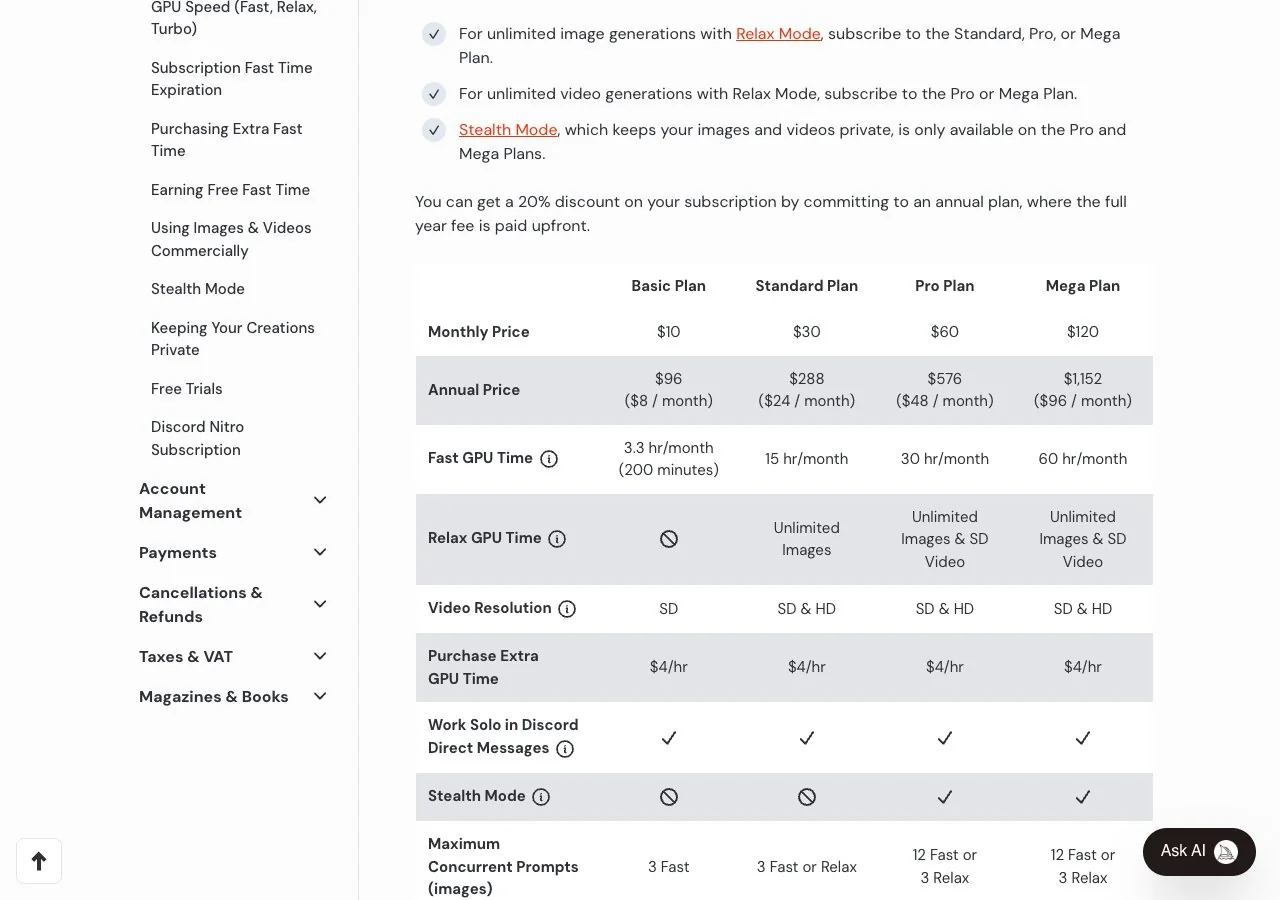
Midjourney pricing is laid out in a single plan comparison: Basic $10 a month (200 fast GPU minutes), Standard $30 (15 hours plus Relax mode for images), Pro $60 (30 hours, Relax for images and SD video, Stealth mode) and Mega $120 (60 hours). Annual prepayment takes 20% off, so Basic becomes $96 a year. Extra fast time is $4 an hour on every plan, and you can earn some free fast time by rating images.
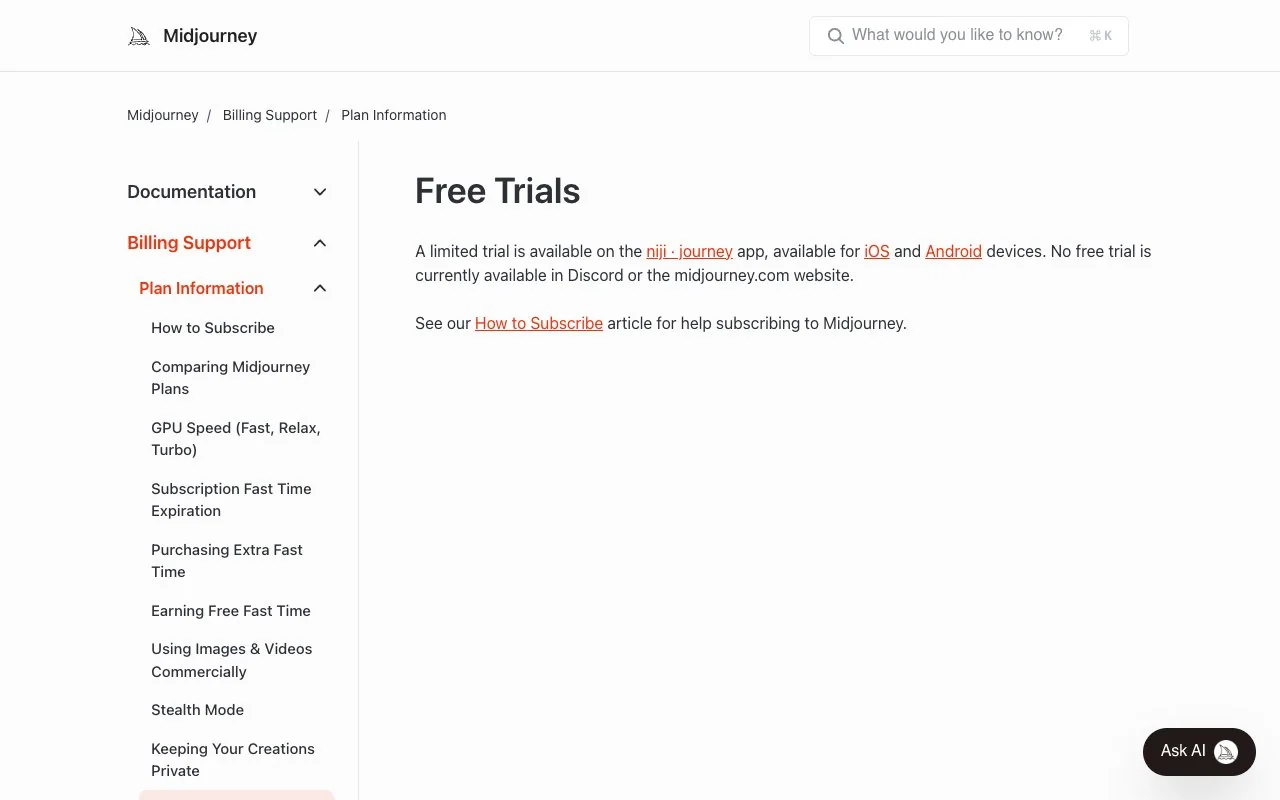
Is there a Midjourney free trial? Not through the website, and not through Discord. The help centre's free trials article says the only trial on offer lives in the niji journey app for iOS and Android, the anime-focused sibling product. On rights, Midjourney states that you own the images and videos you create even after a cancellation, with one exception: a business with gross revenue above $1,000,000 USD a year must hold Pro or Mega to use them commercially.
If a site advertises "Midjourney free" or a free Midjourney login, it is not Midjourney. The official product has no free web tier, and third-party sites using the name are selling something else.
Midjourney alternatives compared
The table lists each of the Midjourney alternatives by what it offers that Midjourney lacks, the cheapest paid route we could read today, the free route, and the area where Midjourney keeps the edge.
| Alternative | What it has that Midjourney lacks | Entry price (15 Oct 2026) | Free route | Where Midjourney still wins |
|---|---|---|---|---|
| LazyKiwi | Six switchable image models, 4K, photo tools | Paid plans on the pricing page; price shown per run | Sign-up credits | One signature style, personalisation |
| Ideogram | Reliable text in images, precise multi-turn edits | Plus $20 monthly, $15 on the yearly plan | Slow credits weekly, images public | Painterly range |
| Leonardo.Ai | Daily token allowance, train your own models | Essential $12 monthly, ex. tax | 150 fast tokens per day, creations public | Consistency of a single look |
| Gemini (Nano Banana) | Plain-language photo edits inside an assistant | Google AI Plus $4.99 monthly | A day's allowance of Nano Banana 2 renders, 1K downloads | Art direction, stylisation |
| ChatGPT Images | Templates, sketch to image, edits in the chat | Go $8 monthly | Image creation described as limited on Free | Aesthetic depth |
| Recraft | Vector output, brand palettes, ownership on paid | Basic $10 monthly, billed yearly | 3 generations per style per day, owned by Recraft | Illustrative richness |
| Magnific (formerly Freepik) | Stock library plus 30+ models, uncapped tiers | Premium $14.50 monthly on yearly billing, $20 month to month | No free plan card on the plan page | Focus and simplicity |
| Higgsfield | Nano Banana Pro and video models on one credit | Starter $19 monthly, billed annually | No free plan card on the plan page | Stylised stills |
| Adobe Firefly | Licensing statement, Photoshop integration | Standard US$9.99 monthly | Daily free generations, refreshed each day | Stylised art |
LazyKiwi vs Midjourney: several models, free credits, no Discord
We publish this blog, so here is LazyKiwi described as plainly as the others. The image generator keeps six models under one prompt box: Z-Image, Qwen Image, Wan 2.7 Image Pro, Seedream 5.0, Nano Banana and GPT Image 2, with output at 1K, 2K or 4K across five ratios. The structural difference from Midjourney is that you choose the model per job instead of living with one aesthetic, and a reference photo sits in the same tab as the prompt for image to image work.
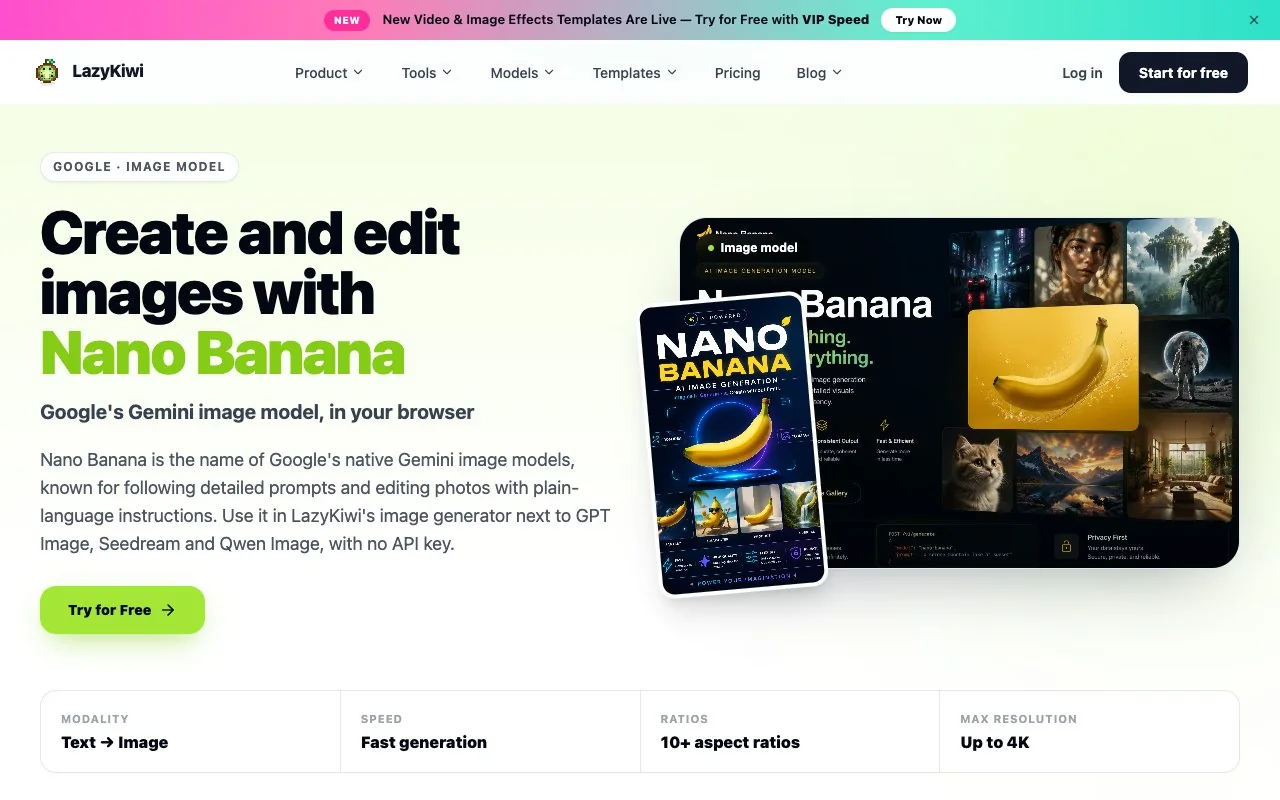
Sign-up comes with free credits, and before a run starts the Generate button displays what it will cost. There are 15+ image templates and 23 photo tools, including the image extender for widening a frame, which is the kind of job Midjourney handles with Zoom Out. What you give up: Midjourney's personalisation profiles, its moodboard-driven style system, and the coherence that comes from one model trained for one look.
Ideogram vs Midjourney: when the words matter
Midjourney can render text, but Ideogram made it the core promise, and its 4.5 model, released in October 2026, adds precise editing that keeps the rest of the image stable across repeated changes. On the pricing page, Free accounts receive slow credits on a weekly basis if they sign in through a Google, Apple or Microsoft account; 2,400 of the priority credits come with Plus ($20 monthly, $15 on the yearly plan), 7,500 with Pro ($60 or $42) and 3,600 per seat with Team ($30 or $20 per user). Keeping generations private requires Plus; on Free they appear in the public feed.
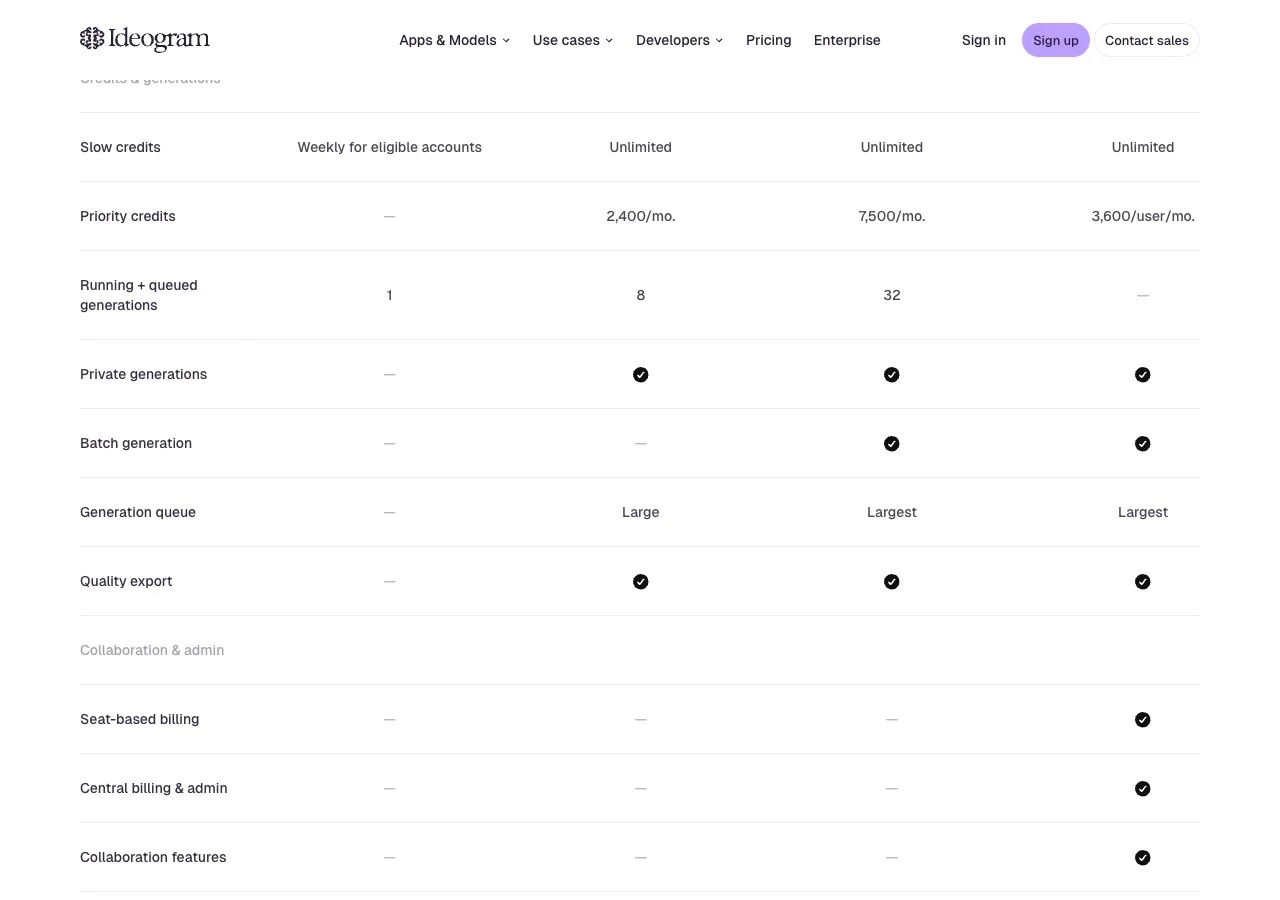
Compared with Midjourney Basic at $10 monthly, Ideogram Plus costs more but includes a usable free tier to test on, and its editing works from a mask and references rather than a Discord command. The model's claims and API prices are covered in our Ideogram 4.5 guide.
Leonardo.Ai vs Midjourney: a free daily allowance and custom models
Leonardo is the closest thing to a free Midjourney alternative for hobbyists, because the pricing page grants Free accounts a 150-token daily allowance of fast generations; the trade-off is that free creations are public and quality settings stay on Basic. Essential is $12 monthly ex. tax with 8,500 fast tokens, private creations, Enhanced quality and 10 personal AI models; the $30 Premium and $60 Ultimate tiers add more tokens, more models and relaxed-pace generation without a cap on a set of in-house models such as Lucid Origin and Phoenix 1.0. Yearly billing is up to 20% cheaper.
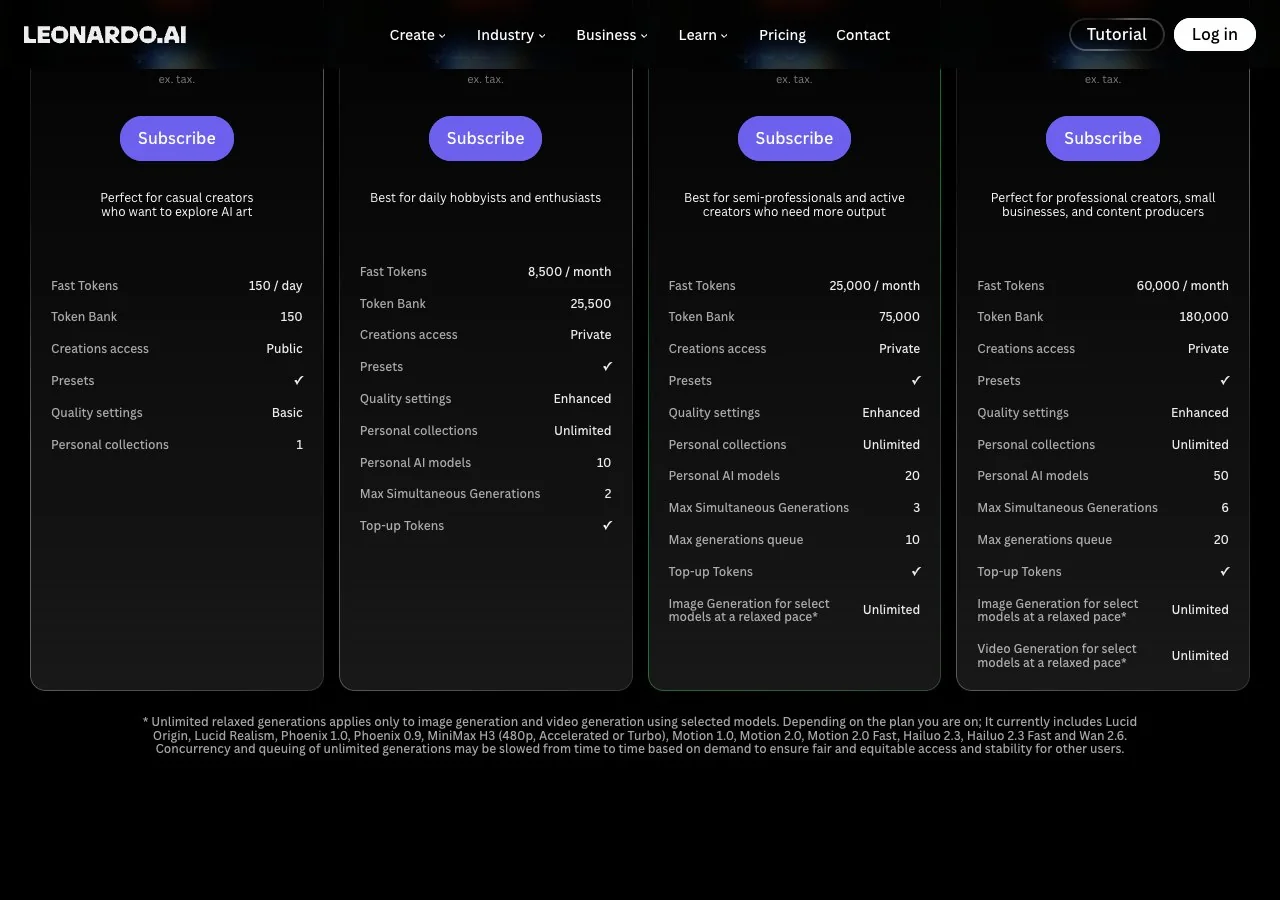
Against Midjourney, the extra is training a model on your own characters or products. The gap is consistency: Leonardo's catalogue of models and presets is wide, which is good for variety and harder for a single signature look.
Nano Banana in Gemini vs Midjourney: editing by instruction
Google's Gemini app is the simplest free Midjourney alternative if your task is editing a photo you already have. Its help article lists Nano Banana 2 Lite, Nano Banana 2 and Nano Banana Pro; free accounts get a day's allowance of Nano Banana 2 renders with 1K downloads, and a paid Google AI plan adds 2K downloads and Pro. Google AI Plus costs $4.99 monthly and AI Pro $19.99 on the plans page.
Where Midjourney wins is art direction: Nano Banana is built around instructions such as "change the jacket to denim" and keeps the rest intact, not around style exploration. To use Nano Banana at higher output sizes and without paying Google, it is one of the models on LazyKiwi.
ChatGPT Images vs Midjourney: the assistant route
ChatGPT generates and edits images inside the conversation, and OpenAI's help centre confirms it is available on every tier, with templates for posters and logos and a mobile sketch tool. On the pricing page, the Free tier's image creation is described as limited; Go ($8 monthly) raises it, Plus ($20) adds what OpenAI calls more complex and accurate generation, and Pro begins at $100 for faster output.
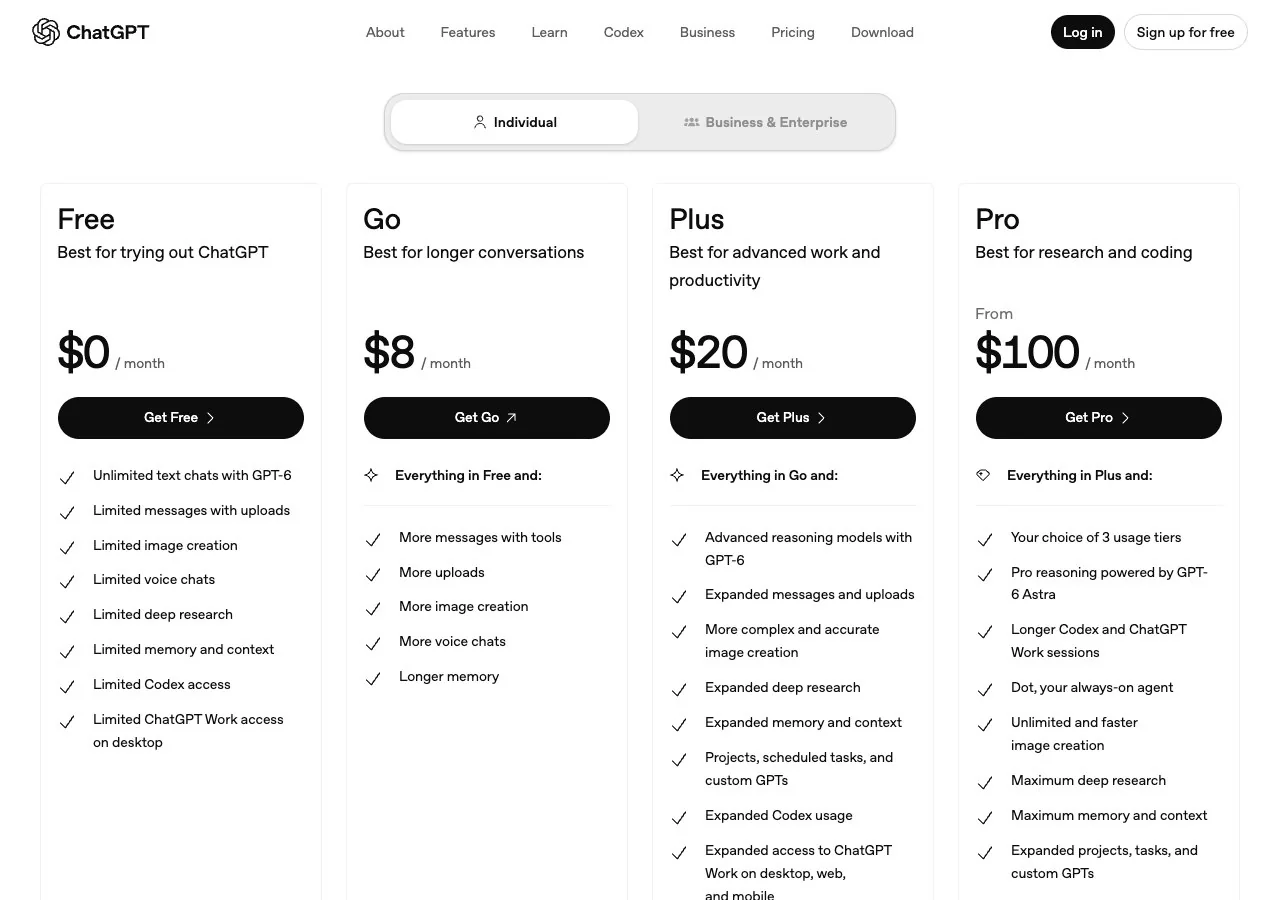
Midjourney vs ChatGPT comes down to intent. If you need an image while writing an email or a deck, the assistant wins on convenience and price. If you want to push a visual idea through fifty variations with style weights, the dedicated tool wins.
Recraft vs Midjourney: vectors and brand work
Recraft is the designer's alternative: it outputs vectors as well as raster images, supports custom colour palettes, and its pricing page is explicit about ownership. Free gives limited credits with three generations per style per day, and images made on Free are owned by Recraft, shown in the community gallery and not licensed for commercial use. Basic is $10 monthly billed annually ($120) with 1,000 credits, Pro $16 billed annually ($192) with 2,000, and Teams $18 per seat; paid plans grant full ownership and keep images private, even after you cancel.
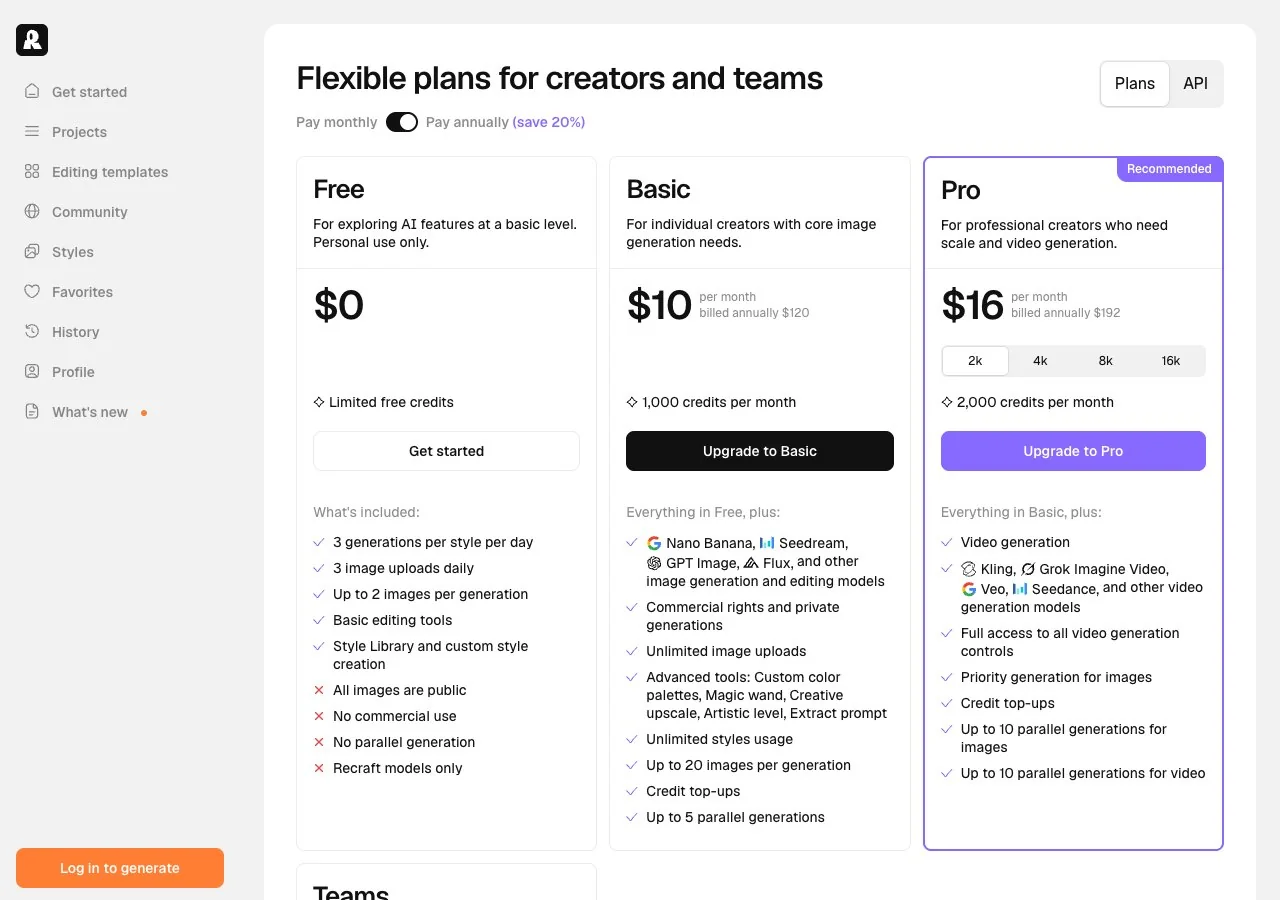
Midjourney does not do vectors at all, so for logos, icons and brand systems this is a different category rather than a rival. For moody illustration, Midjourney's range is wider.
Magnific (formerly Freepik) vs Midjourney: a stock library with generators attached
Freepik has rebranded as Magnific, and its pricing page bundles the stock library with more than 30 generation models, Nano Banana Pro among them. Premium is $20 month to month or $14.50 on yearly billing, with 240,000 credits a year that do not reset monthly; Premium+ is $45 or $33.75 yearly and removes the cap on Draft and Final generations in High quality at 2K and 4K, with Max quality still drawing credits; Pro Starter is $110 or $82.50 with 1.5 million credits.
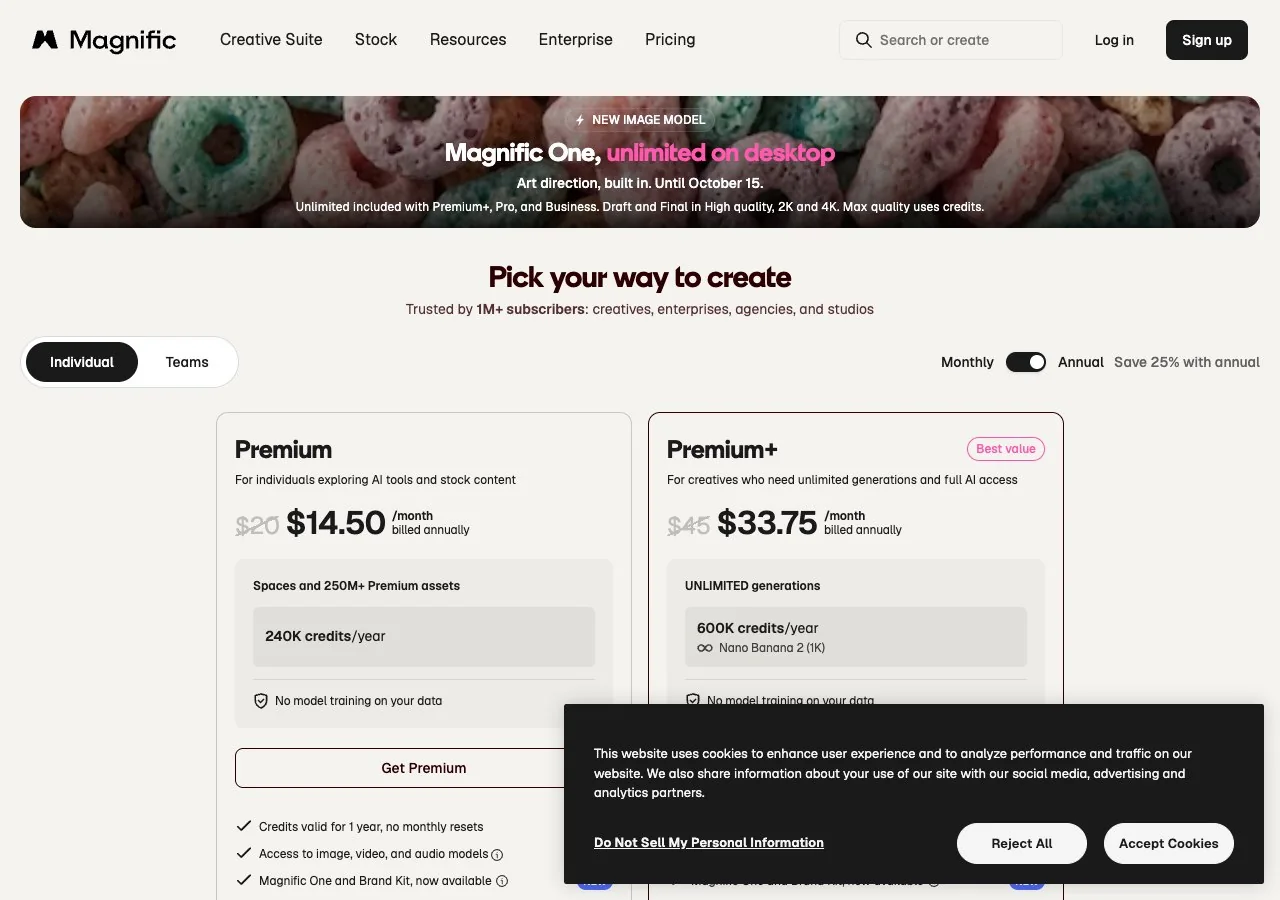
This suits teams that already pay for stock assets and want generation in the same account. The page we read showed no free plan card. Midjourney stays ahead on the depth of a single model; Magnific is a catalogue.
Higgsfield vs Midjourney: image and video on one credit
Higgsfield sells a mixed credit that covers image models such as Seedream plus Nano Banana Pro alongside video models. Its pricing page shows Starter at $19 monthly billed annually with 270 credits (the page equates that to 135 Nano Banana Pro generations), Plus at $59 or $47 billed annually with 1,200 credits, and Ultra at $129 or $99 with 3,000 credits, plus rotating seven-day promotions on specific models. The Starter card notes there is no difference between annual and monthly pricing on that tier.
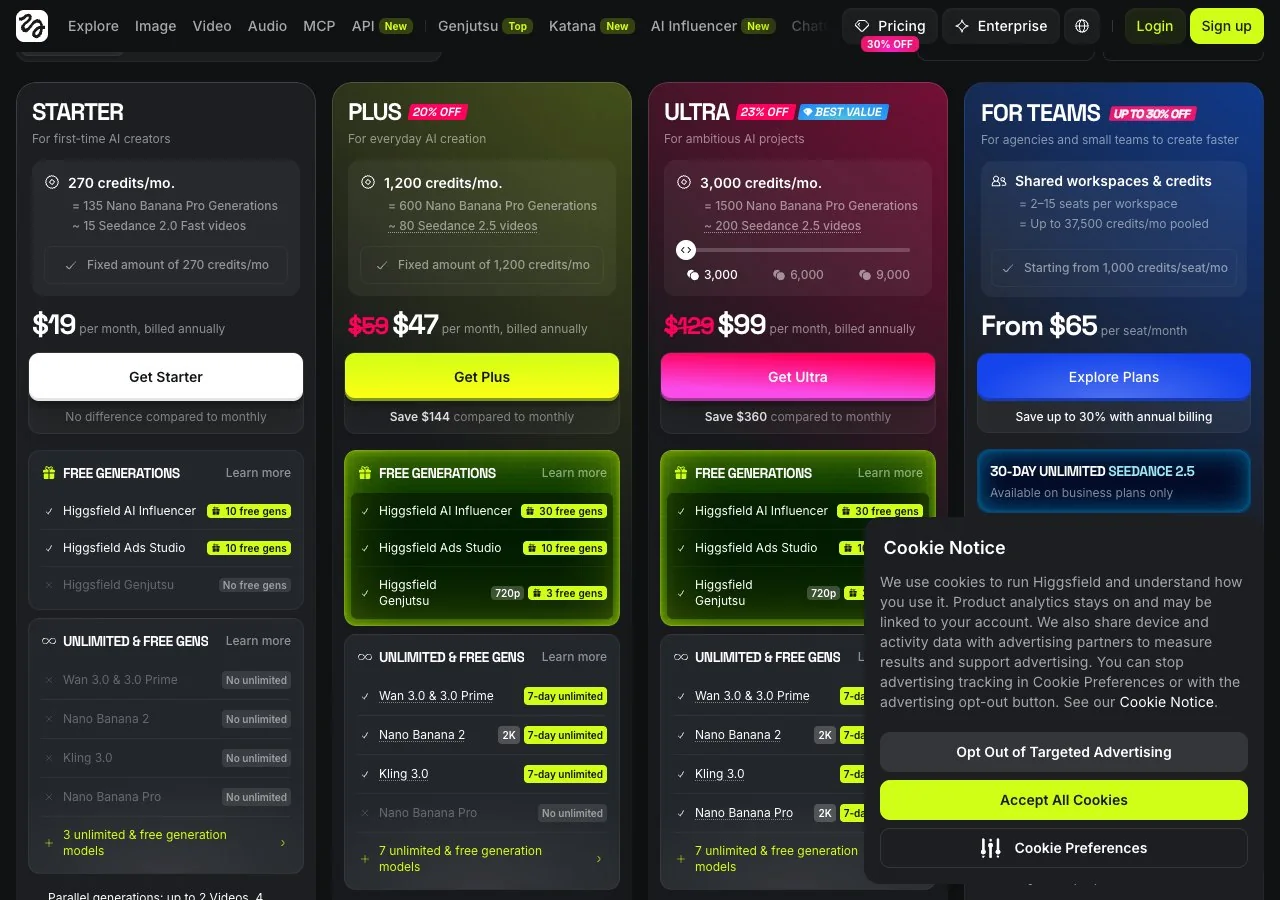
If you want stills and short clips from the same balance, it is one of the few apps like Midjourney that bundles both. We did not find a free plan card on the page we read. Midjourney has video too, but only on paid plans and in its own style.
Adobe Firefly vs Midjourney: the licensing argument
Firefly's pitch is provenance: Adobe's own models are trained on licensed material and public-domain works, and its plans page says their output can be used commercially. Standard is priced at US$9.99 monthly for a 2,000-credit monthly allowance, and Pro doubles that to 4,000 for US$19.99; the higher tiers list regular prices of US$49.99 and US$199.99, alongside a 30% promotion running until 21 October 2026. You can also use Firefly without a plan through daily free generations, and the app now includes partner models such as FLUX and Nano Banana.
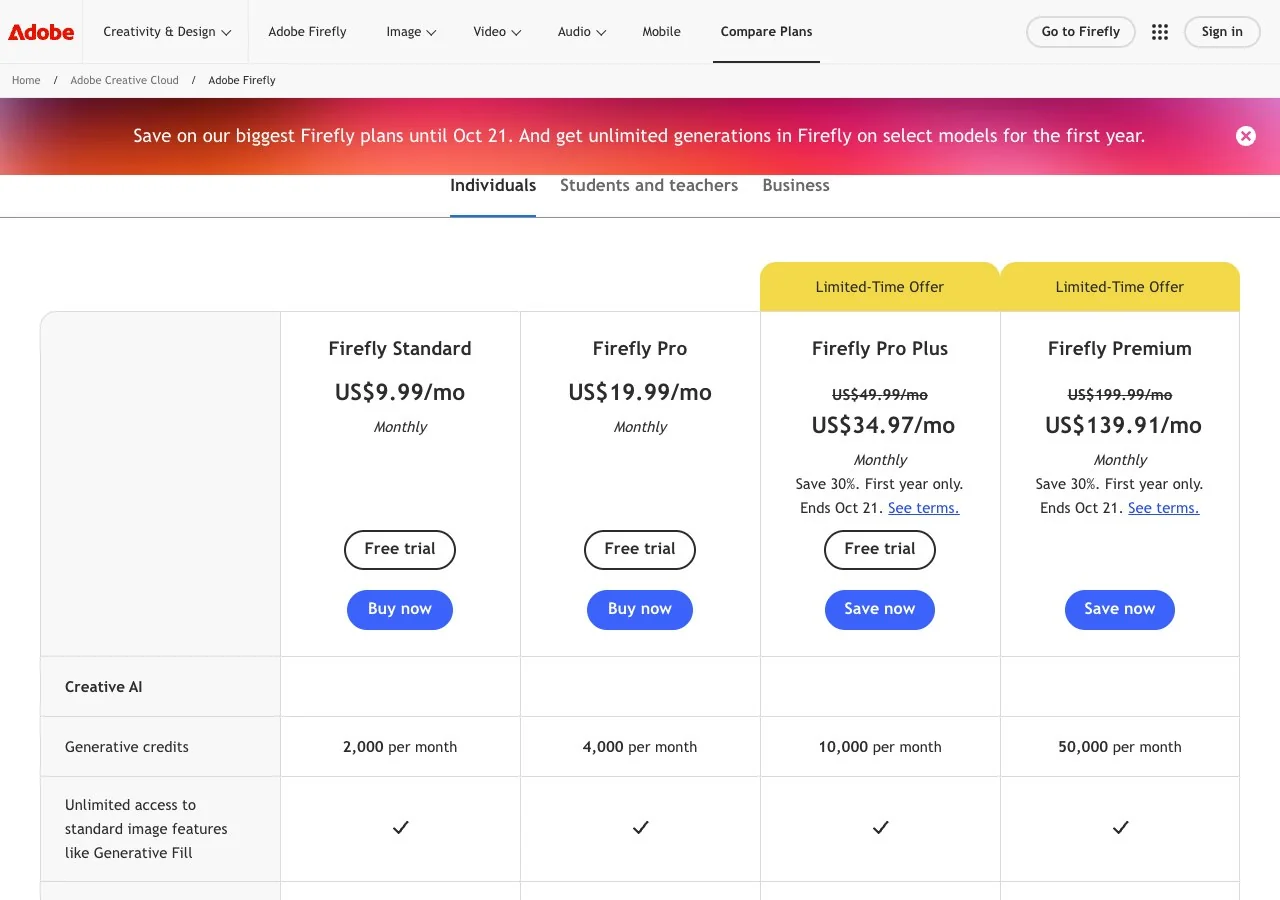
For agencies that need a licensing statement to show clients, Firefly answers a question Midjourney does not address. For raw stylistic range, most people still pick Midjourney.
Which free Midjourney alternatives should you try first?
If you need a Midjourney alternative free of charge, pick by what "free" has to cover:
- Daily allowance for practice: Leonardo (150 tokens each day) or Gemini (the daily Nano Banana 2 limit). Both are generous for learning, but Leonardo's free creations are public.
- Free credits to test a real brief: LazyKiwi, where sign-up credits work on every model and the price of each run appears before you commit.
- Free editing of an existing photo: Gemini's Nano Banana 2 or ChatGPT Free, both inside an assistant you may already use.
- Free with a commercial licence: none of the free tiers above grant one cleanly; Firefly's free daily generations come closest, and local open models are the other route.
The open-weight path is worth a line: FLUX.2 klein models from Black Forest Labs and Stable Diffusion (3.5) via ComfyUI run locally on your GPU with no subscription. They need setup time, and we cover them alongside the hosted tools in our best AI image generators roundup.
When LazyKiwi is the better pick, and when it is not
Choose LazyKiwi over Midjourney when the job changes from day to day: a product shot from a phone photo on Monday, a poster with text on Tuesday, an anime version of a portrait on Wednesday. Switching models beats fighting one model's taste, and the AI portrait template and its siblings bundle the prompt for common jobs. Choose Midjourney when you want a coherent body of work in one style, you enjoy the exploration loop, and $10 a month is fine.
Two honest gaps on our side: there is no personalisation that learns your taste over months, and there is no community feed to browse for prompts. If those are the reasons you love Midjourney, nothing on this list replaces them yet.
Key takeaways
- Midjourney has four plans from $10 to $120 a month, no trial via web or Discord, and V8.2 as the default model since July 2026.
- Leonardo (150 tokens per day) and Gemini (its daily Nano Banana 2 limit) are the roomiest free routes; both have strings attached.
- Ideogram is the pick for lettering inside images, Recraft for vectors, Firefly for a licensing statement, Higgsfield for image plus video credits.
- Magnific (formerly Freepik) and Higgsfield showed no free plan card on 15 Oct 2026.
- LazyKiwi swaps Midjourney's single style for six switchable models, 4K output and sign-up credits.
Image & Design Editor
Maya Chen
Maya Chen edits LazyKiwi's image and design coverage. She works through every template and tool herself before writing about it, and keeps the receipts: the settings used, the credits spent and the runs that did not work.
FAQ
Common questions
Are there free Midjourney alternatives?
Yes. Leonardo.Ai gives 150 fast tokens per day on its Free plan, Gemini has a daily Nano Banana 2 limit, Adobe Firefly offers daily free generations, and LazyKiwi hands new accounts sign-up credits. Check what each free tier does to your images: Leonardo and Ideogram publish them, and Recraft keeps ownership of free output.
Does Midjourney have a free trial in 2026?
No, not through the website or Discord. Midjourney's help centre states that the only limited trial sits within the niji journey phone app. The cheapest way to try the main product is the Basic plan at $10 a month, or $96 with annual prepayment.
What are the closest Midjourney alternatives for artists?
Leonardo.Ai and Krea come closest in spirit, with style references, moodboards and model training. Leonardo adds a free daily allowance and custom models; Krea adds a realtime canvas and Krea's own Krea 2 model. Neither reproduces Midjourney's personalisation profiles, which learn your taste over time.
Which Midjourney alternative is best for in-image text?
Ideogram. Its models were built around legible lettering, and the 4.5 release adds precise edits that leave the rest of the image unchanged. GPT Image 2, available in ChatGPT and on LazyKiwi, is the other option with strong text rendering; both beat Midjourney's text in our reading of the vendors' own claims.
Can I use Midjourney images commercially?
According to Midjourney's help centre you own the images and videos you create, even after cancelling, and can use them commercially. The exception is a company with gross revenue above $1,000,000 USD a year, which must be on Pro or Mega. Upscaling another user's image does not give you rights to it.
Test a Midjourney-style brief on six models
Paste your usual prompt into the LazyKiwi workbench and run it through Seedream 5.0, Nano Banana and GPT Image 2 without a Discord account. Sign-up credits included, and every run shows its credit price up front.
Related reading
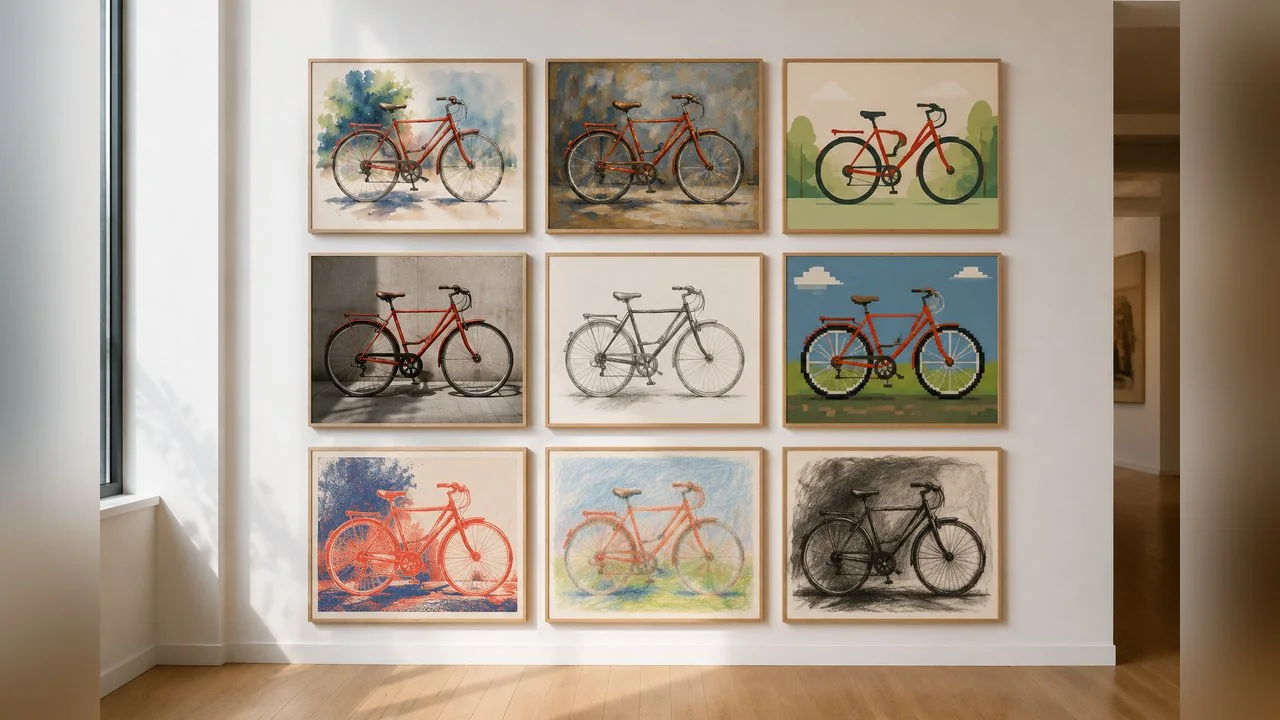
Best AI Image Generators in 2026: 10 Tools Compared
The best AI image generators in 2026, checked on their own pricing pages today: free tiers, output size, editing and commercial terms for ten tools.
12 min read
Ideogram 4.5: What's New, Pricing and Alternatives
Ideogram 4.5 is an edit model built to stop drift across repeated changes. What it does, what it costs per image, whether it is open, and what else to try.
8 min read
9 Canva Alternatives for 2026: Free and Paid Tools Compared
Nine Canva alternatives compared on pricing checked today, free tiers and AI features, plus a one-brief test you can repeat in Figma, Express and LazyKiwi.
10 min read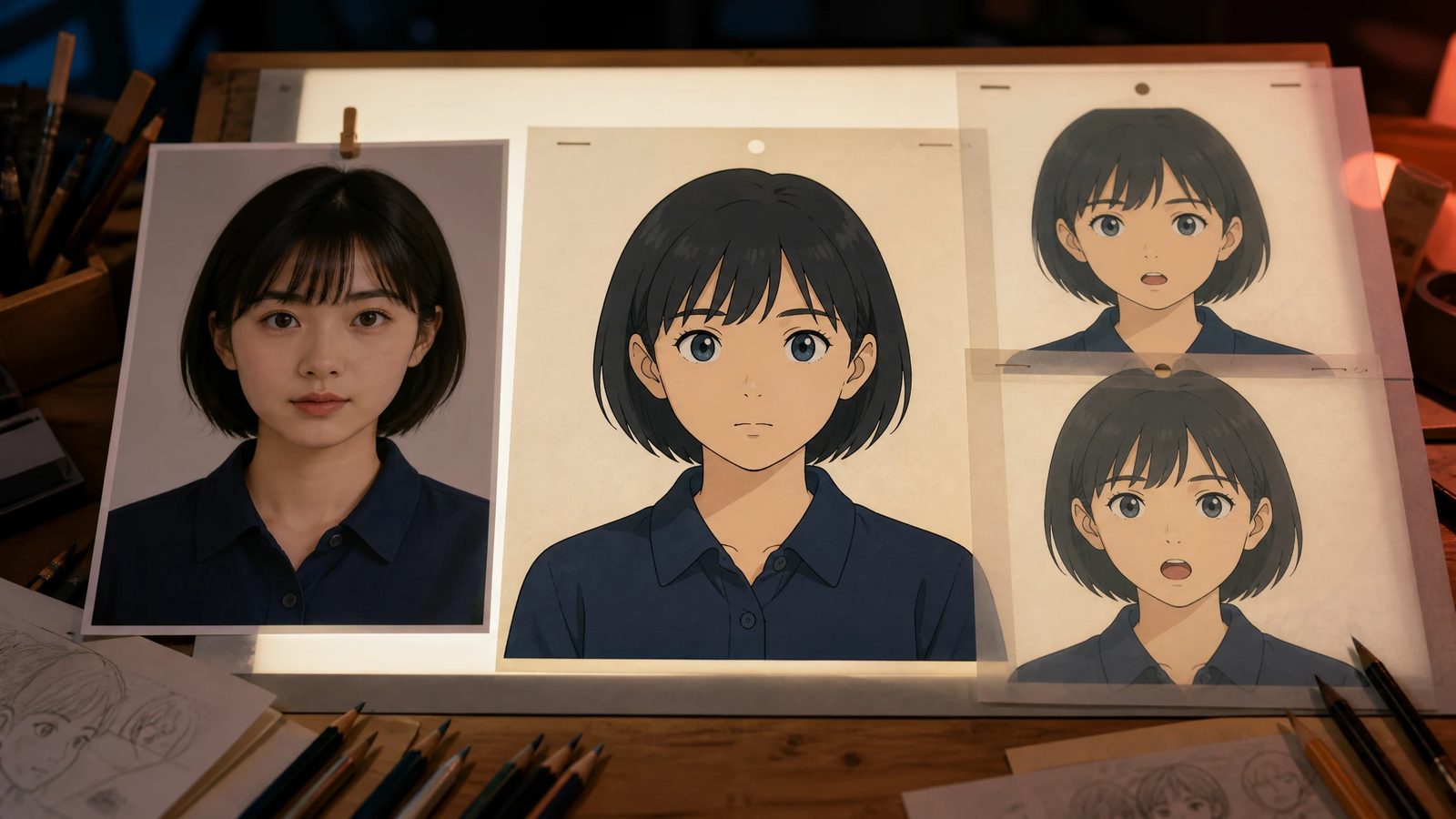
Photo to Anime AI: Turn a Portrait Into Anime Art and Video
A photo to anime AI pipeline that keeps your likeness: fusion filter or anime avatar, upscale, then a breathing anime video. Free routes checked today.
8 min read