
AI Slop: What the Term Means and Why It Stuck
Where AI slop came from, what separates it from ordinary generated work, how platforms are responding, and the working checklist that keeps you out of it.
 Noah Berger 9 min read
AI slop is generated content that exists to fill a slot rather than to be read, watched or used: high volume, low effort, no author behind any single decision. The word stuck because nothing else described the specific failure. Not fake, not spam, not necessarily wrong, just empty. This piece traces where the term came from, sets out four tests that separate slop from generated work worth publishing, quotes what platforms currently do about it, and ends with the discipline that keeps a working process on the right side of the line.
What does AI slop mean?
The encyclopaedia definition is a good starting point: "digital content made with generative artificial intelligence that is perceived as lacking in effort, quality, or meaning, and usually produced in high volume as clickbait" (Wikipedia (2026), read 7 September 2026). Two halves matter there. Perceived, because this is a judgement made by a reader. And high volume, because a single mediocre image is not slop, it is just mediocre.

What it is not: a synonym for AI-assisted work. A researched article drafted with a model and checked by a person is not slop. A photograph retouched by a tool is not slop. The distinguishing feature is absence of judgement, not presence of a machine.
The searches that arrive on pages like this one show the confusion directly. People type what AI slop meaning into a search box, half a question and half a demand, because the word spread faster than any definition of it did.
Where did the term come from?
It came up from forums rather than down from institutions. The usage traces to reactions to the 2022 wave of image generators, circulating as in-group slang on message boards and in comment sections before anyone wrote it down formally. The British programmer Simon Willison is credited with pushing it into wider circulation on his blog in May 2024, while noting the word was already in use before that.
Recognition followed the usage. Slop was chosen as the 2025 Word of the Year by both Merriam-Webster and the American Dialect Society, which is the point at which a piece of forum vocabulary becomes a term the rest of the language has to deal with.
It spread faster than the alternatives because it is a sensory word. Filler, clickbait and low-quality content are all descriptions; slop is a texture. You know what it feels like to be served it, which is why the term travelled through several languages within months.
What separates slop from useful AI content?
Four questions, applied to the piece rather than to the tooling. Anything that fails two of them is slop regardless of how it was produced.
| Test | Slop | Work worth publishing |
|---|---|---|
| Does it answer something? | Restates the question at length | Gets to the answer in the first paragraph |
| Is it verifiable? | Confident numbers with no source | Every figure carries a source and a date |
| Was it reviewed? | Published as generated | A person changed something before it went out |
| Who is it for? | The feed, the index, the quota | A reader with a problem |
The fourth test does most of the work. Content built for a ranking system rather than a person degrades the moment the ranking system changes, and it reads as hollow long before that happens.

Why is there so much of it?
Because the marginal cost of one more piece fell to roughly nothing while the payout structure stayed the same. When publishing a hundred items costs what publishing one used to, volume becomes a rational strategy for anyone paid per impression.
The incentive is documented rather than theoretical: high-volume generated content earns revenue for its creators on the large social platforms, and the practice is attractive enough that creators in lower-cost economies target higher-paying advertising markets with it (Wikipedia (2026), read 7 September 2026). No conspiracy is required. The arithmetic does it.

Regulators have started with the commercial edge of the same behaviour. The Federal Trade Commission announced a final rule on 14 August 2024 banning fake reviews and testimonials, and it names the generated case explicitly, covering reviews that "misrepresent that they are by someone who does not exist, such as AI-generated fake reviews" (FTC (2024), read 7 September 2026).
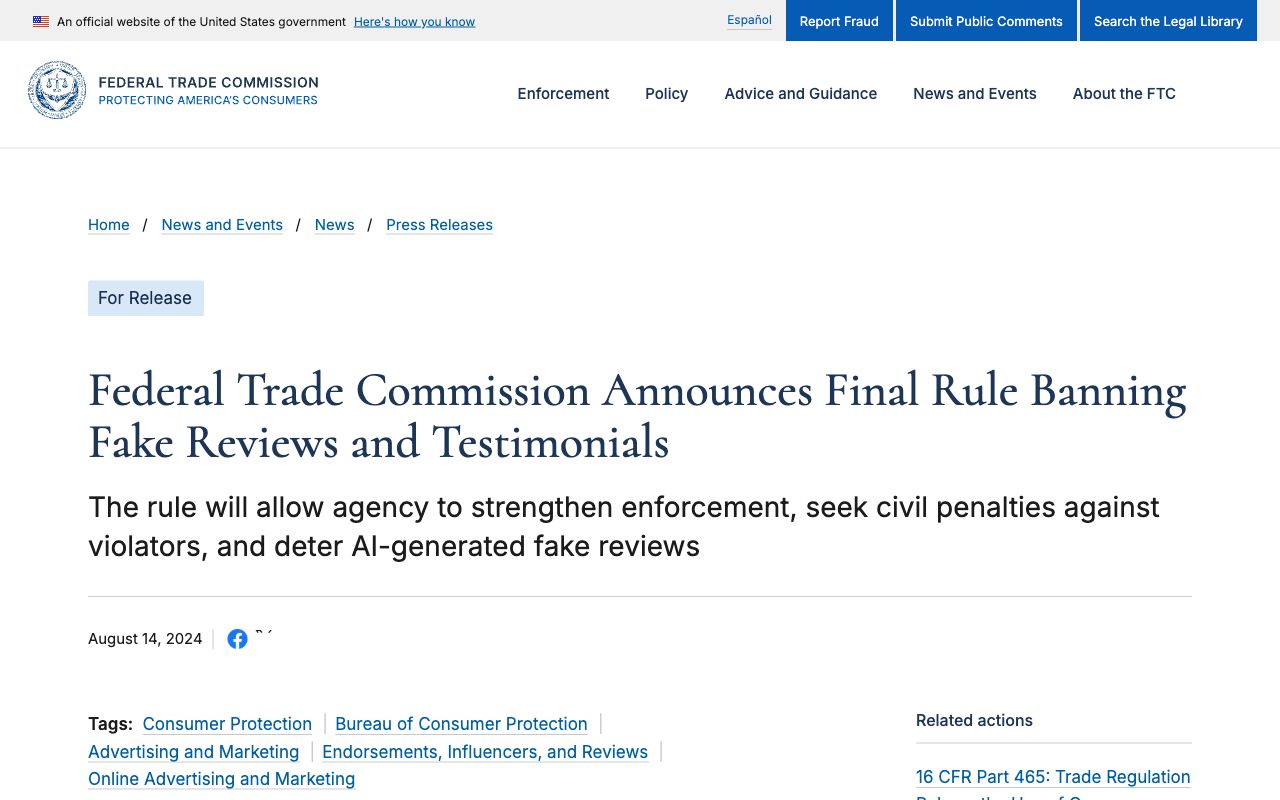
Note what that rule does and does not reach. Inventing a reviewer is illegal; publishing thirty forgettable listicles is not. Most slop is legal, which is why it is an editorial problem before it is a regulatory one.
How are platforms responding to AI slop?
With labels first, ranking second and payouts third. Meta describes an approach built on context rather than removal, saying that "providing transparency and additional context is now the better way to address this content", and it renamed its marker: "we're updating the 'Made with AI' label to 'AI info' across our apps, which people can click for more information" (Meta (2024), post dated 5 April 2024 with updates through 23 October 2025, read 7 September 2026).
Labels get applied in two ways there: when a platform detects industry-standard indicators inside a file, and when the uploader declares it. That second path is the one creators control, and it is the one that fails silently when people skip it.
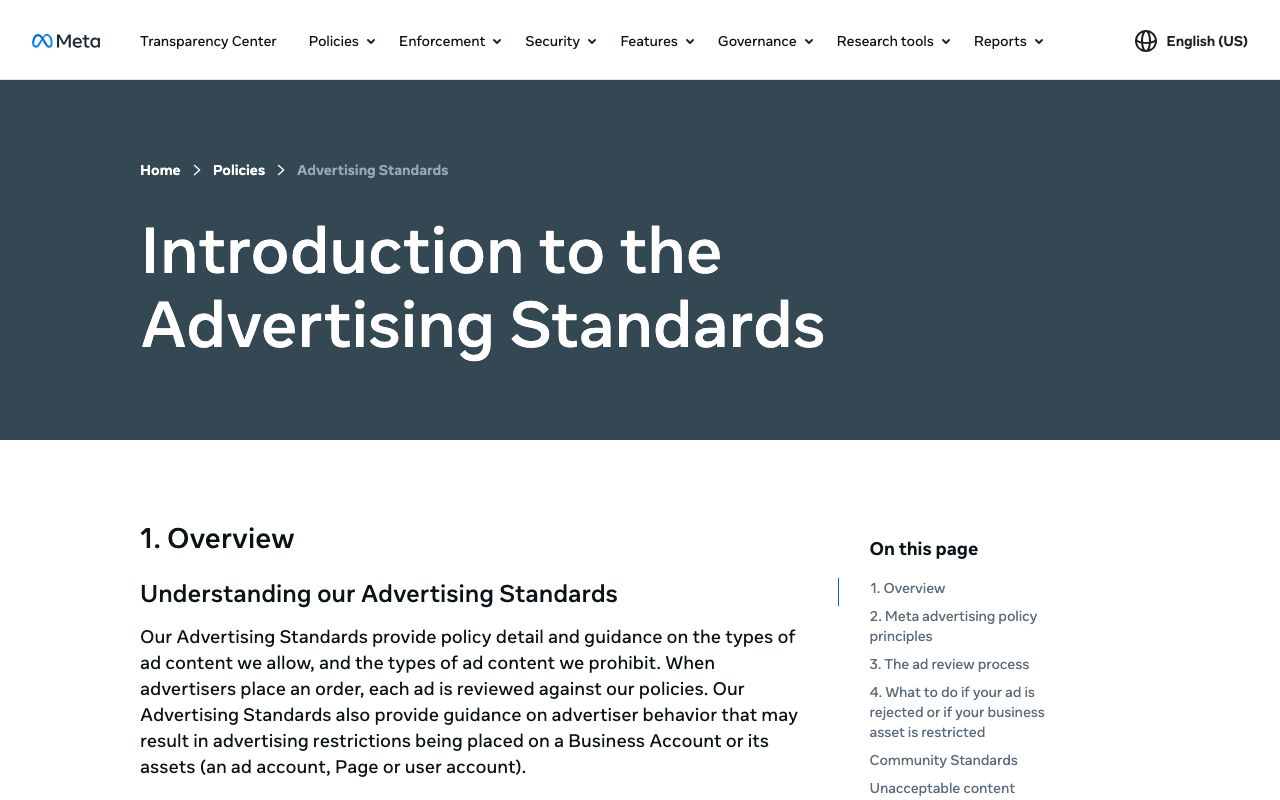
YouTube requires disclosure for realistic generated material rather than for generated material as a category (YouTube Help (2026), read 7 September 2026). Monetisation is handled in separate partner terms on every platform, and those are the documents that decide whether a volume strategy pays. Read them before building on one, because they change more often than the labelling rules do.
How do you tell if something is slop?
This is editorial judgement rather than forensics, and it is quicker than detection. Six signals, none of which is conclusive alone.
- The piece never commits to an answer, and every paragraph hedges the previous one.
- Numbers appear without sources, or with sources that do not contain them.
- The images illustrate nothing specific: a generic desk, a generic team, a generic city.
- Nothing in it could only have been written by someone who did the thing.
- The publication schedule is impossibly regular for the amount of research claimed.
- There is no author, or an author with a portrait and no history.
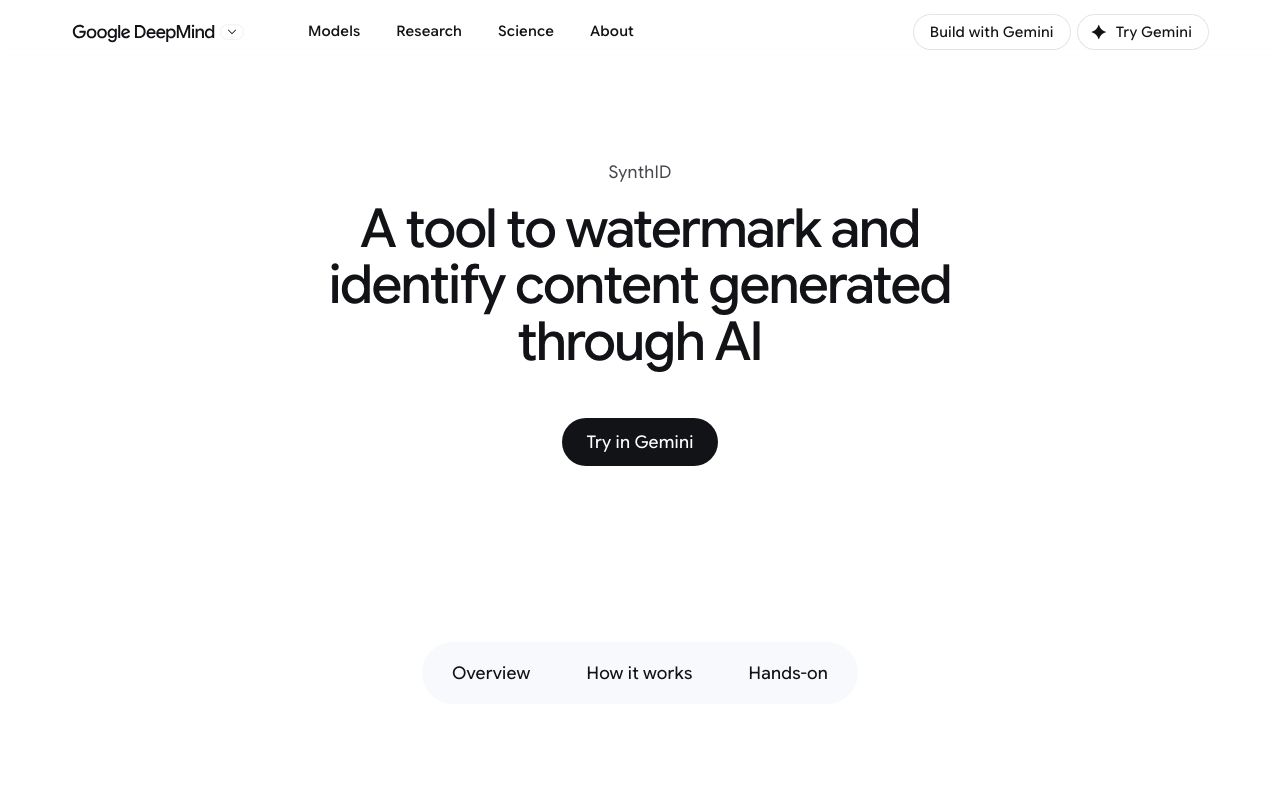
Technical detection is a separate discipline with separate tools, and our guide to spotting generated video covers those checks properly; the provenance route is the more reliable of the two and it is covered below.
How do you use AI tools without producing slop?
Four rules, and they cost time rather than money. That is the whole trade: slop is what you get when the process has no expensive step left in it.
- 1
One verified fact per claim
If a number is in the piece, someone opened the page it came from on the day of writing and wrote down the date.
- 2
A named source, linked
Not a reference to research in general. The specific document, so a reader can disagree with it.
- 3
A human pass that changes something
If the edit changed nothing, the review did not happen. Cutting a section counts, and usually improves the piece.
- 4
A reason for the piece to exist
Write down what this adds that the top three results do not. If you cannot, do not publish it.
Tooling supports that discipline rather than replacing it. Generating in the image generator records the model, the settings and the run, which is what lets you say later which images in a piece were made rather than photographed; a pass through the AI photo editor is a deliberate edit with a person behind it. Most image work in the workbench runs on GPT Image 2, and knowing that is part of being able to describe your own process.
Slop is not a technology problem. It is what happens when nobody in the chain is accountable for one specific decision.
— Noah Berger
Does labelling AI content actually help?
Partly, and it helps with a narrower problem than people expect. Content Credentials, hosted by the Coalition for Content Provenance and Authenticity, attaches a record of how a file was made and edited, and the specification is public and versioned (C2PA (2026), Content Credentials (2026), both read 7 September 2026).
- What it solves: proving what a file is, when the credential survives the journey to the viewer.
- What it does not solve: quality. A fully disclosed, correctly labelled piece of slop is still slop.
- What breaks it: re-encoding, screenshots and platforms that strip metadata on upload.
- What it needs: adoption at both ends, since a credential nobody checks is a tree falling in a forest.
Treat provenance as inventory control rather than as a quality signal. It tells a reader where something came from, which is useful, and says nothing whatsoever about whether it was worth making.
What does this mean for creators in 2026?
Two questions come up constantly: why AI slop matters at all, and why AI slop is bad for the people producing it as well as the people reading it. The answer to both is the same, and it is commercial rather than moral.
- Volume without judgement is the easiest thing in the world to copy, so it earns no lasting advantage.
- Platform payouts for undifferentiated bulk are the most volatile revenue in the business.
- Trust, once spent, is not recoverable at any price a small publisher can pay.
- The scarce thing is now the verified detail, the tested claim and the photograph that only you could have taken.

In our own workbench data (August 2026), the most common reason an image job fails outright is the content-safety filter, with 49 blocks in 30 days. Tools already refuse some things. Nothing refuses to make something boring, which leaves that decision where it has always been: with the person publishing it.
Key takeaways
- Slop is high-volume generated content published without a human decision behind it, not a synonym for AI-assisted work.
- The term came from forums after the 2022 image-generator wave; slop was named 2025 Word of the Year by Merriam-Webster and the American Dialect Society.
- Four tests decide it: does it answer, is it verifiable, was it reviewed, and who is it for.
- The FTC's 2024 rule reaches invented reviewers, not tedious content; most slop is legal and editorial.
- Provenance labels prove origin, never quality; a labelled piece of slop is still slop.
Models & Research Editor
Noah Berger
Noah Berger tracks generative models and the rules around them for LazyKiwi. He works from primary sources, dates every claim, and updates a post when the model or the policy behind it changes.
FAQ
Common questions
What is AI slop in one sentence?
Generated content produced in bulk with no meaningful human decision behind any individual piece, published to fill a feed or a search result rather than to be useful. The judgement is about effort and purpose, not about which tool made it.
Is all AI-generated content slop?
No. Content drafted or illustrated with generative tools and then checked, corrected and edited by a person is ordinary published work. The failure mode is skipping the review, not using the tool, and readers respond to the missing judgement rather than the software.
Is publishing this kind of content against the rules?
Rarely illegal, often against platform policy. Invented reviewers fall under the FTC's 2024 rule on fake reviews and testimonials; labelling requirements apply to realistic synthetic media; and monetisation terms are where bulk uploading usually runs into trouble.
Do AI detectors reliably identify it?
Not reliably enough to act on alone. Detection tools produce false positives on human writing and miss edited generated text. Provenance credentials attached at creation are stronger evidence, and editorial signals such as unsourced numbers are faster in practice.
How do I keep my own output on the right side of the line?
Verify every figure against a page you opened that day, link the specific source, make a human edit that actually changes the piece, and be able to say what it adds that existing results do not. If that last question has no answer, do not publish.
Make one thing properly instead of ten quickly
Generate with the settings and the model recorded, edit deliberately, and keep the trail that shows a person made the decisions.
Related reading

How to Tell If a Video Is AI Generated: 7 Checks That Work
How to tell if a video is AI generated in seven checks: frame continuity, hands and text, audio, channel signals, detectors, C2PA provenance and context.
11 min read
AI Video Generation Trends 2026: What the Data Shows
AI video generation trends 2026 from dated sources: Semrush search indices for Kling, Veo and Sora, LazyKiwi template demand, and the Sora 2 API shutdown.
9 min read
What Is AI UGC? How AI User-Generated Content Ads Work
AI UGC is creator-style ad video with a synthetic presenter: what it is, how it differs from real UGC, how clips are made, tool prices and the FTC rules.
8 min read
What Is an AI Influencer? Definition, Examples, How-To
An AI influencer is a synthetic creator with a persistent identity. Named examples, how it differs from avatars and UGC, the tools, the rules and the build.
9 min read