
AI Video Generation Trends 2026: What the Data Shows
AI video generation trends 2026 from dated sources: Semrush search indices for Kling, Veo and Sora, LazyKiwi template demand, and the Sora 2 API shutdown.
 Noah Berger 9 min read
The AI video generation trends 2026 data points in one direction: search interest is migrating from Sora and Veo prompts toward Kling, the Sora 2 API has a published shutdown date, and the formats people search for are camera moves and photo effects rather than model names. This post replaces our earlier four-observation demand note with a documented method: Semrush 12-month trend indices for a fixed keyword basket retrieved on 2026-09-05, LazyKiwi's template-demand file pulled on 2026-09-04, and dated external reports. Every figure below carries its source and the day we read it.
What are the biggest AI video generation trends in 2026?
AI video generation trends 2026 at a glance

- Kling is the model people are searching for now: 'kling ai image to video' (1,900 searches a month, US) hit its 12-month peak in the most recent month of the index, and 'kling vs veo 3' did the same (Semrush, retrieved 2026-09-05).
- Sora interest spiked once and fell: 'sora 2 prompts' (880 a month) peaked in month five of the window and sat at 0.19 of that peak in the latest month; OpenAI has scheduled the Sora 2 models and Videos API for shutdown on 2026-09-24 (OpenAI deprecations page).
- Veo prompt searches are in decline: 'veo 3 prompts' (720 a month) peaked in the first month of the window and read 0.01 in the last; comparison searches ('sora 2 vs veo 3') followed the Sora curve.
- Formats out-search models: the top template keywords in LazyKiwi's demand file are camera moves and photo looks, led by 'dolly zoom' at 5,400 a month and 'mirror selfie' at 4,400, well above any single model query in our basket.
- The market context is disruption, not maturity: HubSpot's 2026 report has 61% of marketers saying marketing faces its biggest disruption in 20 years because of AI, and Stanford's 2026 AI Index frames a widening gap between what AI can do and how prepared institutions are to manage it.
A sixth finding comes from our own logs rather than search: across LazyKiwi's workbench data for August 2026, image tools were the most used feature (57 external users ran image template or tool generations against 17 for video templates), raw text-to-video had no external use in the window, and GPT Image 2 sat behind 127 of 181 external generations. People arrive for a finished format, not a prompt box.
Two caveats before the tables. Search interest measures curiosity, not usage, so a model can lose search share while gaining paying users. And our basket is US-only and skewed to English keywords, which undercounts the Chinese-language interest around Kling, Seedance and Hailuo. Read the rows as directional.
How did we measure AI video generation trends?
Three inputs, each dated. First, a fixed basket of model-name keywords pulled from the US database of Semrush (2026) on 2026-09-05, with monthly volume, keyword difficulty and the Trends column. Second, LazyKiwi's template-demand file, a list of the primary keyword, US monthly volume and keyword difficulty behind each template page, pulled on 2026-09-04 and used to order the templates hub. Third, external reports and vendor pages opened on 2026-09-06, cited inline where a figure is used.
What does the Semrush trend index mean?
Semrush's Trends field holds up to twelve monthly values for the year before retrieval, scaled so the busiest month equals 1.00 and every other month is a fraction of it. A keyword that reads 0.00 for four months and then 1.00 did not exist in search before month five; a keyword that reads 1.00 first and 0.01 last has lost almost all of its interest. Newer keywords carry fewer than twelve values, which is why our head term shows five: 0.07, 0.15, 1.00, 0.80, 0.65.
- Window: the twelve months preceding retrieval on 2026-09-05; the last value is the most recent month.
- Scale: peak month = 1.00; values are relative, so two keywords cannot be compared by index alone, only by volume.
- Basket: every Kling, Veo, Sora and comparison keyword that appeared in our Semrush pulls for the video cluster; no Wan or Hailuo keyword met the volume floor, so they are absent rather than flat.
- Template demand: 104 template pages with a keyword, volume and difficulty; ordering score is volume multiplied by one minus difficulty over one hundred.
- Limits: US only, English only, search not usage, and two market-size reports (Grand View Research, McKinsey) were behind bot walls on the check date, so no market-size figure is quoted.
Which AI video generation models are gaining search interest?
The table lists the basket with US monthly volume, keyword difficulty and the last three values of the twelve-month index, all from Semrush on 2026-09-05. 'Latest' is the most recent month; a 1.00 there means the keyword is at its twelve-month high right now.
| Keyword (US) | Volume / month | KD | Index: three months ago, two, latest | Read |
|---|---|---|---|---|
| kling ai image to video | 1,900 | 53 | 1.00, 0.44, 1.00 | At peak now |
| kling ai video | 1,600 | 59 | 0.16, 0.23, 0.44 | Rising |
| sora 2 prompts | 880 | 20 | 0.04, 0.00, 0.19 | Spiked in month 5, faded |
| veo 3 prompts | 720 | 37 | 0.01, 0.00, 0.01 | Peaked in month 1, gone |
| kling 3 | 480 | 44 | 0.22, 0.16, 0.20 | New in month 9, settling |
| sora 2 vs veo 3 | 480 | 22 | 0.02, 0.00, 0.00 | Followed the Sora spike |
| sora 2 alternative | 390 | 14 | 0.13, 0.36, 0.16 | Second bump late in the window |
| kling ai video generation | 260 | 54 | 0.16, 1.00, 0.54 | Peaked two months ago |
| kling vs veo 3 | 170 | 11 | 0.20, 0.03, 1.00 | At peak now |

The shape is clearer than any single row. Sora keywords share one profile (zero, a spike, a long tail), Veo prompt keywords share another (high early, near zero now), and Kling keywords are the only group whose latest values are at or near their highs. The 'sora 2 alternative' bump in the last quarter of the window is consistent with the deprecation notice OpenAI sent developers on 2026-03-24, which set a shutdown date for the Sora 2 models and the Videos API of 2026-09-24, per OpenAI (2026).
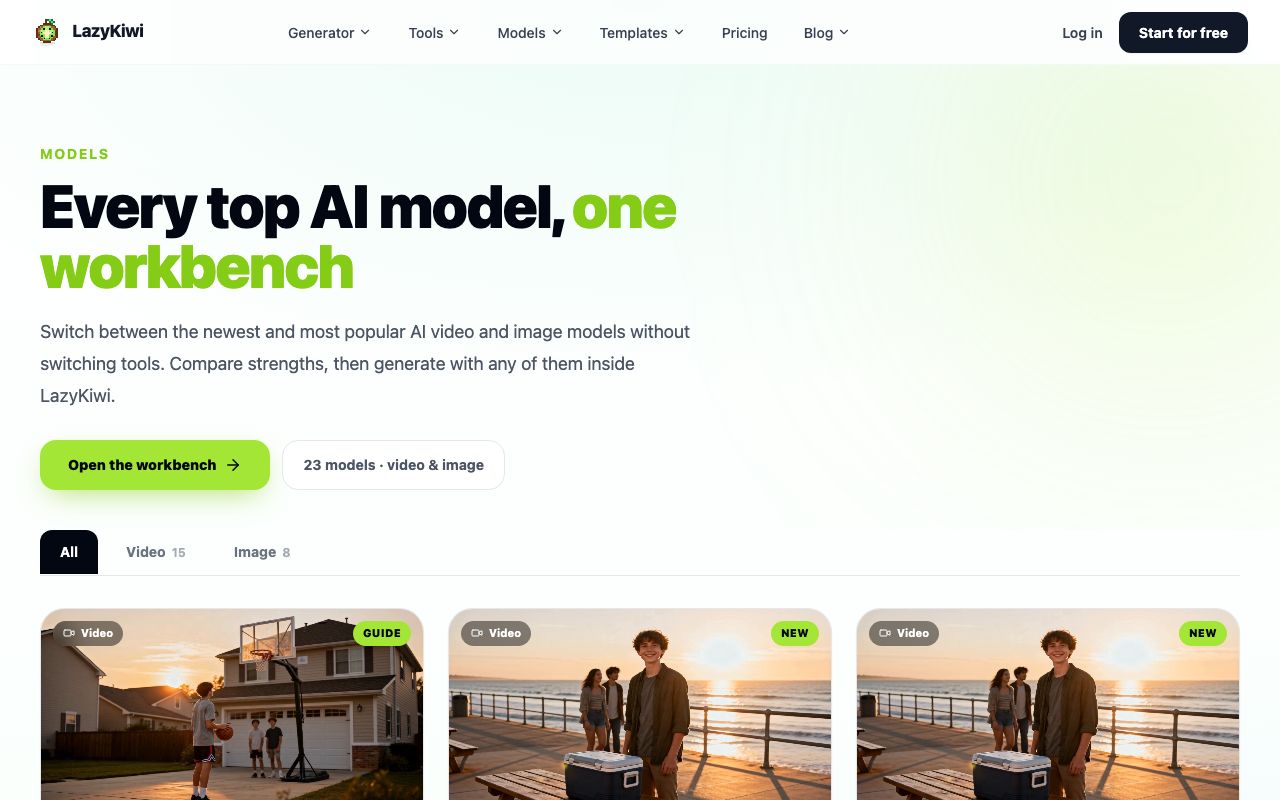
Which of these AI video generation models can you run today?
The models hub listed 23 models on the day of capture, 15 of them video. The search leader is in the lineup: Kling v3 Omni runs text, image and start-and-end-frame generation at 720p or 1080p for 3 to 60 seconds. Veo is present as Veo 3.1 Lite, 16:9 or 9:16 at up to 1080p and up to 60 seconds, without audio in this tier. Sora 2 is not in the workbench; the model page for it is an alternatives page, which matches what the search data says people now want.
What are the market trends in AI video creation for 2026?
We quote only what we could open. The market trends in AI video creation 2026 that survive that filter are about adoption pressure and model churn rather than dollar sizes.
On the demand side, HubSpot's 2026 State of Marketing (2026) reports that 61% of marketers believe marketing is experiencing its biggest disruption in 20 years because of AI. On the capability side, the Stanford AI Index (2026) describes its 2026 edition as showing a widening gap between what AI can do and how prepared we are to manage it. Public attitudes are tracked in Pew's June 2026 report on Americans and AI, per Pew Research Center (2026), which is the reference to use when a client asks whether audiences mind.

Why does model churn count as a market trend?
Because it changes what a creator can buy. OpenAI's deprecation page sets 2026-09-24 as the shutdown date for sora-2, sora-2-pro and the Videos API. Google's Veo page frames Veo 3.1 as its leading video model and notes that its own preference evaluation could not compare image-to-video against Sora 2 Pro because that model did not support realistic human images, per Google DeepMind (2026). Independent rankings exist for anyone who wants a third opinion: Artificial Analysis (2026) runs text-to-video, image-to-video and video-editing leaderboards, and Arena (2026) crowdsources head-to-head votes. AI video generation market trends 2026 are, in practice, the story of which of those names are still available next quarter.
Which video formats and effects are creators searching for?
LazyKiwi's template-demand file attaches one primary keyword to each template page, with US monthly volume and keyword difficulty from Semrush, pulled 2026-09-04. It exists to order the templates hub, which showed 225 templates on the day of capture. The top rows are camera language and photo looks, not model names.
| Template keyword | Volume / month (US) | KD | Kind |
|---|---|---|---|
| dolly zoom | 5,400 | 33 | Camera move |
| mirror selfie | 4,400 | 28 | Photo look |
| polaroid photo | 4,400 | 44 | Photo look |
| flash photography | 4,400 | 59 | Photo look |
| over the shoulder shot | 3,600 | 26 | Camera move |
| bullet time | 2,900 | 35 | Camera move |
| ken burns effect | 2,900 | 38 | Camera move |
| ai dance generator | 2,900 | 39 | Effect |
| tracking shot | 2,400 | 29 | Camera move |
| ghibli art | 2,400 | 43 | Style |
| fat filter | 1,900 | 12 | Face effect |
| infinite zoom | 1,900 | 27 | Camera move |
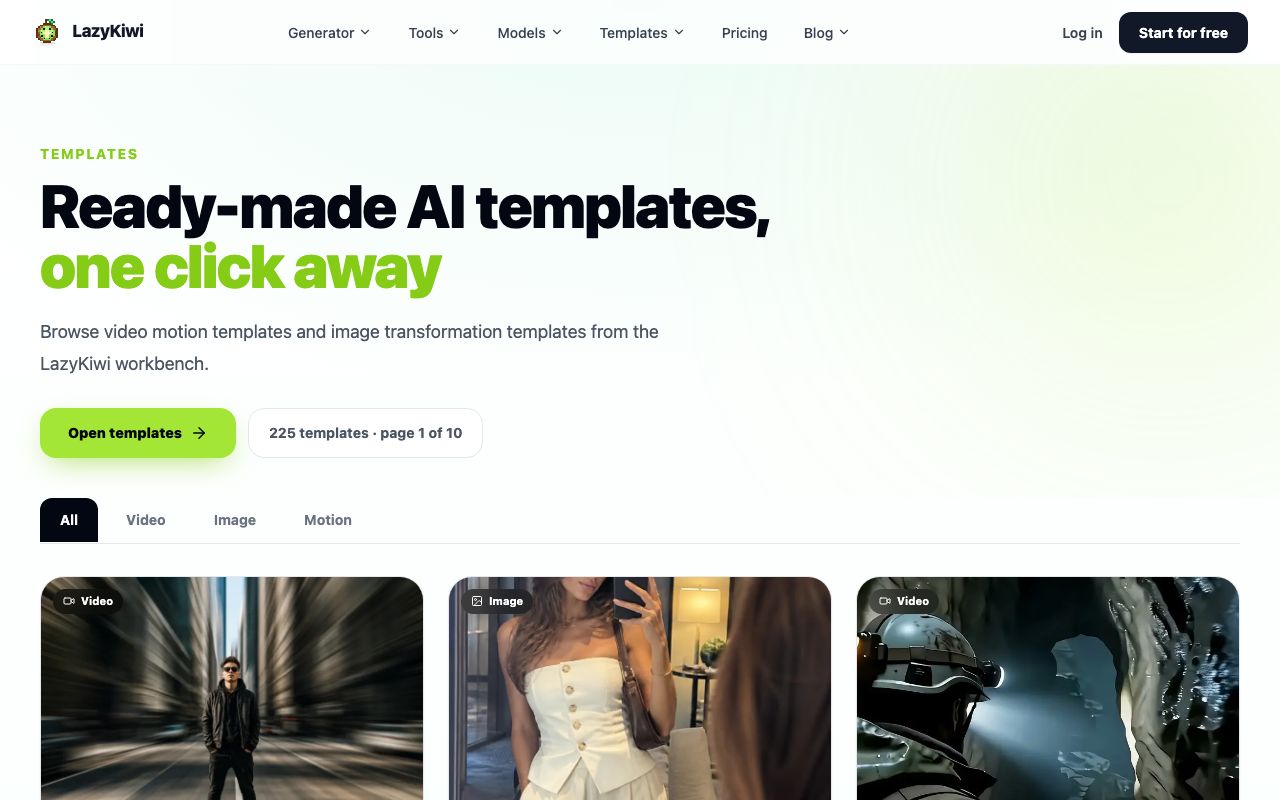
Seven of the twelve are camera moves, which is the practical finding for anyone choosing what to build: people search for the shot they want, not the engine that renders it. Current trends in AI video creation on the effect side are face and style filters with low difficulty ('fat filter' at KD 12), where a single template page can rank quickly.
What do these trends mean for creators and marketers?
AI video trends move faster than content calendars, so the useful response is procedural: decide what to test now, what to stop, and how to check the numbers yourself before the next planning cycle.
- 1
Test Kling first for image-to-video
It is the keyword group at its twelve-month high and it is in the LazyKiwi AI video generator. Run the same photo through Kling v3 Omni and Veo 3.1 Lite and keep whichever holds the face.
- 2
Stop building Sora-specific content
The API shuts down on 2026-09-24 per OpenAI's page, and the 'sora 2 alternative' keyword is already rising. A comparison post written as 'X vs Sora 2' has a shelf life measured in weeks.
- 3
Name the shot, not the model
Title landing pages and videos with the camera move or effect ('dolly zoom', 'bullet time', 'mirror selfie'); those keywords carry five to ten times the volume of any model query in the basket. The referral side agrees: in the 90 days to 2026-09-04, chatgpt.com was the second-largest source of sessions to lazykiwi.ai after direct (300 sessions, 279 users), landing mostly on the AI clothes changer and logo animation tool pages, which are named for the job, not the model.
- 4
Finish at 1080p
Search interest in enhancement follows resolution expectations; when a 720p render is the only take that worked, pass it through the AI video enhancer rather than re-rendering.
- 5
Re-check the index quarterly
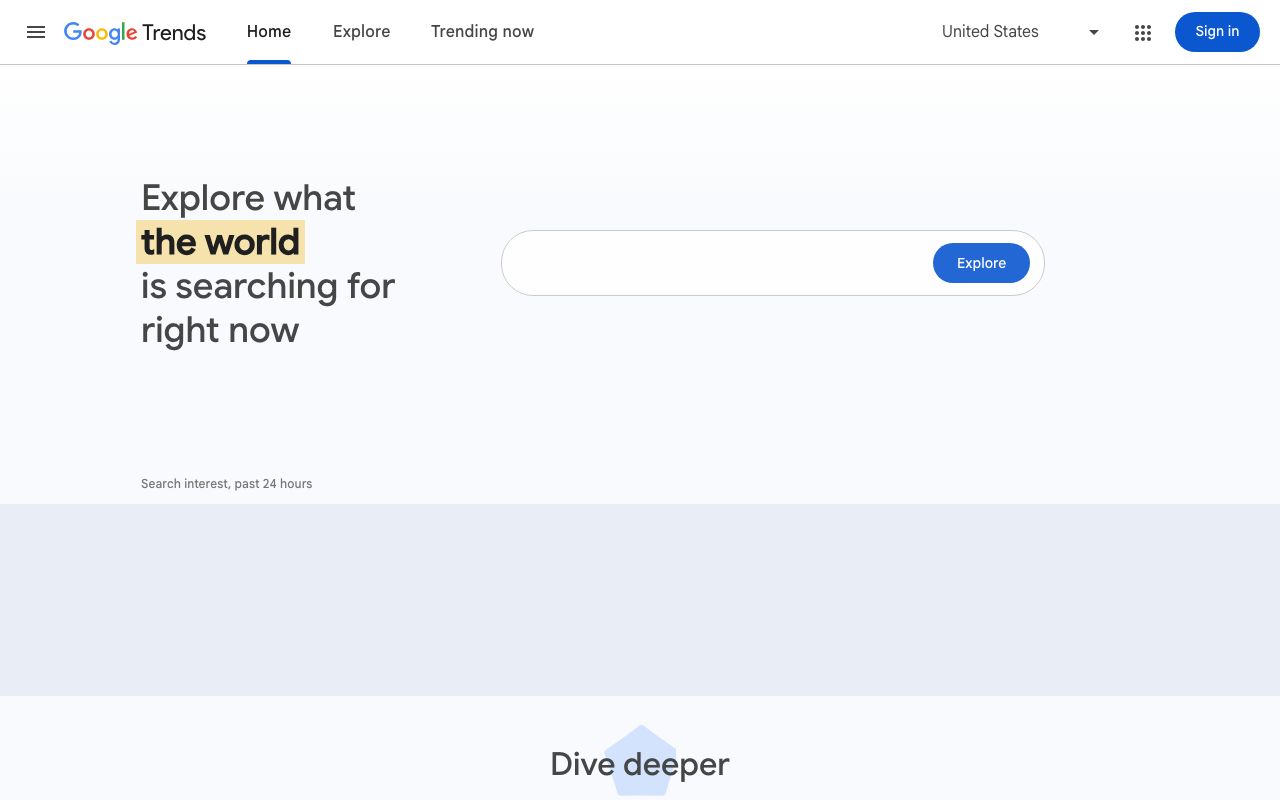
Paste the basket into Google Trends for a free cross-check; its interest-over-time chart uses the same peak-equals-100 scaling idea, per Google Trends (2026).
For AI video marketing trends 2026 planning, treat the HubSpot disruption figure as the reason to test and the Kling index as the place to start; neither tells you what will convert, and only a controlled A/B on your own audience does.
How to cite and reuse this data
Cite the underlying sources, not this post, for any single figure: Semrush (US database, retrieved 2026-09-05) for the keyword rows, LazyKiwi template-demand file (pulled 2026-09-04) for the template rows, and the linked vendor or report page for everything else. If you cite the synthesis, use 'AI Video Generation Trends 2026, LazyKiwi blog, data as of 2026-09-05' and link this page.
- Update cadence: the keyword basket is re-pulled when the video cluster is refreshed, roughly quarterly; the template-demand file changes when new template pages ship.
- Reuse: the tables may be reproduced with attribution; the index values are Semrush's and subject to its terms.
- Corrections: if a row disagrees with what Semrush shows you today, the index has moved; the retrieval date in the caption is the reference.
The earlier version of this page presented a four-observation series without naming its source. The series was the Semrush trend for our head keyword; it now has five values (0.07, 0.15, 1.00, 0.80, 0.65) and is reported above with its origin, which is the only change to the finding.
Key takeaways
- AI video generation trends 2026, by Semrush's US index retrieved 2026-09-05: Kling keywords are at their twelve-month highs ('kling ai image to video' 1,900 a month), Sora keywords spiked once and faded, Veo prompt searches fell to 0.01 of their peak.
- OpenAI's deprecation page sets 2026-09-24 as the shutdown date for sora-2, sora-2-pro and the Videos API; 'sora 2 alternative' searches rose late in the window.
- Shots out-search models: 'dolly zoom' (5,400 a month) and 'mirror selfie' (4,400) lead LazyKiwi's template-demand file, and seven of its top twelve keywords are camera moves.
- Market context from pages we could open: 61% of marketers call AI the biggest disruption in 20 years (HubSpot 2026); the Stanford AI Index 2026 describes a widening capability-readiness gap; no market-size figure is quoted because those reports were bot-walled.
- In the LazyKiwi workbench the search leader is available as Kling v3 Omni (720p or 1080p, 3 to 60 s) alongside Veo 3.1 Lite; Sora 2 is an alternatives page, not a model.
Research & Trust Editor
Noah Berger
I track how detection, labelling and platform policy keep moving, and I cite the source and the date so you can check the claim yourself.
FAQ
Common questions
Is AI video generation growing in 2026?
Search interest says yes, unevenly. In the AI video generation trends 2026 basket, Kling keywords sit at their twelve-month highs while Sora and Veo prompt keywords have fallen from earlier spikes, so interest is shifting between models rather than rising everywhere. HubSpot's 2026 finding that 61% of marketers see AI as the biggest disruption in 20 years is the pressure behind it.
Which AI video model is the most searched?
In our US basket retrieved on 2026-09-05, 'kling ai image to video' (1,900 searches a month) and 'kling ai video' (1,600) are the largest model-name keywords, followed by 'sora 2 prompts' (880) and 'veo 3 prompts' (720). Only the Kling rows are at or near their twelve-month peak in the latest month; the Sora and Veo rows have decayed.
What is the AI video generator market size?
We do not quote one. The reports that publish a dollar figure (Grand View Research, McKinsey) returned bot-wall or connection errors when we checked on 2026-09-06, so any number we copied from a third-party summary would be unverified. If you need a market size, open the report itself, note the edition year and the CAGR window, and cite that page rather than a blog.
Are model-specific prompt searches declining?
For Sora and Veo, yes: 'veo 3 prompts' read 1.00 in the first month of the window and 0.01 in the last, and 'sora 2 prompts' read 0.19 of its peak in the latest month. For Kling the opposite holds. The bigger pattern is that shot-name keywords such as 'dolly zoom' carry several times the volume of any prompt query, which is why we recommend naming the shot.
How often is this data updated?
The Semrush basket is re-pulled when the video cluster is refreshed, roughly quarterly, and the retrieval date is printed with every table. The template-demand file updates when new template pages ship (last pull 2026-09-04). External reports are checked on the day of publication and dated inline; if a linked page changes, the date next to the citation tells you which version we read.
Test the model people are searching for
Run the same photo through Kling v3 Omni and Veo 3.1 Lite in one workbench and keep the take that holds the face. Prices show on the Generate button before you spend.
Keep reading
How to Tell If a Video Is AI Generated: 7 Checks That Work
How to tell if a video is AI generated in seven checks: frame continuity, hands and text, audio, channel signals, detectors, C2PA provenance and context.
11 min read
Sora 2 vs Veo 3.1 in 2026: Which Video Model Should You Use?
Sora 2 vs Veo 3 with dated sources: Sora 2's API ends September 24, 2026, Veo 3.1 Lite runs in LazyKiwi at 1080p, no audio, and four models fill the gap.
9 min read
Kling vs Veo 3 in 2026: Which Video Model Wins?
Kling vs Veo 3 on the two tiers that run in LazyKiwi: Kling v3 Omni for start-end frames, 1:1 and 60-second takes, Veo 3.1 Lite for silent 16:9 clips.
9 min read
How to Make an AI Face-Swap Video That Looks Convincing
Learn how to make a convincing AI face-swap video with compatible source media, controlled generation, frame-by-frame quality checks, clear consent, and responsible disclosure.
8 min read