Skinny To Muscular
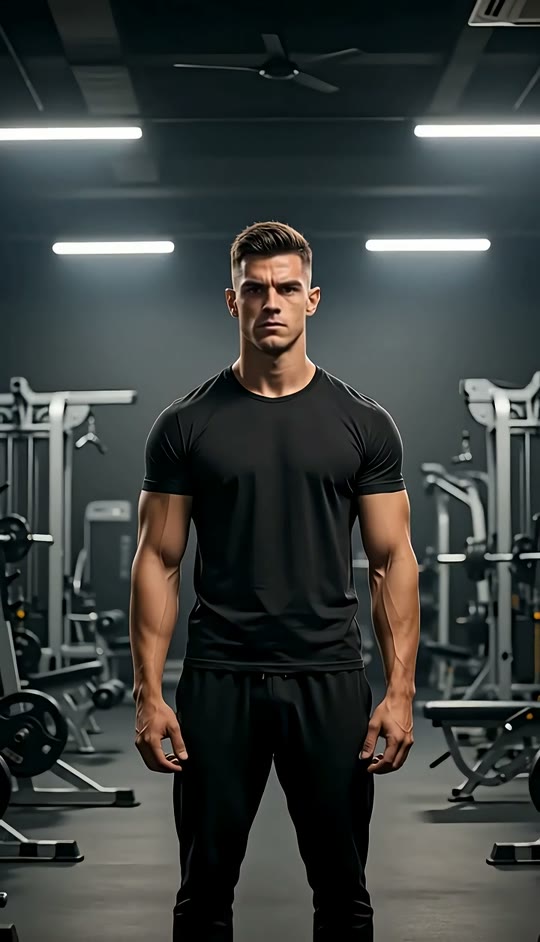
Upload one photo and the skinny to muscular template shows the change happen: over a few seconds the shoulders broaden, the arms and chest thicken and definition appears under the light, while the face, hair and background stay exactly as they were. A short vertical clip, made as an illustration rather than a prediction.
Skinny to Muscular Template
Upload one photo taken straight on from the knees or waist up, wearing something fitted such as a t-shirt or vest, with the arms slightly away from the body.
WHAT IT IS
Skinny to muscular, as a clip instead of a pair of photos
A skinny to muscular transformation is usually shown as two photos side by side. This template shows it as one continuous change, because a body filling out on screen holds attention in a way a before-and-after pair does not. You upload one photo and the clip starts from it exactly as it is. Over the next few seconds the shoulders widen, the arms and chest thicken, definition appears where the light falls and the clothing pulls tighter to follow the new shape, while the face, the hair, the skin tone and the background stay where they were. That last part is the point: people should be able to tell it is still you underneath. The transformation is fixed, which is what makes it a template. It always goes from a leaner frame to a solidly muscular one, at the same pace, ending on a squared-up hold. If you want to describe a different build, a lean athletic look or a full bodybuilder frame, or a different moment such as a shirt rip or a flex in the mirror, the AI muscle generator takes the same photo plus a line of description. What decides the quality is the photograph. Muscle reads through shadow, so a photo lit from the side or above gives the model definition to build on, and fitted clothing tells it where the body actually is. And none of it is a forecast: there is no model of training, nutrition or anatomy behind the result, so it cannot show what a year in the gym would do, and it should never be posted as a genuine progress clip.
- One photo, one continuous change
- The clip begins from your photo unchanged and grows the frame over a few seconds. No before photo and no after photo to line up; the transformation is the video.
- Face kept, frame rebuilt
- Identity, hairstyle, skin tone and background stay from the upload while the shoulders, arms, chest and definition change. The result should still be recognisably you.
- Fitted clothing and side light
- Definition is drawn with shadow, so a side-lit photo in a t-shirt or vest gives the model something to work with. A flat flash and a loose hoodie are the fastest ways to a pasted-on result.
- A picture, not a prediction
- There is no training or anatomy model behind this. It cannot show what work would produce for a real body, and it should not be shared as a genuine progress video.
USE CASES
Where a skinny to muscular clip gets used
Three uses that treat the result as an illustration rather than as evidence.
A goal clip, labeled as one
A fitness creator posts the version of themselves they are training toward, with a caption that says it is generated. It works as motivation content precisely because nobody is pretending it is last month.
The group-chat transformation
A friend's photo from the weekend, five seconds later a much bigger friend. It lands better than a caption, as long as the friend is in on the joke and the clip stays in the chat.
Character and costume concepts
A comic, game or sketch needs a heroic build for a character based on a performer or on original art. Generating the physique is faster than a muscle suit and keeps the face the story is built around.
FAQ
Common questions
What does the skinny to muscular template do?+
It takes one photo and returns a short vertical clip in which the person's frame fills out on screen: shoulders broaden, arms and chest thicken and definition appears, while the face, hair and background stay as they were. It edits the picture only and has no connection to how any real body would develop.
How do I make a skinny to muscular video?+
Upload a straight-on photo from the waist or knees up, ideally in a fitted t-shirt or vest with side light, run the template and pick the length in the workbench. The clip comes back a few seconds long, starting from your photo unchanged and ending on the muscular version squared up to the camera.
Will this show what I would look like after training?+
No. There is no model of training, nutrition, genetics or anatomy behind the result, so it cannot forecast anything about your body. Treat it as an illustration, and if you want a realistic idea of what is achievable, that is a question for a coach rather than for a video template.
What photo works best?+
A straight-on shot from the waist or knees up, in a fitted t-shirt or vest, lit from the side or slightly above. Side light is what makes muscle read on camera, since definition is drawn with shadow. Avoid a direct phone flash, loose hoodies, crossed arms and hands in pockets, which all hide the shoulders and arms.
Can I choose how muscular the result is?+
Not in this template; the change from a leaner frame to a solidly muscular one is fixed, which is what makes it a template. To describe the build yourself, from lean and athletic to a full bodybuilder frame, or to pick a different moment such as a shirt rip, use the AI muscle generator with the same photo.
Can I run it on someone else's photo?+
Only with that person's permission, and never on a public figure, whose photos are refused. Changing how a real person's body looks and posting it without their agreement is not a use this template supports, and a shared result should say it is AI-generated.
Is the skinny to muscular template free?+
A new account starts with free credits that cover a first clip, so you can try the template before deciding on a plan. After that each run spends credits according to the model, the length and the resolution, and the cost is shown before you generate.
Other names for the skinny to muscular effect
The direct phrasings are skinny to muscular, skinny muscular and skinny muscle, which describe the change rather than a tool. Result phrasing covers skinny to buff, skinny to ripped and muscle transformation video, and tends to come from people who have seen the clip on a feed. Tool phrasing, such as ai muscle generator or add muscle to photo, belongs to the AI muscle generator, where the build is described rather than fixed. All of them start from the same one-photo upload.
Watch the frame fill out from one photo
One upload, a short transformation clip back. An illustration, not a progress video.