
Nose Piercing Filter
This nose piercing filter puts jewelry on your own face rather than on a model's: a flat-back nostril stud, a small hoop through the nostril, or a septum ring under the tip. Metal color, ring diameter and which side it sits on change the look more than people expect.

Nose Piercing Filter Template
Upload one photo taken straight on, in daylight, with the nose unobstructed and in focus. A slight three-quarter angle also works and often shows a hoop better; a low angle exaggerates the nostrils and a heavy beauty filter removes the skin texture the template needs to seat the jewelry believably.

WHAT IT IS
A preview, drawn on your face rather than a model's
Shop photography shows jewelry on a nose chosen because it suits jewelry. Your own nose has a different bridge width, a different nostril curve and a different skin tone, and all three change how a hoop or a stud reads. This template places the piercing on your uploaded photo and keeps everything else fixed: same face, same skin texture, same lighting. What it changes is the jewelry, the metal and the placement. It renders the small things that sell a piercing as real rather than pasted, a specular highlight along the top of the metal, a contact shadow where it meets the skin, and a slight compression of the nostril where a hoop passes through. It is a visualisation, not a medical or professional opinion, and the section below is honest about where that line sits.
- Stud, hoop or septum
- The three common placements look nothing alike on the same face. A nostril stud reads as a point of light and disappears at a distance. A hoop draws a curved line that changes the perceived width of the nose. A septum ring sits centrally and is the only one of the three that is easy to flip up and hide.
- Metal color changes more than size
- Silver-toned metal reads cool and recedes against most skin; yellow gold warms and advances; rose gold sits between them and is the one people are most often surprised by. Because the jewelry is small, the metal tone often matters more to the overall look than a millimetre of diameter does.
- Your skin, unchanged
- The template edits the jewelry region and leaves the rest alone: pores, freckles, stray hairs and the existing lighting all stay. That is deliberate, because a preview that also smooths your skin is showing you a different face wearing the piercing.
- Straight on and three-quarter
- Piercers and jewelry shops photograph from both angles for a reason. Straight on shows placement and symmetry; a three-quarter turn shows the profile of a hoop and how far it stands off the face. Run your photo at both if you are deciding between ring sizes.
USE CASES
Three decisions this actually helps with
One photo in, one previewed placement out.
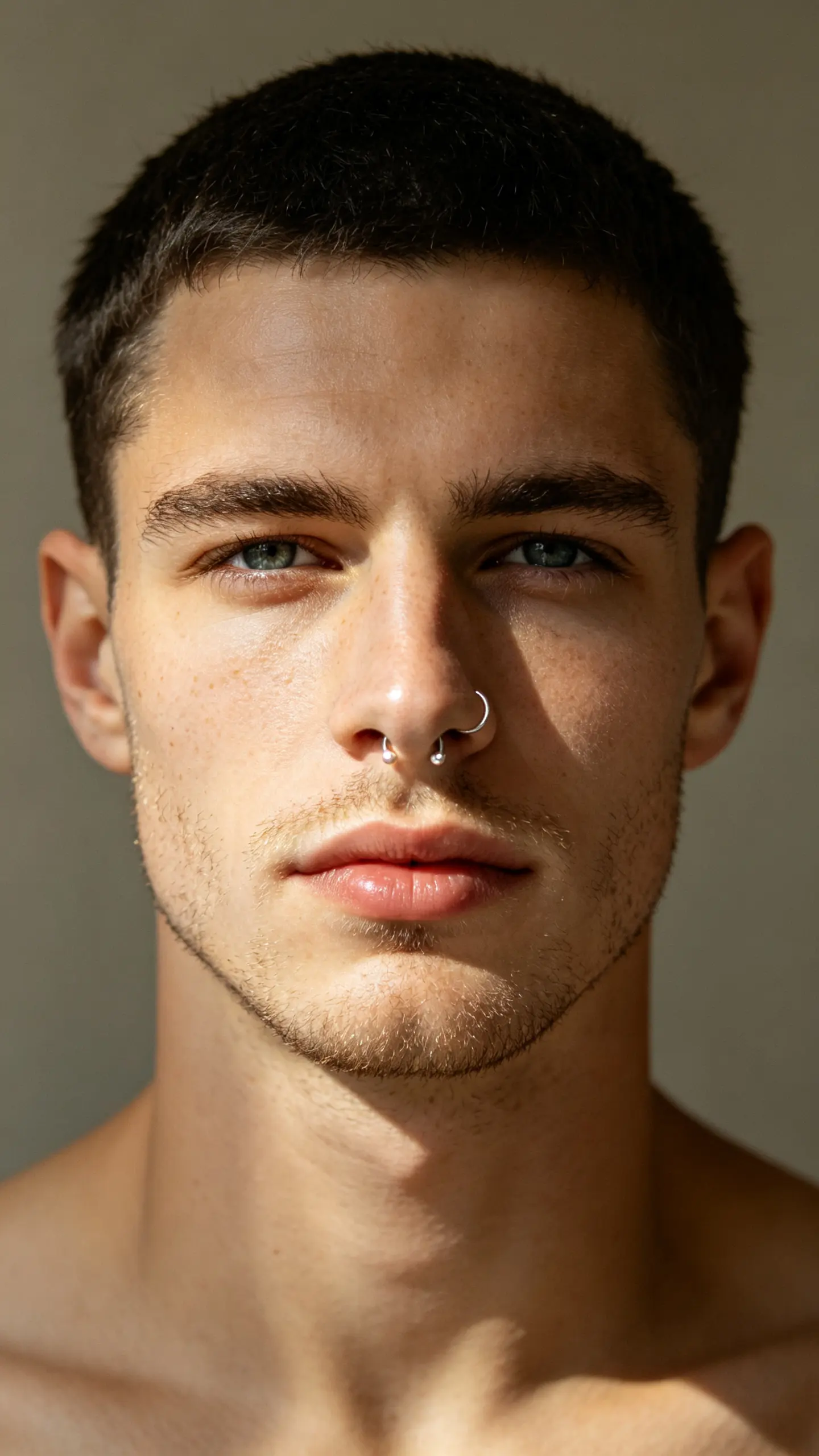
Deciding before the appointment
Someone booked for a first nostril piercing wants to know whether a stud or a hoop suits their face, and which side. Two renders answer it in a minute, and the piercer gets a clear reference to work from instead of a description.

Showing a workplace what it would look like
Plenty of people put off a visible piercing because they cannot picture how it reads in a professional photo. A render in the same lighting as a work headshot is a more useful answer than an internet argument about dress codes.
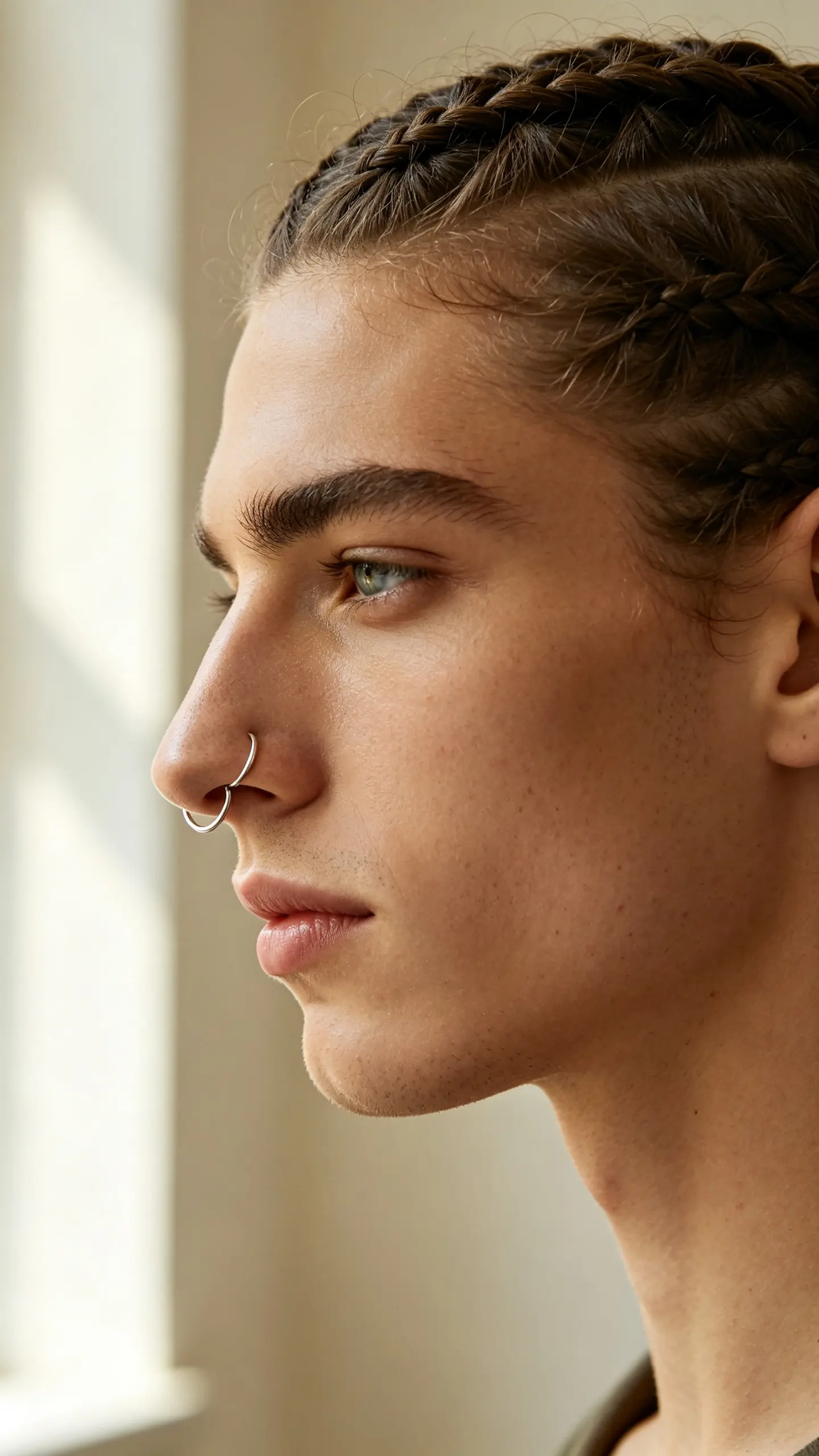
Choosing between two hoop diameters
Ring size is the decision people regret most, because an eight-millimetre hoop and a ten-millimetre hoop look nearly identical in a product photo and clearly different on a face. Rendering both on your own nose, at a three-quarter angle, makes the difference obvious.
FAQ
Common questions
What is a nose piercing filter?+
A nose piercing filter is a preview that adds nose jewelry to a photo of your face so you can see the placement, the metal color and the size before anything is pierced. This one works on an uploaded still rather than a live camera, which is why it can render a proper highlight and contact shadow instead of a flat sticker that slides around when you move.
Is this piercing advice?+
No. It is a visual preview and nothing more. It cannot tell you whether your septum has enough of the thin tissue that a septum piercing passes through, whether your nostril wall is thick enough for a particular piece of jewelry, or whether you are prone to keloids or migration. Those are questions for a professional piercer who can look at your anatomy in person, and the render is a useful thing to bring to that conversation rather than a substitute for it.
What jewelry can I try on?+
The three placements people actually search for: a nostril stud, a nostril hoop and a septum ring. Nostril jewelry is commonly fitted at 20 or 18 gauge, which is thin enough that the piece reads mostly as a point of light, while septum jewelry is usually thicker at 16 or 14 gauge and reads as a visible band. Silver-toned, yellow gold and rose gold all change the result noticeably.
Does it show what healing looks like?+
No, and it should not be read that way. The render shows a settled, healed result with clean skin. A fresh piercing looks different for weeks: swelling, redness around the entry point, crusting, and a longer or larger initial piece of jewelry fitted specifically to leave room for that swelling. Nothing about the timeline or the aftercare is modeled here.
What photo gives the most accurate preview?+
A straight-on or gently angled shot in daylight, in focus on the nose, with no heavy smoothing filter applied. Low camera angles distort the nostrils and make hoops look larger than they will be, strong side lighting hides the contact shadow that makes the render believable, and a beauty filter removes the skin texture the jewelry needs to sit against.
What else can I preview on my own face?+
The same approach covers anything worn rather than changed. Eye Color Changer previews contact lens shades, Hair Color Changer does the same for dye, and Face Shape Detector is worth a look first if you are choosing between placements, since where a hoop sits best depends on the width of the nose relative to the face.
Other names for the nose piercing filter
Most searches name the jewelry rather than the tool: nose ring filter and nose stud filter point at the two nostril options, septum piercing filter at the third. A second group names the intent instead, which is where virtual nose piercing and nose piercing simulator come from. A few people search for the app they expect it to be. All of them want the same thing: their own face, with the piercing on it, before committing.
Try the piercing on your own nose first
Stud, hoop or septum, in three metals. A preview, not piercing advice.