
Can You Copyright AI Art? What the Rules Say
Can you copyright AI art? The US position quoted from the Copyright Office, what counts as human authorship, how to register, and how the UK differs.
 Noah Berger 9 min read
Can you copyright AI art? In the United States, not the parts a machine produced. The Copyright Office's registration guidance is direct about it: material whose expressive elements were determined by an AI system "is not protected by copyright and must be disclaimed in a registration application". What you can protect is your own contribution, when there is one, and the rest of this page is about where that line sits, how to file, and what changes once you cross a border. This is a summary of published guidance, not legal advice.
Can you copyright AI art in the United States?
The governing document is the Copyright Office's statement of policy, published 16 March 2023 at 88 Federal Register 16190 and effective that day (US Copyright Office (2023), read 7 September 2026). Its reasoning is that copyright protects "only material that is the product of human creativity", and that a prompt does not supply that creativity.
Users do not exercise ultimate creative control over how such systems interpret prompts and generate material. Instead, these prompts function more like instructions to a commissioned artist.
— US Copyright Office, registration guidance, 16 March 2023
Not legal advice
This page quotes published guidance from official bodies and links each source. It is not legal advice, it does not cover your specific facts, and pending cases are not summarised here. Take advice in your own jurisdiction before you rely on any of it.
The Office has also published a second stage of analysis: Part 2 of its report, which "addresses the copyrightability of outputs created using generative AI", was published on 29 January 2025 (Copyright Office AI initiative (2026), read 7 September 2026). If you want the reasoning in full rather than the working rule, that is where it lives.
What counts as enough human authorship?
The Office describes a case-by-case test that turns on who executed the "traditional elements of authorship", the expression itself rather than the idea. Two routes are named explicitly in the guidance as capable of supporting a claim.
- Selection and arrangement: "a human may select or arrange AI-generated material in a sufficiently creative way that the resulting work as a whole constitutes an original work of authorship".
- Modification: "an artist may modify material originally generated by AI technology to such a degree that the modifications meet the standard for copyright protection".
- Neither route protects the generated material itself. Protection covers the human contribution, and nothing underneath it.
A worked example sits in the guidance itself. In February 2023 the Office concluded that a graphic novel combining human-authored text with images generated by an AI service was a copyrightable work, while the individual images inside it were not. That is the shape of most real claims: a protected whole containing unprotected parts.
So when people ask can you legally copyright AI art, the accurate answer is that you register a work, not a render. The more of the work you actually made, the more there is to register.
How do you register a work that includes AI-generated material?
The guidance sets out an obligation and a mechanism, and both are quoted here because the wording matters.
- 1
Disclose
"Applicants have a duty to disclose the inclusion of AI-generated content in a work submitted for registration and to provide a brief explanation of the human author's contributions to the work."
- 2
Exclude what is not yours
"AI-generated content that is more than de minimis should be explicitly excluded from the application", using the Limitation of the Claim section under the Material Excluded heading.
- 3
Do not name the tool as an author
The guidance says applicants should not list an AI technology, or the company that provided it, as an author or co-author simply because it was used.
- 4
Describe the human contribution briefly
One or two plain sentences about what you selected, arranged or modified. This is the part examiners read.
- 5
Keep the file trail
Drafts, prompts, edit history and dated exports. Nothing in the guidance requires them, and everything about a dispute makes you wish you had them.
The consequence of skipping step one is spelled out: where information essential to registrability "has been omitted entirely from the application or is questionable", the Office may move to cancel the registration, and a court may disregard a registration under section 411(b) of the Copyright Act where an applicant knowingly supplied inaccurate information.

Does anyone own AI art when copyright does not apply?
Contract fills the gap. Where nothing is copyrightable nobody holds an exclusive right, so who owns AI art becomes a question about the tool's terms of service rather than about copyright: usually you hold a licence to use the outputs, sometimes with conditions attached.
- Read the terms for output rights, commercial use, exclusivity and any attribution requirement, per tool, not per industry.
- Assume non-exclusivity unless the terms say otherwise. Two users with similar prompts can receive similar outputs, and neither can stop the other.
- Check whether the terms differ by plan. Free tiers sometimes carry narrower commercial rights than paid ones.
- Client work needs the same clause twice: what you may deliver, and what the client may then do with it.
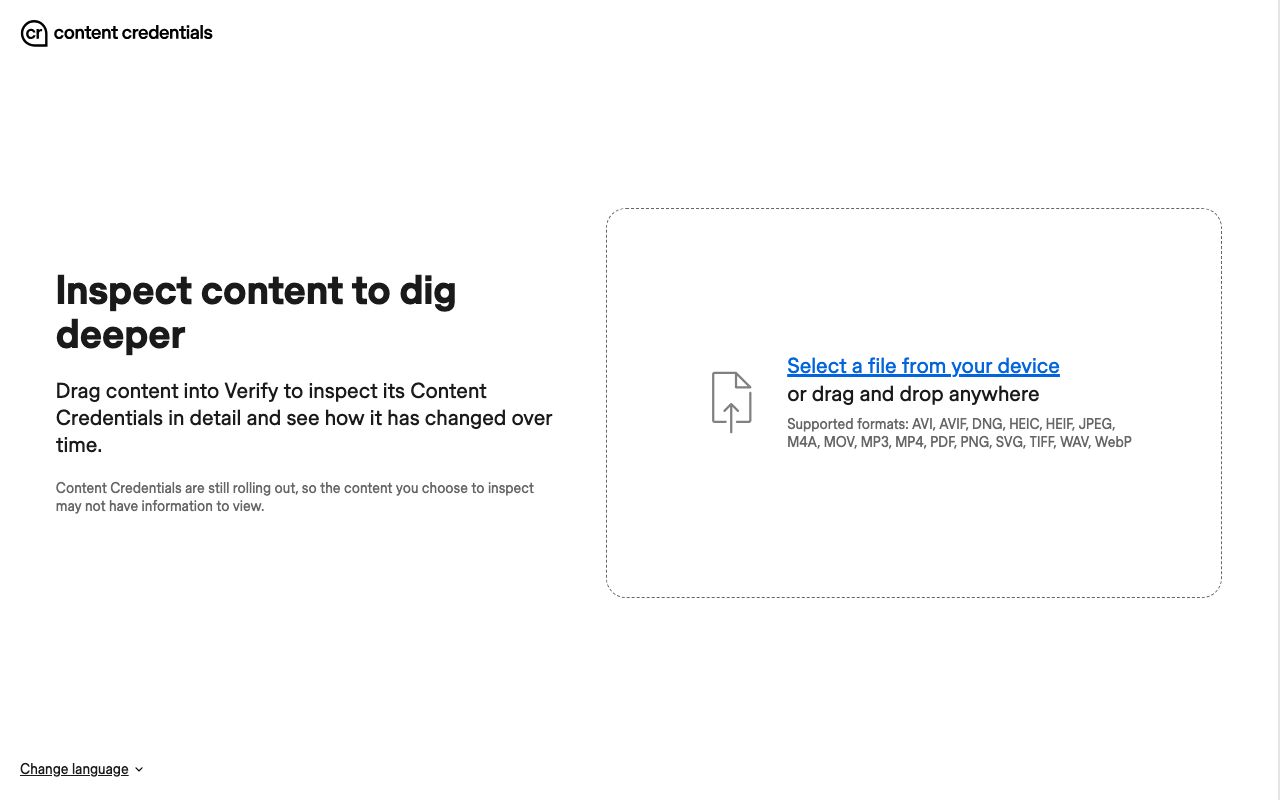
Provenance data is worth attaching even when ownership is unclear. Content Credentials, the C2PA-hosted standard, records how a file was made and edited, and the specification is public (C2PA specification (2026), Content Credentials (2026), both read 7 September 2026). A credential is not a title deed, but it is evidence of process, which is exactly what a contested authorship claim needs.
Is AI art copyrighted differently in the UK, EU or elsewhere?
Yes, and the UK is the clearest contrast. Section 9(3) of the Copyright, Designs and Patents Act 1988 provides: "In the case of a literary, dramatic, musical or artistic work which is computer-generated, the author shall be taken to be the person by whom the arrangements necessary for the creation of the work are undertaken" (legislation.gov.uk (2026), read 7 September 2026). That is a statutory answer to a question the US answers with a human-authorship test.
| Jurisdiction | What the official source says | Source read 7 September 2026 |
|---|---|---|
| United States | Human authorship required; AI-generated material must be disclaimed in an application | Copyright Office statement of policy, 16 March 2023 |
| United Kingdom | Computer-generated works have an author: the person who made the arrangements for creation | CDPA 1988, section 9(3) |
| European Union | The AI Act regulates transparency and disclosure rather than who owns an output; Article 50 is the transparency provision | AI Act guide site |
| Canada | The copyright office's own copyright landing page did not address AI-generated works when we read it | CIPO copyright pages |
| International | Authorship of AI outputs is described as an open question under discussion | WIPO AI and IP pages |
Sources for that table: EU AI Act guide (2026), CIPO (2026) and WIPO (2026). Two cautions. A transparency rule is not an ownership rule, and the absence of a published statement is not the same as a settled position. Neither of those is legal advice for your facts.
Can you sell AI art commercially?
Usually yes, and that is a separate question from ownership. Selling depends on your licence from the tool and on the rules of wherever you are selling; copyright decides whether you can stop somebody else from copying it afterwards.
- The tool's terms decide whether you may sell the output at all.
- The marketplace decides whether it accepts generated work and how it must be labelled.
- Advertising rules decide how you may describe it: claims about a product or service have to be honest and substantiated (FTC (2026), read 7 September 2026).
- Copyright decides only whether you can enforce exclusivity, which for a bare generated image you likely cannot.
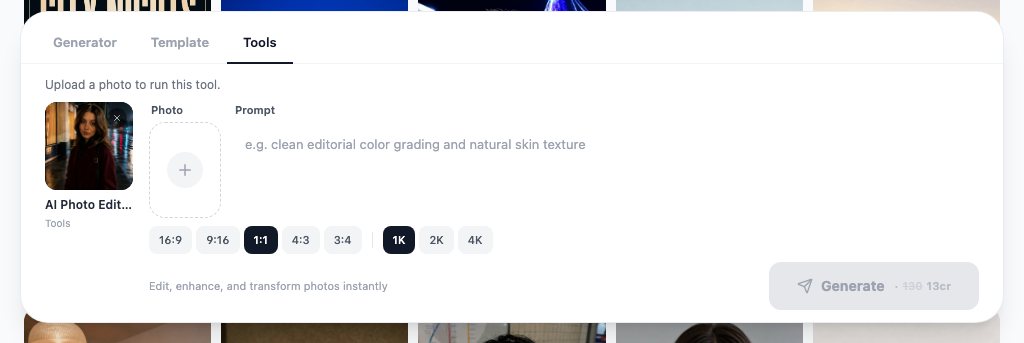
One practical note from our own workbench data (August 2026): the most common reason an external image job fails is the content-safety filter, with 49 blocks in 30 days. Commercial constraints start before the licence, at the point where a tool declines to produce something at all.
What about the training-data question?
It is live, it is contested, and it is a different question from the one this page answers. Whether training on copyrighted material is lawful, and on what terms, is the subject of active litigation and policy work in several countries, and nothing here predicts an outcome.
What can be said from official sources: WIPO lists training data and copyright among the open questions it is convening discussion on, and the US Patent and Trademark Office maintains its own AI initiative covering the patent side of the same technology (USPTO (2026), read 7 September 2026). The Copyright Office signalled in its 2023 guidance that it would seek public input on how the law should treat the use of copyrighted works in AI training, and its notice of inquiry followed later that year (Copyright Office NewsNet (2023)).
For a working creator the practical exposure is not the training question at all. It is producing something too close to an identifiable existing work, which is an ordinary infringement question with an ordinary answer: do not do it, and do not prompt for it by name.
What should a creator do in practice today?
Five habits, none of them expensive.
- 1
Record your process
Keep prompts, references, intermediate files and the dates. This is the evidence for the human-contribution explanation you will have to write.
- 2
Disclose when you file
The duty is explicit, and the penalty for ignoring it lands on the registration you were trying to protect.
- 3
Read the tool terms once, properly
Output rights, commercial use, plan differences. Ten minutes, then keep a copy of the version you agreed to.
- 4
Do not assume exclusivity
Plan your business on the parts you actually made: the edit, the brand, the series, the distribution.
- 5
Attach provenance where you can
Credentials that record how a file was made cost nothing and answer the question everyone asks second.
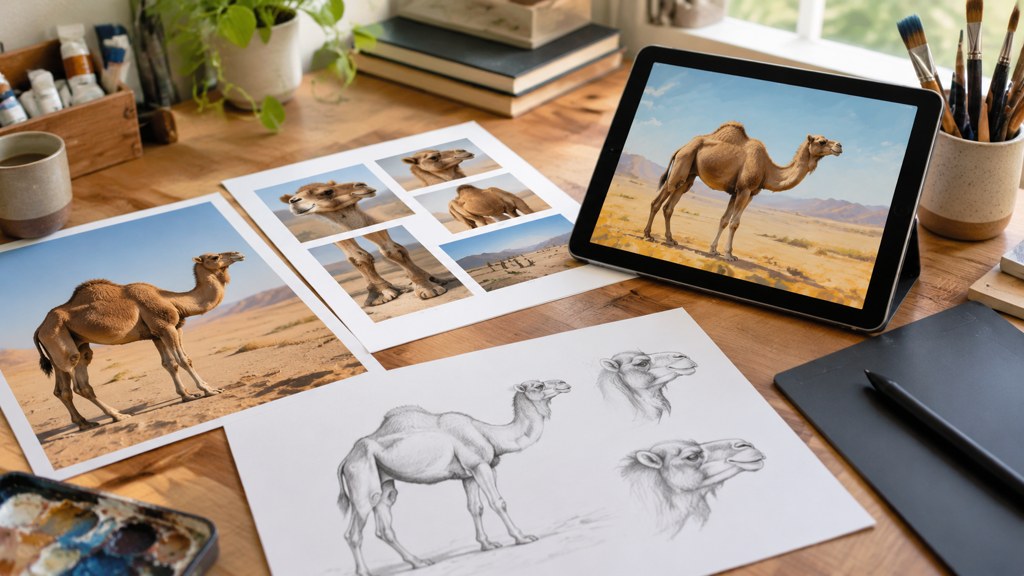
So, can you copyright AI art? The human parts, yes, on the record and with the generated material disclaimed. Everything else you protect by contract, by process and by making more of the work yourself. If you generate in our image generator, the settings panel and the AI photo editor both leave a trail worth keeping, and every run records which model produced it, which for most image jobs is GPT Image 2.
Key takeaways
- Can you copyright AI art in the US? Only the human contribution; generated material must be disclaimed when you file.
- Selection, arrangement and modification are the named routes to a valid claim; a prompt alone is not one.
- Applicants have a duty to disclose AI-generated content and to explain the human author's contribution.
- UK law takes a different route: CDPA 1988 section 9(3) gives computer-generated works an author.
- Selling is a licence and marketplace question; copyright only decides whether you can enforce exclusivity.
Models & Research Editor
Noah Berger
Noah Berger tracks generative models and the rules around them for LazyKiwi. He works from primary sources, dates every claim, and updates a post when the model or the policy behind it changes.
FAQ
Common questions
Is AI art copyrighted automatically when I generate it?
No. In the US, material whose expressive elements the system determined is not protected and must be disclaimed on an application. What can be protected is a human contribution such as creative selection, arrangement or substantial modification of that material.
Can you copyright AI art in Canada?
We could not verify a Canadian equivalent of the US policy statement: the copyright pages of Canada's intellectual property office did not address AI-generated works when read on 7 September 2026. Treat the position as unsettled and take local advice rather than assuming either answer.
Can you copyright AI generated art if I edited it heavily?
Possibly. The guidance says an artist may modify generated material enough that the modifications themselves meet the standard for protection. The protection then covers your modifications, not the underlying generated image, so keep the before and after files.
Who owns the images I make with a paid subscription?
Whatever the tool's terms grant, which is normally a licence to use the output rather than an exclusive right. Check for commercial-use limits, attribution requirements and differences between free and paid plans, and keep a copy of the terms you accepted.
Does labelling an image as AI-made affect copyright?
No. Provenance credentials and platform labels are about transparency, not ownership. They help you evidence how a file was produced, which matters in a dispute, but they neither create nor remove any copyright in the work.
Keep the trail while you work
Generate in a workbench that records the model, the settings and the run, so the human contribution you claim later is documented rather than remembered.
Related reading
How to Tell If a Video Is AI Generated: 7 Checks That Work
How to tell if a video is AI generated in seven checks: frame continuity, hands and text, audio, channel signals, detectors, C2PA provenance and context.
11 min read
What Is an AI Influencer? Definition, Examples, How-To
An AI influencer is a synthetic creator with a persistent identity. Named examples, how it differs from avatars and UGC, the tools, the rules and the build.
9 min read
How to AI Face Swap Video Clips Responsibly (2026 Guide)
Here is how to AI face swap video clips with consent: the character swap tool, a GIF route, checked tool prices, artifact fixes and the label rules.
11 min read
AI Video Generation Trends 2026: What the Data Shows
AI video generation trends 2026 from dated sources: Semrush search indices for Kling, Veo and Sora, LazyKiwi template demand, and the Sora 2 API shutdown.
9 min read