AI Twin
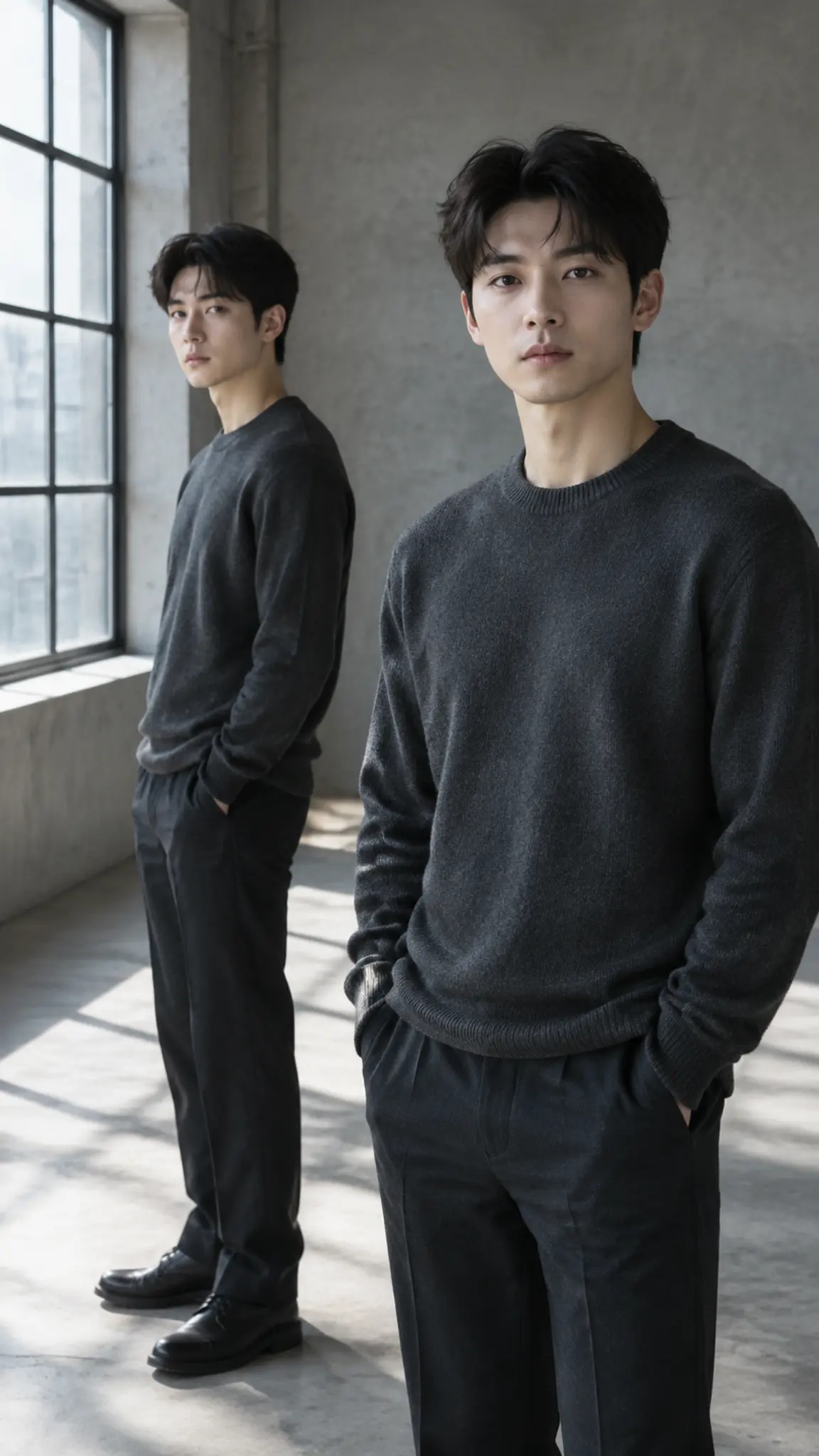
An AI twin video puts a second copy of you into the shot: standing beside yourself, walking past yourself, or splitting into two people from one body. Upload one photo and both copies are built from the same face, so the pair reads as one person duplicated rather than two people who happen to look alike.
AI Twin Template
Upload one clear photo from the waist up, facing the camera, in even light. Both copies inherit that face, so a soft or heavily filtered upload becomes two soft copies rather than one.
WHAT IT IS
The duplicate shot, without the locked-off camera
Filmed the traditional way, a twin shot is a locked-off camera, two takes and a mask down the middle of the frame, and it carries a permanent tell: the two copies never overlap and never touch, because a split-screen composite cannot hand an object across the seam. Generating the shot removes that constraint and introduces a different one. The second copy is the weak link. The engine holds a face best on the copy nearest the camera and most frontal, so a well-built twin shot usually stages the second copy a step further back, turned three quarters, or partly occluded, which is also how a cinematographer would block it. Push to three or four copies and the furthest one loses likeness first, which is why crowd-of-me shots read as convincing at the front and generic at the back. Lighting is the other half of it. Both copies have to sit under the same key from the same direction, so a photo shot with a clear side light gives the engine an instruction to copy, while flat overhead light gives it nothing and the copies drift apart in tone. This template is the entry point for the whole duplicate family: Cell Division Clone Effect covers the moment one body pulls apart into two, and 3D Split Screen Collage covers several versions in separate panels rather than one shared space. What it does not do is clone your voice or drive a talking avatar, so a twin who speaks needs audio you record and add in your editor.
- One face, two bodies
- Both copies are built from the same upload, so hair, build and clothing match across the pair. That shared origin is what makes a duplicate read as a duplicate instead of as two similar-looking people.
- Blocking beats copy count
- Two copies hold identity reliably. Three or four are possible, but the furthest copy loses likeness first, so stage the extras turned away, further back or partly hidden rather than lined up flat facing camera.
- They can share space
- Unlike a split-screen composite, the copies can overlap, cross in front of each other and occupy the same depth, because there is no mask seam to protect. Handing an object between them is still the hardest ask.
- No voice, no lip sync
- The template generates picture only. There is no voice cloning and no dialogue sync here, so a twin conversation needs your own audio laid over the clip afterwards in an editing app.
USE CASES
What people make with a duplicate of themselves
Three formats that only work when the same person appears twice in one continuous shot.
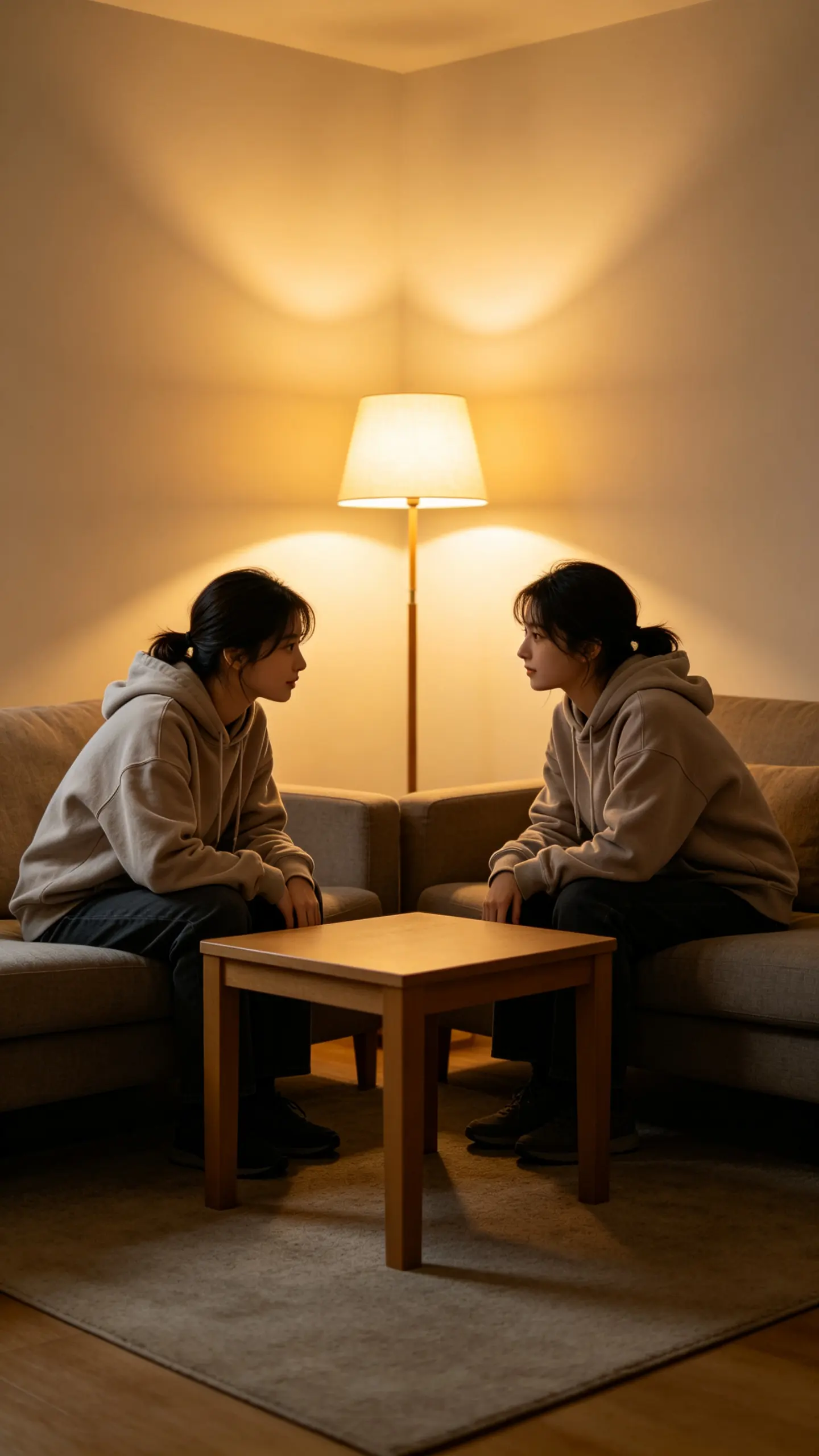
The two-sides-of-me skit
The oldest format on short video: one copy states the plan, the other undercuts it. Generating it means no tripod, no locked-off camera and no matching the light between two takes filmed an hour apart.
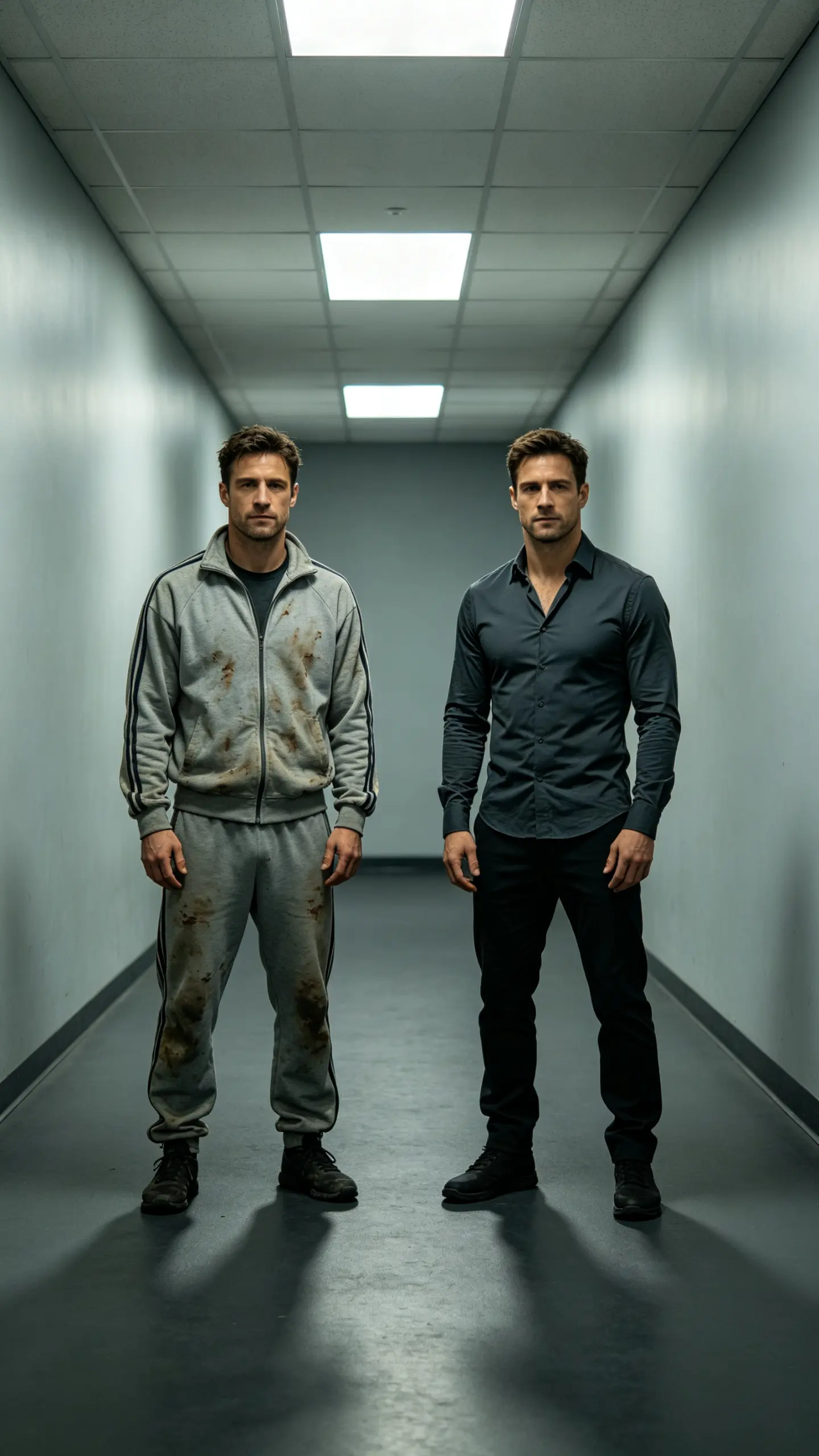
Before and after, standing together
A trainer, a stylist or a language coach shows the earlier version and the current one in the same frame instead of in a side-by-side card. The shared lighting is what makes the comparison feel like one person rather than two photos.
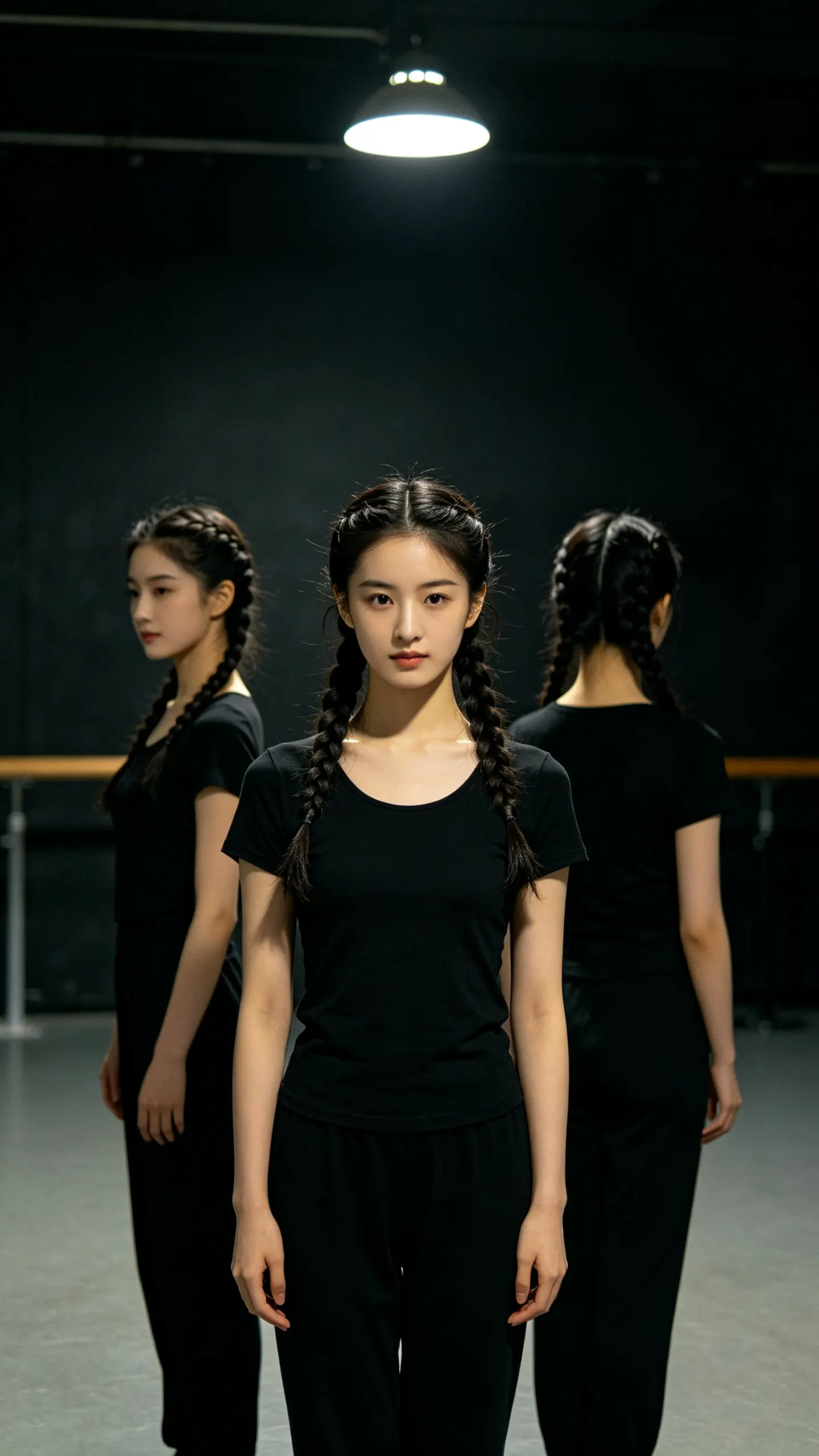
One-person band and unison choreography
A musician plays every part, or a dancer runs a routine alongside themselves. Depth staging carries this one: the copies at the back of the frame are turned or partly obscured, so likeness holds where the camera actually looks.
FAQ
Common questions
What is an AI twin video?+
An AI twin video is a clip in which the same person appears more than once in a single continuous shot, generated from one photo rather than filmed as two takes and masked together. The copies share a face, a build and an outfit, and unlike a split-screen composite they can overlap and cross in front of each other.
How do I clone myself in a video without a green screen?+
Upload one clear waist-up photo to this template and the second copy is generated along with the shot. The filmed alternative is a locked-off tripod, two takes without moving the camera, and a mask down the center of the frame in your editor, which works but stops the copies ever touching or overlapping.
How many copies of me can appear?+
Two hold identity reliably; three or four are possible with the extras staged further back or turned away. Likeness degrades from the furthest copy inward, so a line of five identical faces staring straight at the camera is the arrangement most likely to disappoint.
Does the twin speak with my voice?+
No. This template generates picture only, with no voice cloning and no lip sync to supplied audio. If the twins need to talk, record both lines yourself and lay them over the clip in an editor, cutting on the moments where the copies are not facing camera.
What photo works best for an AI clone video?+
Waist-up, facing camera, one clear light source with visible shadow direction, and no heavy filtering. Directional light matters more than resolution here: it gives the engine an instruction both copies can follow, whereas flat overhead lighting lets the two drift apart in tone.
How is this different from the cell division clone effect?+
Cell Division Clone Effect animates the transition, one body pulling apart into two, and is about that split moment. AI Twin is about the shot after it: two copies coexisting, moving independently and sharing a space for the length of the clip.
Other names for AI Twin
This effect is searched under at least four different names. Some people look for an AI twin or an AI clone video, some for how to clone yourself with AI, some for a multiple me or double me effect, and a smaller group for a doppelganger video. They all describe the same shot: one person appearing more than once in the same frame, built from a single photo.
Put a second you in the shot
One photo, two copies, no tripod and no mask. Free monthly credits cover the first clips.