
Family Picture Outfit Ideas: Palettes That Work
Family picture outfit ideas that hold up: six palettes, the anchor-outfit method, what not to wear on camera, and how to try a set before you buy it.
 Maya Chen 9 min read
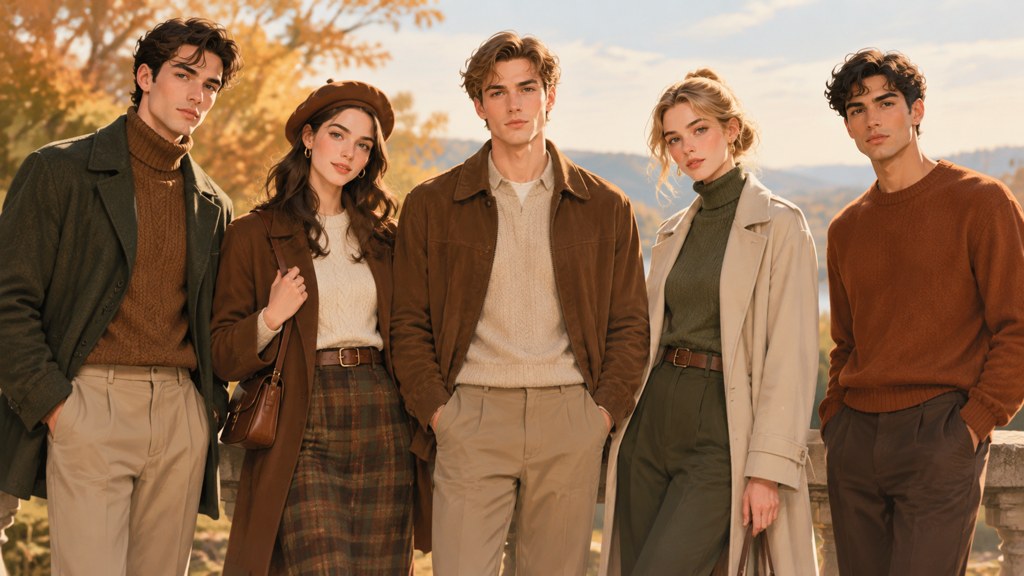
The family picture outfit ideas that survive contact with a real family all start the same way: pick one person's outfit, pull three colours out of it, and dress everyone else from those three. That is the whole method. What follows is six palettes with the settings they suit, the fabrics and patterns that misbehave on camera, what to do about the relative who refuses to play along, and how to try a palette on a photograph before anybody spends money on clothes.
How do you coordinate family outfits without matching?
Matching is when everyone wears the same thing. Coordinating is when everyone wears something from the same set. The first reads as a uniform and dates within a year; the second reads as a family who got dressed.
- 1
Choose the anchor outfit first
Usually the hardest person to dress, or whoever already owns something they love. That garment becomes the source of truth.
- 2
Pull three colours out of it
One dominant, one supporting, one accent. A patterned anchor makes this easy because the pattern has already done the colour work.
- 3
Give everyone a different share of those three
One person leads with the dominant, another leads with the supporting colour, a third carries the accent as a scarf or shoes. Nobody wears the same combination.
- 4
Vary texture, not just colour
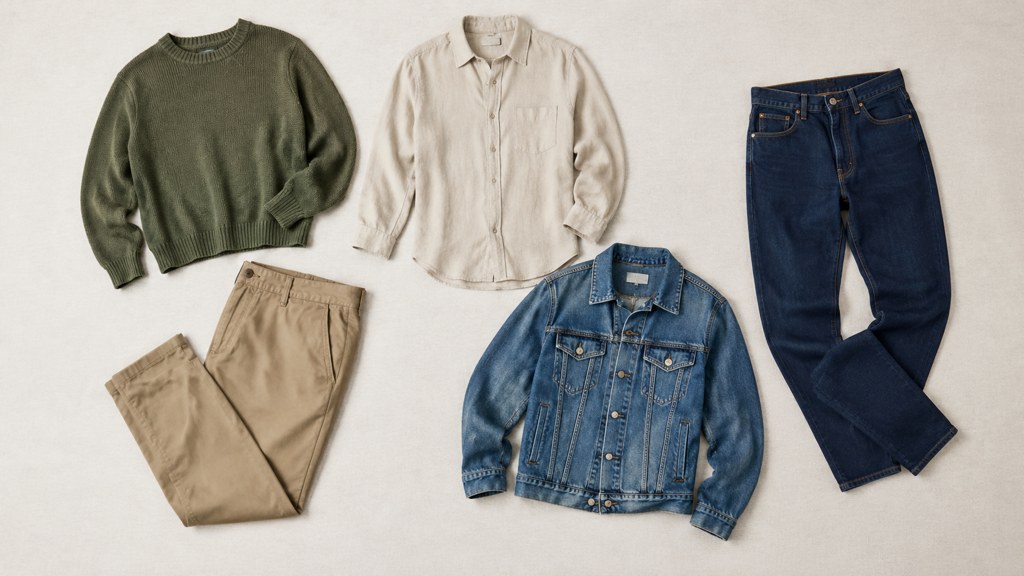
Denim, knit, cotton and corduroy in the same tone photograph as four different things. Four identical cotton shirts photograph as a team kit.
- 5
Lay it all out together before the day
On a bed, in daylight, photographed on a phone. Problems that are invisible on hangers are obvious in a flat photograph.
The anchor method also settles arguments, because the decision stops being about taste and becomes about a rule everyone agreed to. That is most of what family photo ideas are actually for.
What colour palettes work best for family photos?
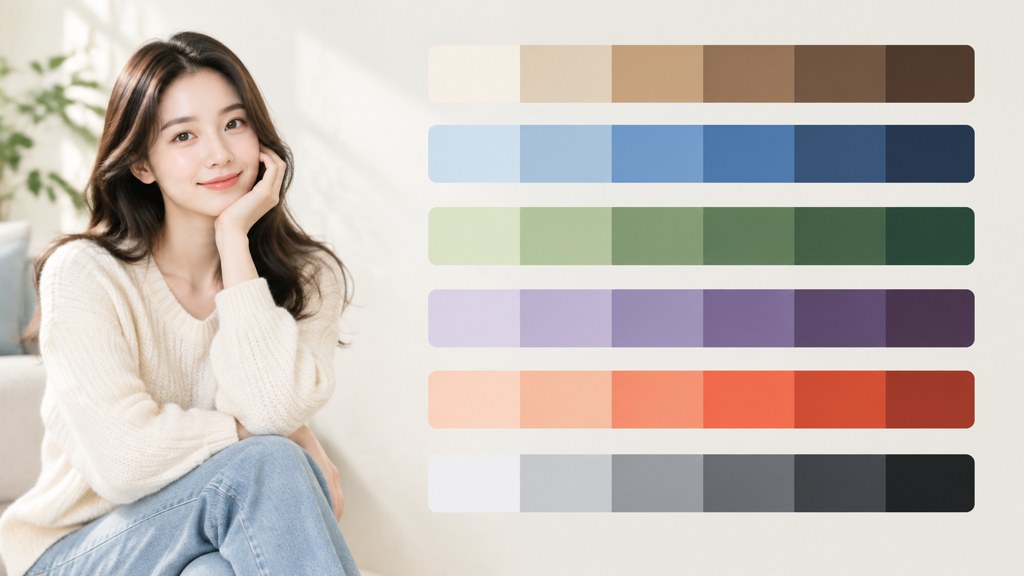
| Palette | The three colours | Setting it suits | Where it fails |
|---|---|---|---|
| Warm neutrals | Cream, camel, soft brown | Anywhere, including a plain wall | Pale skin against a very pale wall with no separation |
| Sage and stone | Muted green, grey, off-white | Woodland, garden, park in leaf | Deep shade, where the green goes flat and grey |
| Denim and white | Indigo, mid blue, white | Beach, harbour, bright overcast days | Strong sun, which blows the white out before the faces are exposed |
| Rust and olive | Burnt orange, olive, ivory | Autumn fields, brick, late light | Green grass in high summer, which fights the orange |
| Charcoal and berry | Charcoal, plum, dusty pink | Studio, city, evening indoors | Dim rooms, where charcoal turns into a silhouette |
| Full neutral | Three shades of the same grey or beige | Formal portraits and anything printed large | Flat frontal light, which removes what little contrast there is |
The neutral rule survives any background: if you cannot decide, put everybody in two or three shades of one warm neutral and let the setting supply the colour. It is the safest option for a print that will hang on a wall for a decade.
Check the palette against the background, not the sofa
Photograph the actual wall, field or beach on your phone first, then hold the clothes up against that picture. A palette chosen indoors against magnolia paint behaves differently in front of green grass.
What should you not wear in a family photo?
- Visible logos and slogans. They pull the eye first, every time, and they date the photograph to the season the shirt was sold.
- Fine repeating patterns. Narrow stripes, small checks and herringbone can beat against the sensor's pixel grid and produce moire, a rainbow shimmer that is genuinely hard to remove afterwards.
- Fluorescent and very saturated colours. They bounce onto skin, so a neon shirt gives the wearer a green or pink jaw that no editing fully repairs.
- Bright white next to deep black in strong sun. One of the two is going to lose detail, because no sensor holds both ends at once outdoors at midday.
- Whatever is on your feet, if nobody has thought about it. Shoes appear in every full-length frame and are the most common thing people regret afterwards.
- New clothes nobody has worn. Stiff collars, unwashed creases and shoes that hurt all show up in posture.
Consumer titles such as Good Housekeeping and Reader's Digest run seasonal versions of this list every year, and the durable advice in all of them is the same: remove the loudest item and check the shoes.
How do you plan outfits around the location?
One question decides it: what colour is the biggest thing behind you? Dress against that, not with it.

- Beach. The background is pale sand and pale sky, so pale outfits vanish. Mid-tone blues, warm neutrals and denim hold their shape.
- Woodland or park. Green dominates, so green clothing merges. Rust, cream, charcoal and dusty pink separate cleanly.
- Urban brick and concrete. Warm brick fights orange and rust; grey concrete flattens grey clothes. Deep blues and creams do well against both.
- Home. Your own rooms are already full of colour you stopped noticing. Photograph the room empty first and pick from what is missing.
- Studio or plain backdrop. The background gives you nothing, so the palette has to carry the whole frame. This is where a three-colour set earns its keep.
Two seasonal versions of this question dominate the searches, family picture outfit ideas summer and family picture outfit ideas fall, and they are really questions about background colour: bright sand and hard light in one, deep foliage and low soft light in the other.
What do you dress small children in for photos?
- Comfort first, and it is not close. A child in a scratchy collar will be visibly unhappy in every frame, and no palette survives that.
- Colour from the same three, but in the simplest garment. One plain piece in the accent colour does more than a small outfit with six details in it.
- Bring the spare. Same palette, completely different garment, already worn once so it is soft.
- Shoes that stay on. Socks and bare feet photograph fine; a shoe halfway off does not.
- Book the shoot inside the two good hours. After nap, before hunger. Everything else is negotiable and this is not.
Shoot the children first while the goodwill lasts, then the group, then the adults. Reversing that order is the single most common reason a family session produces one usable frame instead of ten.
How do you handle a family member who will not coordinate?
Most family picture outfit ideas quietly assume everybody agrees. Somebody always says they will wear what they like, and fighting it costs more than absorbing it.
- Ask for one item, not an outfit. A scarf, a jacket, a shirt in one of the three colours ties them in and reads as intentional.
- Put them next to the strongest colour in the group so the contrast looks like a decision.
- Shoot the group frame in the first fifteen minutes, before anyone gets tired of the whole idea.
- Give them a role rather than an instruction: holding a child, leaning on something, at the end of the row where the eye finishes.
- Accept the result. A family portrait where one person looks like themselves beats one where everybody looks styled and nobody looks comfortable.
Group photo ideas that depend on total compliance rarely work with more than four people. Build the frame so it tolerates one outlier and you will get through the day without a negotiation.
How do you preview a family palette before buying anything?
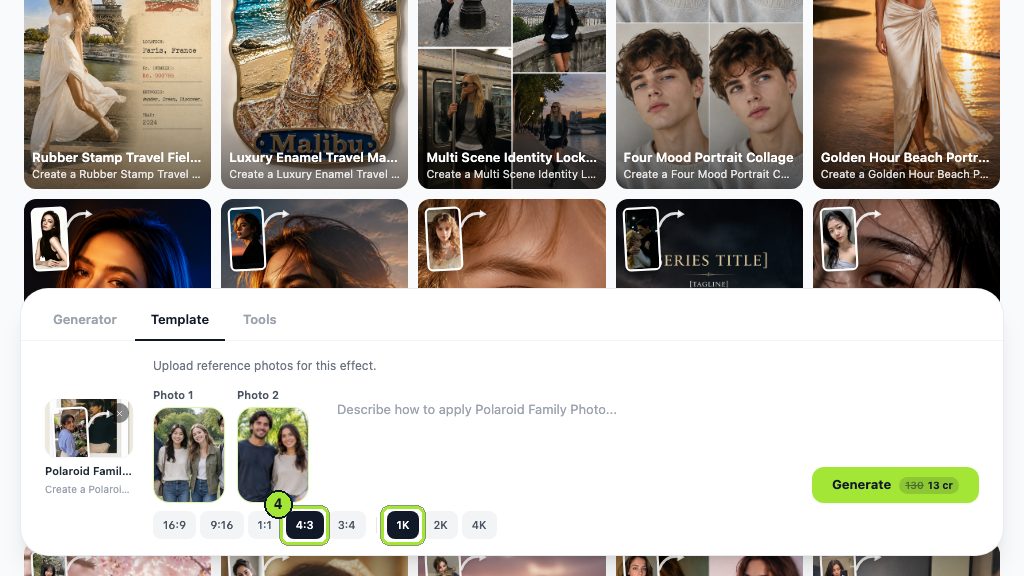
Trying a palette on a photograph costs less than buying five garments and finding out on the day. The outfit generator restyles clothing on a photo you upload, and the polaroid family photo template builds a framed group shot from two uploads. We ran the template twice to see exactly what it does.

- 1
Fill both photo boxes
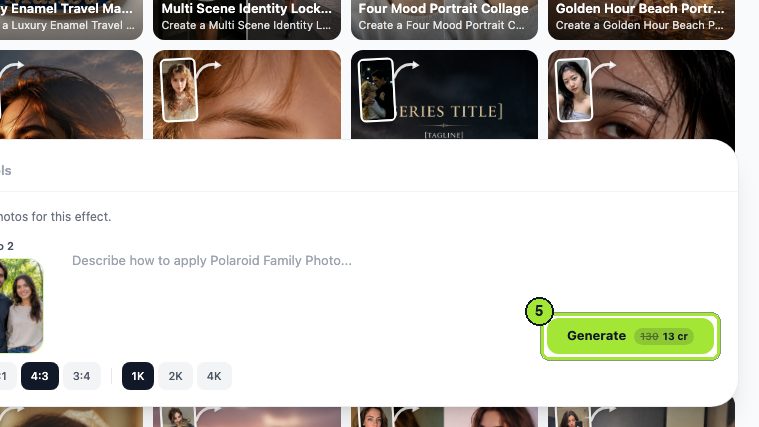
This template will not run on one image. Photo 1 and Photo 2 are both required, which is a design decision worth knowing before you plan a single-subject card.
- 2
Pick the frame shape
The ratio chips are the only layout control here. Our first run used 4:3 at 1K resolution.
- 3
Read the price on the button
Generate displays the cost before it spends anything. Each 1K run came to 13 credits.
- 4
Change one variable for the second run
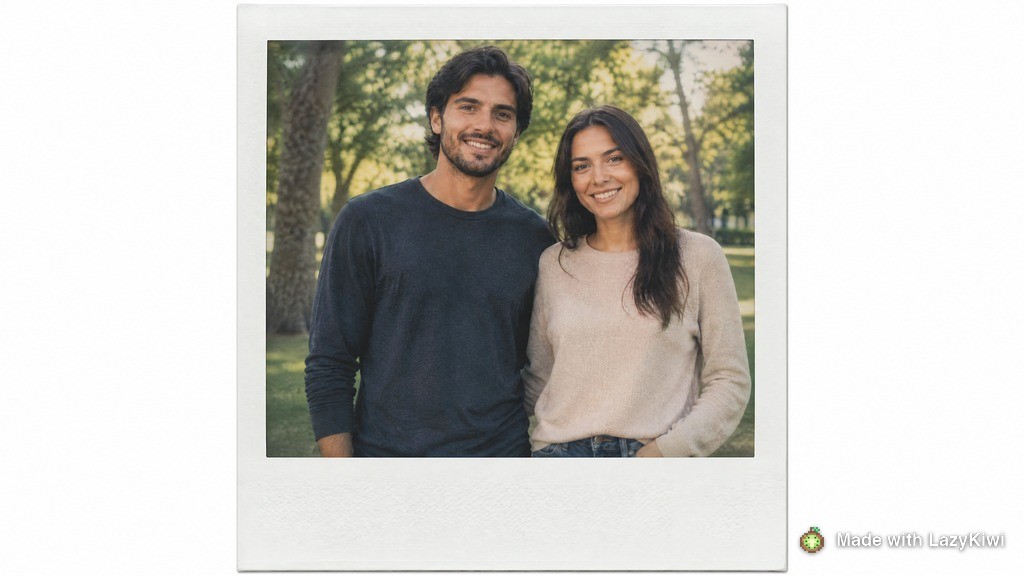
We switched the ratio to 16:9 and left both photos and the resolution alone, so the only difference between the two results is the frame shape.
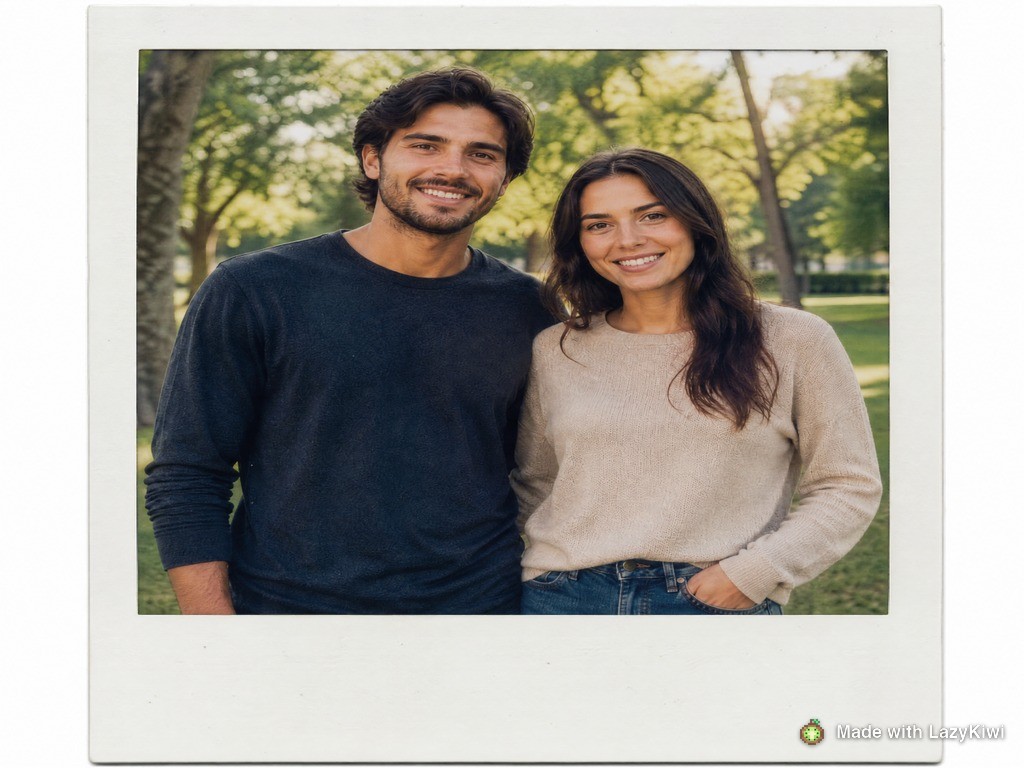
In LazyKiwi's workbench data from August 2026, image tools and templates were run by 57 external users against 17 for video, so this is the part of the workbench that gets used for exactly this kind of planning job. Everything here ran on GPT Image 2, and forty free credits land in a new account, which covers three runs at 1K.
How do you include someone who cannot be there on the day?
Deployment, illness, a shift that will not move. A two-upload template can put two photographs into one frame, and it is worth knowing its limits before you promise anyone a family portrait.
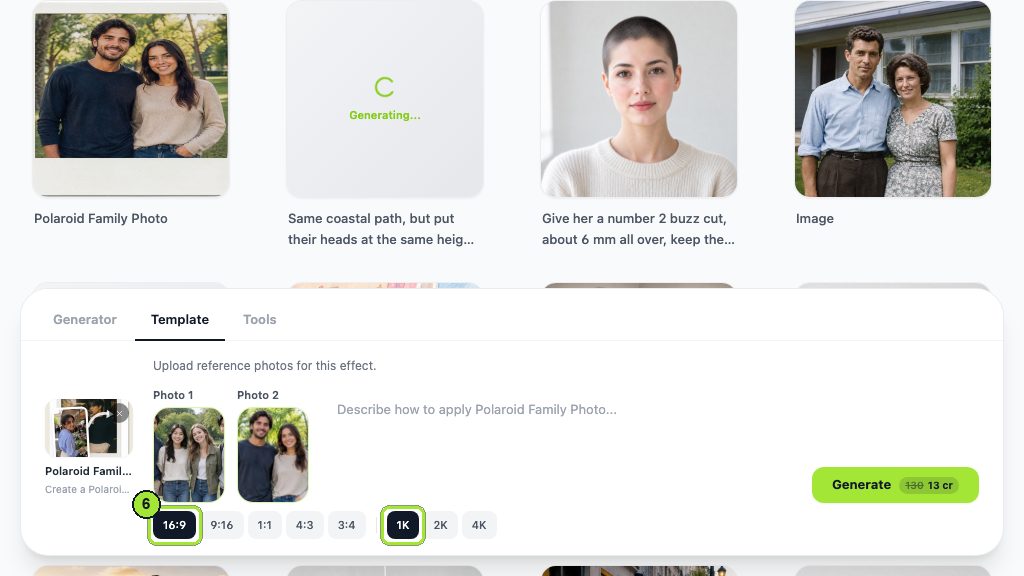
That is the honest limitation. This template pairs people; it does not preserve a group of four and add a fifth. An ai group photo that keeps five distinct faces is a much harder job than it looks, and any tool that promises it should be tested on your own photographs before it is trusted with a print.
- Match the light direction in both source photos. Opposite light is what makes a composite read as a cut-out.
- Match the camera height and distance too. A close phone selfie composited next to a photograph taken from three metres away will never sit right.
- Say what it is. A composed frame is a lovely card and a poor record, and describing it accurately costs nothing.
What makes a family photo look dated in two years?
- Trend-led colour. Pantone named PANTONE 11-4201 Cloud Dancer as its Colour of the Year for 2026 (Pantone, checked 2026-09-07). Use it as one accent if you like it; dressing five people in the year's colour dates the picture to that year exactly.
- Seasonal props. Pumpkins, chalkboards with ages written on them and matching hats fix the photograph to a moment rather than to a family.
- Heavy filtering. Strong grades age faster than clothing does, and a print made from a heavily graded file cannot be undone later.
- Very of-the-moment silhouettes. Plain shapes in good fabric survive; a statement sleeve does not.
- Everything shot at the same distance. A set of ten identical waist-up frames looks like a catalogue two years later.
The family portrait ideas that hold up are boring on paper: plain clothes, decent light, faces close together, one or two frames that show the room the family actually lives in. Photography publications such as PetaPixel and school libraries such as NYIP are useful for the technical half, and boards on Pinterest are useful for the palette half, as long as you take the colours rather than the styling.
Key takeaways
- The best family picture outfit ideas reduce to one method: an anchor outfit, three colours from it, a different share for each person.
- Dress against the dominant background colour rather than with it; the location decides the palette.
- Logos, fine repeating patterns and fluorescent colours are the three reliable ways to spoil a family frame.
- Children get comfort, one accent colour, a spare outfit and the first fifteen minutes of the session.
- Preview a palette on a photograph before buying clothes; a 1K run costs 13 credits.
- A two-upload template composes a pair, not a group of four, so test it before promising anyone a print.
Image & Design Editor
Maya Chen
I spend my days inside image tools, testing prompts and settings on real photos so the steps here match what you actually see on screen.
FAQ
Common questions
What colours should a family wear for pictures?
Two or three shades from one palette, chosen against the background rather than with it. Warm neutrals work almost anywhere, denim and white suit bright coastal light, and rust with olive suits autumn. Give each person a different share of the same three colours.
Should families match outfits for photos?
No. Matching produces a uniform and dates quickly. Coordinating from a shared palette keeps everyone looking like themselves while the group still reads as one set. Vary the fabric and the garment type, not only the colour.
What patterns should you avoid in family photos?
Fine repeating patterns such as narrow stripes, small checks and herringbone, which can interfere with the camera's sensor grid and produce a coloured shimmer. One larger pattern in the group is fine and useful as the anchor; five small ones are not.
What should kids wear for family pictures?
Something soft they have worn before, in one colour from the family palette, with shoes that stay on. Bring a spare in the same palette but a different garment. Book the session inside the two good hours between a nap and the next meal.
Can you add a missing family member to a photo?
A template that takes two uploads can compose two photographs into one frame, and it works best when the light direction, camera height and distance match in both sources. It pairs people rather than adding one to a group, and the result belongs on a card rather than in a record.
Try the palette before you buy the clothes
Upload the photos, pick the frame shape, and see how a family set actually looks composed. Each 1K run costs 13 credits and a new account gets 40 free.
Related reading
Pose Reference Library: 40 Poses by Use Case
Forty pose references sorted by what you need them for, figure drawing, portrait sessions, product shots, plus how to generate your own on demand.
10 min read
Couple Photo Poses: 20 That Do Not Look Stiff
Twenty couple poses grouped by height difference, comfort level and setting, plus the prompts that get two people moving instead of standing still.
9 min read
Photo Collage Ideas: 15 Layouts by Occasion
Fifteen collage layouts for birthdays, trips and anniversaries, the grid maths behind each, and how to build one from photos you already have.
9 min read
AI Christmas Photos: Cards, Family Sets and Limits
How people are making AI Christmas photos, the settings that keep faces recognisable, card sizes that print well, and what to disclose on a family card.
9 min read
Halloween Photo Ideas: 20 Shots and Costume Looks
Twenty Halloween photo setups from easy to ambitious, the light that makes costumes read on camera, and AI looks you can test before buying anything.
9 min read