
Buzz Cut Lengths: Guard Numbers 1 to 8 Compared
Buzz cut lengths in guard numbers and inches, straight off the manufacturer chart, plus how much scalp shows at each one and which to pick first.
 Maya Chen 9 min read
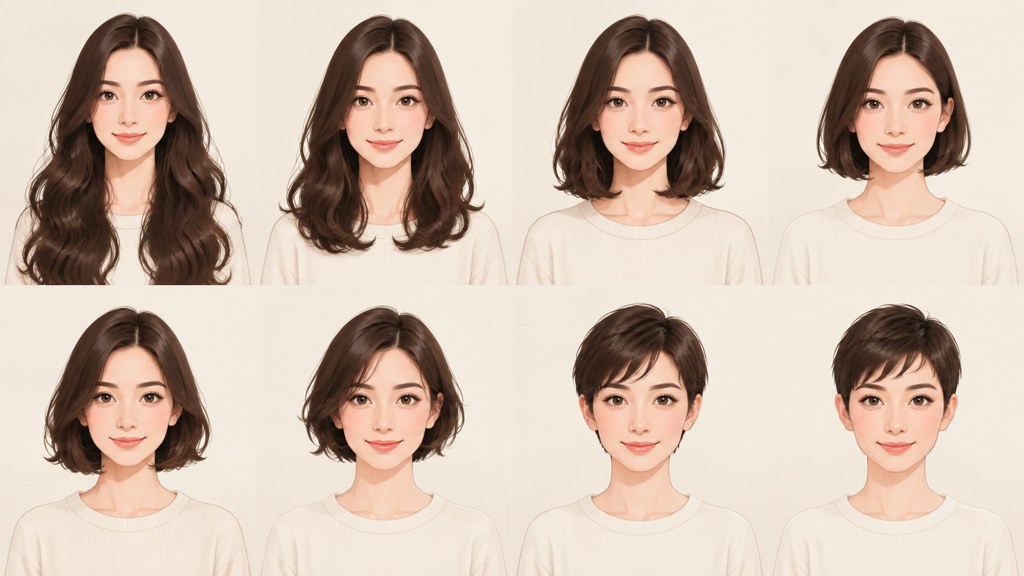
A guard number is a length in eighths of an inch, and that is the entire system. Wahl's own guide comb chart puts a number one at an eighth of an inch and a number eight at a full inch, with the steps in between rising in eighths. Everything people argue about, how much scalp shows, whether it suits them, how bad the grow-out is, follows from that one measurement plus two variables the chart cannot see: your hair colour and your hair density. This piece maps the numbers to what they actually look like, using a real preview run at three different lengths on two different heads.
What length is each buzz cut guard number?
Straight from the manufacturer. Wahl publishes a guide comb chart that gives the cutting length for each attachment, and the descriptions in the right-hand column below are its own words for what each number produces.
| Guard | Wahl's stated length | Rounded metric equivalent | What Wahl calls it |
|---|---|---|---|
| #1/2 | 1/16 inch | About 1.5 mm | As short as you can go, outside of bald |
| #1 | 1/8 inch | About 3 mm | A short buzz cut |
| #2 | 1/4 inch | About 6 mm | A traditional buzz cut |
| #3 | 3/8 inch | About 10 mm | Still a buzz cut, on the longer side |
| #4 | 1/2 inch | About 13 mm | Crew cut or brush cut territory |
| #5 to #7 | 5/8, 3/4 and 7/8 inch | About 16, 19 and 22 mm | Long enough to part and to style with product |
| #8 | 1 inch | About 25 mm | As long as it gets with a hair clipper |
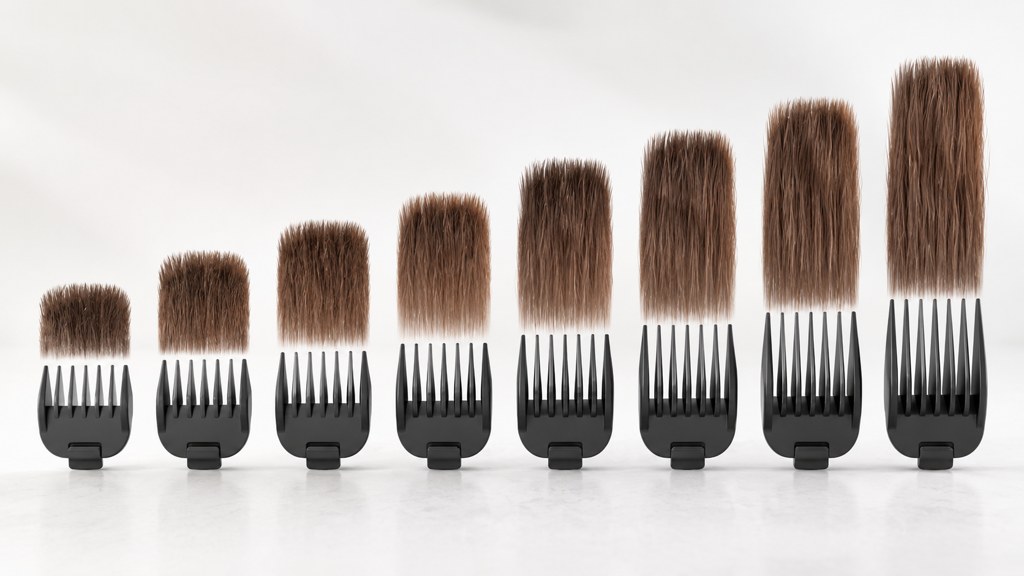
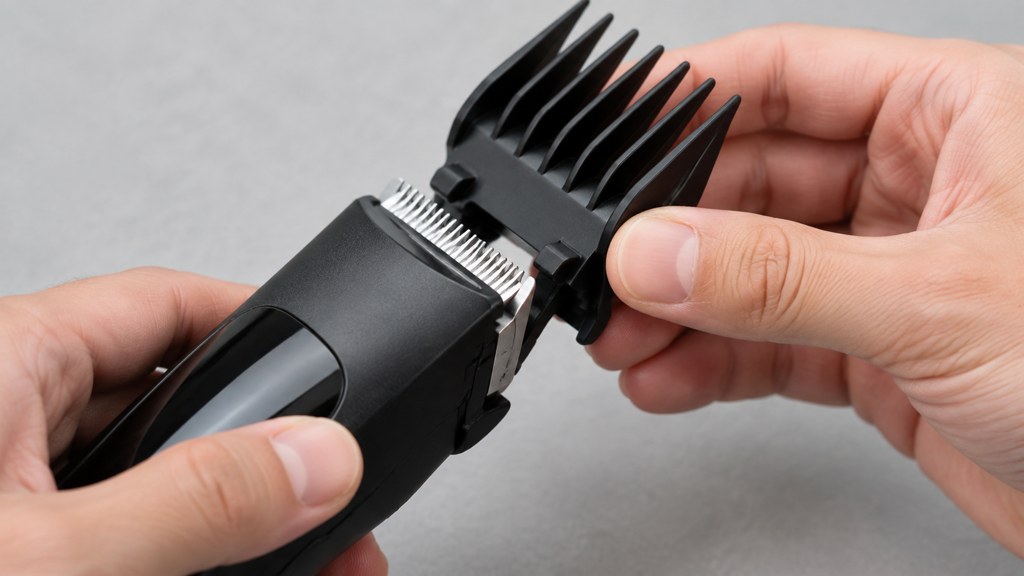
Two caveats. The metric column above is an arithmetic conversion of Wahl's inch figures rather than a published number, so treat it as approximate. And guard sizing varies slightly between brands, so check the chart that came with your own clipper before assuming a number two means the same thing on it.
Half sizes exist and matter most at the short end
The gap between a #1/2 and a #1 is a sixteenth of an inch, and at that length a sixteenth is the difference between skin showing and not showing. Half guards are far less useful at the #4 end, where a sixteenth disappears into the texture.
What do the different buzz cut lengths actually look like?
Forget trend names, which change every season and describe the fade rather than the length. Describe each number by how much scalp reads through it, because that is what people actually notice.
- A #1/2 reads as skin with a shadow on it. Head shape is fully exposed and any scar or dent shows.
- A #1 reads as colour rather than hair. Scalp is visible through it in bright light, and the hairline becomes a hard edge.
- A #2 is the point where most people stop seeing scalp indoors. It still shows the skull outline clearly.
- A #3 covers the scalp under normal light and starts to have direction. You can see which way it wants to lie.
- A #4 is no longer a buzz in any meaningful sense. It has enough length to look uneven if the cut is uneven.
- A #6 upward can be parted, and at that point the guard number stops being the interesting decision.
That list answers what different buzz cut lengths look like better than any gallery, because a gallery shows you other people's hair colour and density rather than a length. Menswear desks such as GQ, Esquire and Men's Health run the seasonal version, which is worth reading for the fade rather than for the number.
Our own two-length test on the same head shows the jump. At about 13 mm the hair still reads as a dense dark shape and the hairline is soft; at about 3 mm the scalp comes through, the temples recede visibly and noticeably more forehead is on show. Same face, same light, same day, and a different head shape entirely.
Which buzz cut length should you get first?
Start at a #4 and work down over several cuts. This is the single most useful piece of advice on the page and it is almost always ignored.
- 1
First cut, a #4
Roughly half an inch. It is a large visual change from most hairstyles but it still covers the scalp, so nothing about your head shape is a surprise.
- 2
Second cut, a #2 or a #3
Two to four weeks later. This is where you learn what your crown and temples really look like, with the option of stopping.
- 3
Third cut, decide
Only now is a #1 or a #1/2 a decision rather than a gamble. Most people who regret a buzz cut jumped straight here from a full head of hair.
Anyone asking what are the different buzz cut lengths is usually really asking which one to start at, and the answer is not the shortest. The reason for the sequence is arithmetic. Going shorter takes ten minutes. Going longer takes months: Cleveland Clinic gives average scalp growth as 4 to 6 inches over a year, which is roughly half an inch a month at the top of that range. A #1 to a #4 is a three-month wait.
Going shorter costs ten minutes. Going longer costs three months. Only one of those decisions should be made quickly.
— Maya Chen
How does hair colour and density change how a buzz cut reads?
Two heads cut at the same number look like different lengths, and the reason is contrast rather than the clipper.
| Variable | Reads shorter | Reads longer |
|---|---|---|
| Hair against scalp | Dark hair on pale skin, where every gap shows | Light or grey hair on similar-toned skin |
| Density | Sparse hair, where scalp reads through at any number | Thick hair, which holds a visible shape at a #1 |
| Texture | Straight hair, which lies flat and shows the scalp | Coarse or coily hair, which stands up and covers |
| Light | Hard overhead light, which shadows every gap | Flat daylight, which fills in the gaps |
This is why the question what do different buzz cut lengths look like has no universal answer, and why buzz cut numbers are a spec rather than a promise. The practical translation: if you have dark hair on light skin, go one number longer than the picture you liked. If you have fair hair, go one number shorter to get the same effect. Density beats both of those, though, and it is the one thing you cannot judge from someone else's photograph.
Does a buzz cut suit your face shape and head shape?
A buzz cut removes the styling variable entirely, which means your head becomes the shape people see. Two separate questions live inside this one.
- Face shape decides the framing. Strong jaws and defined cheekbones gain from having nothing else competing. Softer jaws lose the vertical line that a longer cut provides at the sides.
- Head shape decides the silhouette, and hair has been hiding it. A flat crown, a prominent occipital bone or an asymmetry at the back are all invisible under three inches of hair and obvious under three millimetres.
- Ears change size, apparently. They do not move, but with nothing beside them they read larger, and this catches people out more than anything else on this list.
If you have not measured your proportions, our face shape post covers the four measurements. And if the honest question is whether to skip the clippers entirely, the bald filter answers the version of this with no hair left at all.
What are buzz cut lengths for women and how do they differ?
The numbers are identical; the decisions around them are not. Searches for buzz cut women have been climbing, and the questions attached to them are about the neckline, the grow-out and the in-between shapes rather than about the guard.
- The neckline is a real choice. A rounded nape reads softer, a squared-off one reads more graphic, and it needs redoing every three weeks regardless of the length on top.
- The grow-out is a sequence, not a wait. A buzz goes through a pixie shape at around two inches, which for most people is roughly four months, then into a bob at around six.
- The middle ground is wider than it looks. A #2 with longer length left on top, or a #3 all over with a soft outline, both sit between a pixie and a full buzz.
- Brows and lashes do more work. With nothing framing the face, the eye area carries the whole composition, which is why so many buzz-cut portraits lean on strong brows.
For the styling and beauty side of that conversation rather than the mechanics, Cosmopolitan and Self both keep standing short-hair sections.

The grow-out numbers above come from the same growth figure: roughly half an inch a month at the upper end of the Cleveland Clinic range. Plan the shapes you will pass through rather than treating the months as dead time.
Should you get a buzz cut? How to preview it first
There is no length slider in our workbench, which turns out to be the honest design: you type the guard number and the millimetres into the Prompt box, exactly as you would say them to a barber. Here is the run we recorded on 7 September 2026 through the buzz cut filter.

- 1
One frontal photo into the Photo box
Plain background, flat light, hair off the forehead so the tool can see where your hairline sits rather than guessing.
- 2
Type the number and the millimetres
Our first prompt asked for a number 4 buzz cut, about 13 mm all over, and told the tool to keep the hairline, beard, face and lighting unchanged. The protective clause matters as much as the length.
- 3
Square at 1K, then Generate
Thirteen credits, printed on the button before you click. The card renders into My Image.
- 4
Change only the number for run two
The second prompt asked for a number 1, about 3 mm, with scalp showing through. Same photo, same chips, one clause different, so the two results are directly comparable.
- 5
Third run, second head
We then swapped in a woman's headshot and asked for a number 2 at about 6 mm. Three renders, 39 credits in total.


The pair is the point. Every tool here renders through GPT Image 2, which rebuilds the frame each time, so judge the head and ignore small differences in the background. In LazyKiwi workbench data (August 2026), image tools like this one are the most used part of the product: 57 external accounts ran image tool or template jobs against 17 running video templates.
How long does it take to grow out a buzz cut?
Work backwards from the growth rate. At roughly half an inch a month, the milestones land like this.
| Target | Length | Rough wait from a #1 |
|---|---|---|
| Back to a #4 | 1/2 inch | About one month |
| Short crop you can style | 1 to 1.5 inches | Two to three months |
| Pixie shape | 2 to 3 inches | Four to six months |
| Chin length | 6 inches | About a year |
Upkeep is the part nobody budgets for. At these lengths the neckline and the edges need attention roughly every three weeks, which means owning a razor as well as clippers: Dollar Shave Club listed a six-blade razor at 10 US dollars and a twin blade at 6 dollars when we checked on 7 September 2026. Washing changes too, and the American Academy of Dermatology is specific that frequency depends on hair type, suggesting daily shampooing for straight hair with an oily scalp, which describes most very short cuts.
The awkward stage is months two and three, when the top is long enough to move and too short to direct. Two things get you through it: keep the perimeter and the neckline tidy every three weeks, and take the length off the sides rather than the top so the shape stays deliberate.
If you want to see the milestones rather than imagine them, run the same photo at two or three lengths from the image generator page and keep the cards. Comparing your own head at 3 mm, 6 mm and 13 mm is a far better decision aid than any reference photo of somebody else.
Key takeaways
- Guard numbers are eighths of an inch: Wahl lists a #1 at 1/8 inch and a #8 at a full inch.
- Describe lengths by how much scalp shows rather than by trend names, because that is what people notice.
- Start at a #4 and step down over several cuts. Shorter takes ten minutes, longer takes months.
- Dark hair on pale skin reads shorter at the same guard number, so go one number longer than the photo you liked.
- There is no length slider: the guard number and the millimetres go in the Prompt box, 13 credits a render.
- Growth of roughly half an inch a month puts a pixie shape four to six months out from a #1.
Image & Design Editor
Maya Chen
Maya Chen writes the image side of the LazyKiwi blog. She tests every tool in the workbench on real photographs before she describes it, and prefers a measurement to an adjective.
FAQ
Common questions
How long is a number 4 buzz cut in millimetres?
Wahl's chart lists the #4 guard at half an inch, which converts to about 13 millimetres. That is crew cut or brush cut territory in its own description, long enough to cover the scalp completely and long enough to show an uneven cut.
Should I get a buzz cut if I have never had short hair?
Start at a #4 rather than a #1. It is a big visual change while still covering the scalp, so nothing about your crown or temples takes you by surprise. Step down two weeks later if you like it, which turns one gamble into three small decisions.
Do buzz cut lengths work the same for women?
The guard numbers are identical. What differs is the neckline decision, which needs redoing roughly every three weeks, and the grow-out plan, since the hair passes through a pixie shape at two to three inches before reaching anything longer.
Why does the same guard number look different on other people?
Contrast and density, not the clipper. Dark hair on pale skin shows every gap and reads shorter; thick or coily hair holds a visible shape even at 3 millimetres. Judge from your own preview rather than from a photograph of somebody with different hair.
How much does previewing three lengths cost?
Thirteen credits per render at 1K, so our three-length comparison came to 39 credits, with the figure shown on the Generate button each time. A new account starts with 40 credits, which covers the whole set.
See the number on your own head first
Type the guard number and the millimetres into the Prompt box, spend 13 credits, and compare two lengths side by side before anyone picks up clippers.
Related reading

What Is My Face Shape? A Measured Self-Test
Measure four numbers, get one answer. The tape-measure method, the six shapes, and what each one changes about hair, glasses and camera angle.
9 min read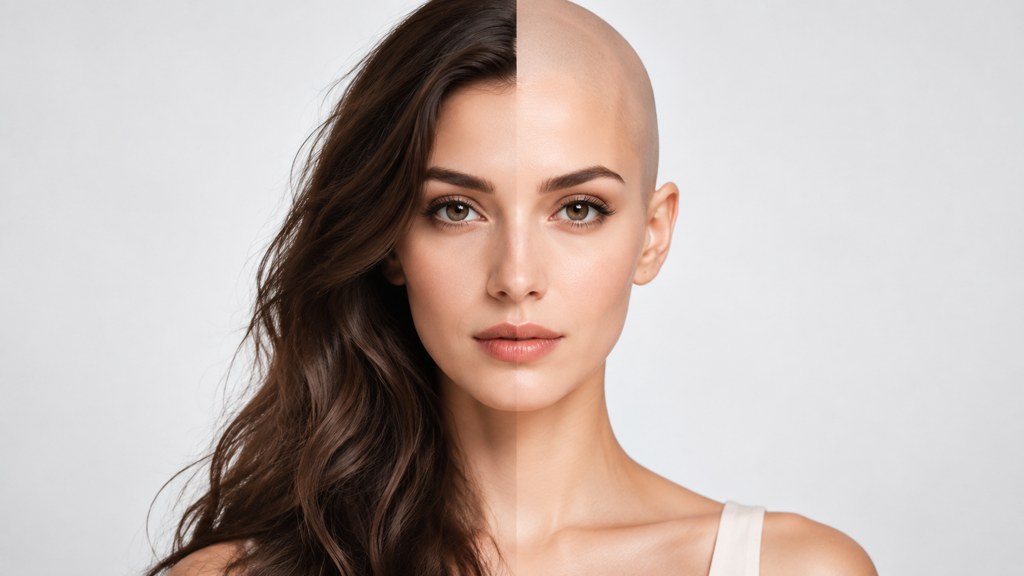
Bald Filter: See What You'd Look Like Bald
Where the bald filter lives on each app, which ones produce a believable scalp, and how to read the preview before you take clippers to your head.
9 min read
Beard Styles by Face Shape: A Practical List
Fourteen beard shapes sorted by what they do to a jawline, which face shape each balances, and how to preview both keeping and shaving before you commit.
9 min read